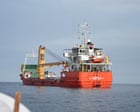
Oil markets finally caught a break. After weeks of nerve-wracking headlines and speculative spikes, Iran's maritime authorities just confirmed that the Strait of Hormuz is completely open for commercial traffic. It's the news every shipping company and energy analyst wanted to hear. Brent crude didn't wait around for a second invitation to drop. Prices fell immediately as the immediate fear of a global energy strangulation eased.
You've probably seen this movie before. Every time geopolitical friction heats up in the Middle East, the world stares at that narrow strip of water between Oman and Iran. It's only about 21 miles wide at its narrowest point. Yet, roughly a fifth of the world's total oil consumption passes through it every single day. If that door slams shut, the global economy hits a wall. But here's the reality most people miss: Iran needs that water open just as much as you need your gas prices to stay down.
Understanding the Iranian Strategy of Verbal Deterrence
Tehran knows exactly how much power it holds over the global economy. By simply suggesting they could close the strait, they can manipulate market sentiment. However, actually doing it is a different story. The latest statement from Iranian officials emphasizing "freedom of navigation" isn't just a friendly gesture. It's a calculated move to stabilize their own economic interests while de-escalating a situation that was starting to look too risky even for them.
When oil prices fall on these announcements, it reflects a sigh of relief from the tankers currently sitting in the Persian Gulf. These vessels carry millions of barrels from Saudi Arabia, the UAE, Kuwait, and Iraq. If Iran were to block the path, they wouldn't just be picking a fight with the West. They'd be cutting off the lifeblood of their neighbors and their biggest customers in Asia, specifically China. Beijing buys a massive amount of Iranian crude. Blocking the strait would be like burning down your own store because you don't like the neighbors. It doesn't make sense.
Why Oil Prices Reacted So Quickly
The market hates uncertainty. Traders had priced in a "risk premium" based on the fear of a blockade. The moment the Iranian military and maritime offices signaled business as usual, that premium evaporated. We saw Brent crude prices slide toward the $75 mark, a significant shift from the talk of $100 oil that was circulating just days prior.
It's not just about the volume of oil. It's about the logistics of global trade. The Strait of Hormuz is the only way out for massive quantities of Liquefied Natural Gas (LNG) from Qatar. If you're sitting in Europe trying to heat a home or run a factory, that's the supply chain you care about. The drop in prices shows that the market believes Iran's current stance. They aren't looking for a total maritime shutdown right now. They're looking for leverage.
The Real Cost of a Blockade
If someone actually tried to sink a tanker or mine the channel, insurance rates would go through the roof. Most people don't think about the maritime insurance side of things. If Lloyd’s of London decides a route is a "war zone," the cost to send a ship through becomes astronomical. That cost gets passed directly to you at the pump. By declaring the strait "completely open," Iran is effectively telling the insurance markets to keep the rates steady. It’s a move that keeps the global supply chain moving without the friction of "war risk" surcharges.
What History Tells Us About Maritime Threats
We’ve seen this tension during the "Tanker War" of the 1980s. Back then, hundreds of ships were attacked. The U.S. Navy eventually stepped in with Operation Earnest Will to escort tankers. The lesson from history is clear: any attempt to physically close the strait usually leads to a massive international military response.
Iran's current leadership is well aware of this. Their rhetoric often sounds aggressive, but their actions on the water are usually much more measured. They use small speedboats to harass, they occasionally seize a ship for "legal violations," but they rarely stop the flow entirely. This latest "all clear" is a continuation of that pattern. They push the line, see how the world reacts, and then pull back to maintain the status quo when the heat gets too high.
The Role of Domestic Pressure
Don't forget that Iran is dealing with its own internal economic struggles. High inflation and a devalued currency mean they can't afford to be completely isolated. They need to keep selling what they can. Even with sanctions, they've found ways to move oil. If the strait closes, their own "ghost fleet" of tankers has nowhere to go. It’s a classic case of mutual assured destruction, but for bank accounts instead of bunkers.
The China Factor in Middle Eastern Shipping
China is the elephant in the room. They are the primary destination for much of the oil flowing through Hormuz. If Iran were to truly disrupt that flow, they would be directly harming the one major power that still offers them a degree of diplomatic and economic cover.
I’ve watched these cycles for years. The pattern is almost always the same.
- Tensions rise due to regional conflict.
- Oil speculators drive prices up.
- Iran hints at maritime "consequences."
- Reality sets in regarding the sheer cost of a blockade.
- Iran issues a statement saying the strait is open.
- Prices tumble.
We are currently at step six.
Navigating the Volatility
So, what should you actually do with this information? If you're a business owner or someone worried about energy costs, don't get distracted by every single headline. Look at the shipping data. Look at the actual movement of vessels. Right now, the AIS (Automatic Identification System) tracking shows a steady stream of tankers moving through the narrowest parts of the strait. That's the only metric that matters.
The "completely open" status is a green light for the short term. It doesn't mean the underlying political issues are solved. It just means that for now, the economic cost of a shutdown is too high for anyone to pay. Expect prices to stay lower as long as the tankers keep moving. If you see a sudden drop in vessel traffic on tracking maps, that's when you start worrying again.
Keep an eye on the U.S. Fifth Fleet based in Bahrain. Their presence is the ultimate insurance policy for the strait. As long as they are patrolling and the Iranian statements remain focused on "commercial freedom," the energy markets should remain relatively calm. The big spike everyone feared isn't happening today.
Check the daily tanker tracking reports if you want the ground truth. Stop listening to the pundits who predict $150 oil every time a boat gets stopped for a safety inspection. The geography of the region makes the Strait of Hormuz a permanent flashpoint, but the economics of the region make it a permanent necessity. It stays open because it has to. Everyone involved, including the guys making the threats, knows that a closed strait is a losing hand for everybody.
Buy the dip in transport stocks if you're feeling bold, or just enjoy the fact that your next fill-up might be a few cents cheaper. The immediate crisis has been shelved. Expect the status quo to hold until the next political tremor, at which point the cycle will simply start all over again. That's just how the energy game is played in the 21st century.