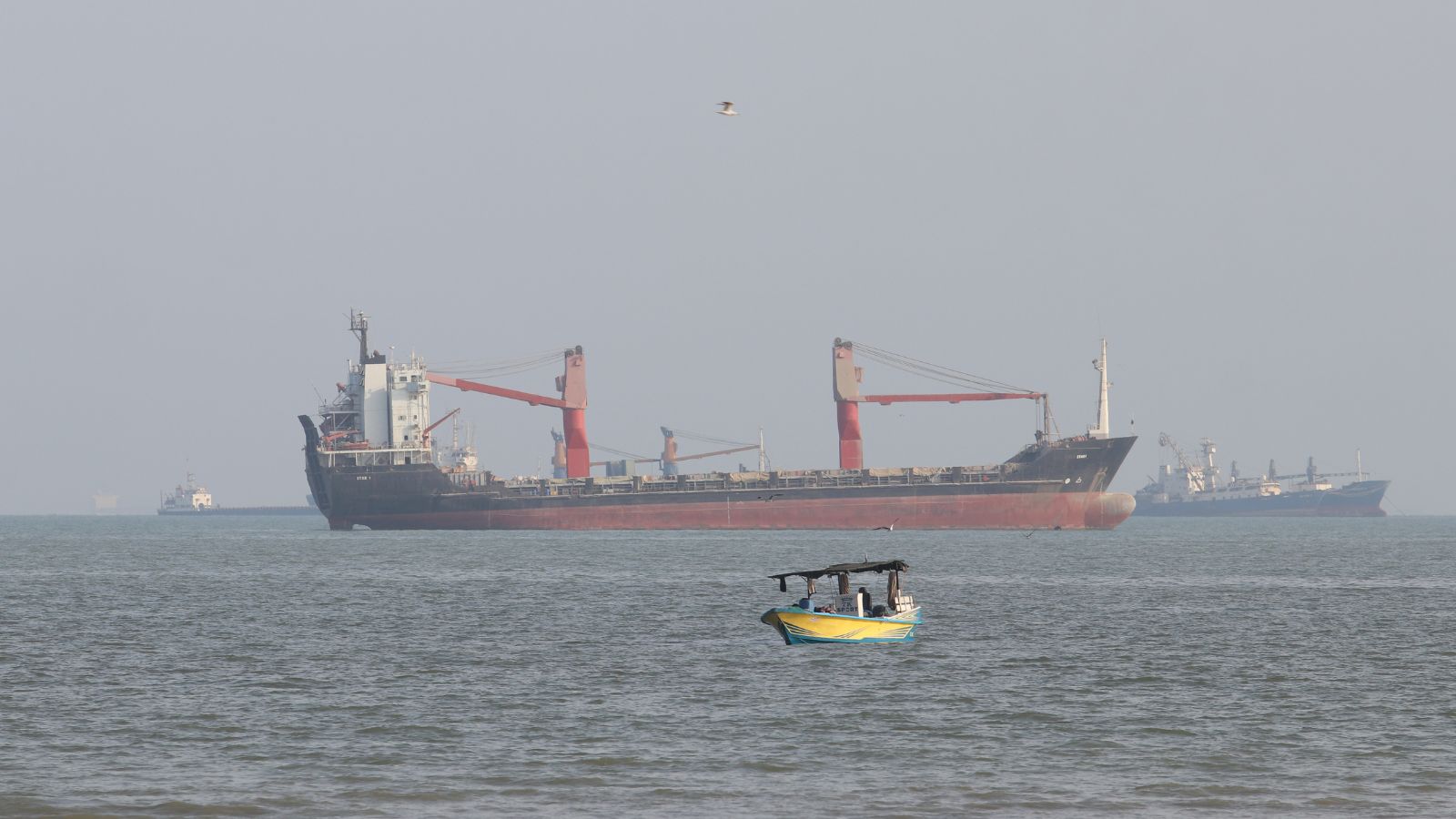
UKMTO issues a "severe" warning. Trading desks slam the panic button. Cable news anchors treat the Strait of Hormuz like a cork about to blow out of a champagne bottle.
Stop falling for the theatricality.
Every time tensions flare between Washington and Tehran, the lazy consensus rolls out the exact same script. An advisory goes out from the United Kingdom Maritime Trade Operations. Headlines scream that global oil is seconds away from evaporation. Crude spikes on fear, commodities desks charge a fortune in emotional slippage, and half the people talking on television couldn't tell you the difference between a Very Large Crude Carrier and a panamax freighter if their bonus depended on it.
Let's get something straight before we go any further. A "severe" maritime warning in the Persian Gulf is not a physical blockade. It is a risk-pricing signal. Confusing a threat advisory with a closed waterway is how amateur analysts get wiped out and how corporate procurement teams sign terrible hedges.
The real question isn't whether Iran can make shipping miserable near the Strait of Hormuz. It can. The real question is who actually pays when insurance premiums jump, which cargoes get stranded first, and why financial markets keep pricing a total physical cutoff when physical chokepoints in energy markets rarely work that way.
The Lazy Consensus Around Chokepoints Is Backwards
Conventional coverage treats the Strait of Hormuz like a binary light switch. Either tankers flow freely, or the world runs dry.
That framing is lazy. Worse, it gets the mechanics of maritime trade backward.
Around a fifth of the world's petroleum liquids trade passes through the Strait of Hormuz alongside massive volumes of liquefied natural gas, particularly from Qatar. According to the U.S. Energy Information Administration, the narrowest navigable channels in each direction are only about two miles wide, even though the waterway itself is roughly twenty-one miles across at its narrowest point. On paper, that looks terrifying. Two miles of deep-draft shipping lane running past rugged Iranian terrain looks like a sniper's alley for anti-ship cruise missiles, coastal batteries, mines, and fast-attack craft.
Military analysts like Caitlin Talmadge, who has written extensively on Persian Gulf escalation and anti-access/area-denial dynamics, have long pointed out that Tehran has asymmetric tools designed to impose costs without necessarily committing its entire conventional navy to a pitched battle. Harassment works. Seizures work. Spooking a captain into anchoring outside Fujairah works.
Yet a full, sustained physical closure is a two-edged sword with sharp teeth pointed back at Tehran. Closing the Strait of Hormuz doesn't just choke Western allies or Asian importers. It chokes regional trade across the Gulf, invites overwhelming U.S. Fifth Fleet and coalition retaliation against Iranian missile sites, radar installations, and naval bases, and risks alienating major buyers of Iranian crude—most notably independent refiners in China—that rely on uninterrupted regional flows.
Markets don't just price physical destruction. They price friction. When UKMTO escalates its threat level, the immediate shock hits war risk insurance, crew willingness, charter rates, and transit times—not necessarily the physical existence of barrels in the ground.
What People Actually Ask When Sirens Blare
Will oil hit $150 a barrel tomorrow?
Wrong question. Oil spikes on fear and reprices on supply-demand balances.
During the Tanker War of the 1980s, ships were hit, mines damaged vessels, and maritime risk surged, yet crude markets eventually adjusted to ongoing risk rather than living in permanent triple-digit paralysis. For crude to stay at stratospheric levels over months rather than days, there has to be a sustained physical deficit that spare capacity and strategic stocks cannot offset.
Most headlines skip that arithmetic because "Oil Could Spike" gets more clicks than "Refiners Rerouting Via Pipeline and Adjusting Crack Spreads."
Does a UKMTO warning mean ships are stopping?
Not automatically. UKMTO is a Royal Navy-run hub that collects reporting and issues advisories to commercial vessels. When it flags a severe threat, shipowners and charterers reassess routing, escort protocols, AIS transponder habits, and hull insurance coverage.
Some operators pause. Some speed up. Some pay steep premiums and keep moving because idle steel loses money every single day a charter sits in limbo. A warning changes the cost of movement; it doesn't freeze the ocean by decree.
Are Western economies the most exposed if Hormuz gets hairy?
Another flawed premise. Exposure depends on import dependency, crude slate flexibility, and alternative pipeline access—not just flag colors on a map.
Major Asian economies take a huge share of Gulf crude and LNG shipments. Meanwhile, the United States produces record volumes of crude and natural gas, even though its refining system still imports specific medium and heavy grades for optimal blending. Calling this a simple "US vs. Iran" shipping story misses the global web of refinery configurations, arbitrage trades, and competing buyers scrambling for non-Gulf barrels like West African, North Sea, or Latin American crudes.
Imagine a scenario where three merchant vessels suffer minor drone or mine damage near the Gulf of Oman over a single week, with zero total sinkings. You wouldn't need a single barrel physically blocked for freight rates, marine war-risk underwriters, and commodity options desks to go haywire. The mere probability of the next hit moves billions of dollars before a single refinery runs short of feedstock.
Battle Scars From Trading Headlines Instead of Balance Sheets
I've watched companies blow millions on headline-driven panic.
Years ago, a mid-sized industrial manufacturer I worked with had energy exposure tied to diesel and freight surcharges. The moment Gulf tensions flared and cable news started running countdown graphics on shipping lanes, their finance team panicked and locked in long-dated hedges at the peak of the fear spike. Three weeks later, no sustained physical cutoff had materialized, risk premiums cooled off, and the company sat on ugly mark-to-market losses while competitors bought spot fuel cheaper.
That is the classic trap of reacting to warnings as if they were confirmed outages.
Let's be precise about terms so nobody gets fleeced by jargon. Freight rates reflect the cost of hiring the vessel itself. War risk premiums are the extra surcharge insurers demand to cover hull and cargo against hostile acts in designated high-risk zones. Crack spreads measure the margin between crude oil prices and refined products like gasoline or distillate. Confusing those buckets leads to terrible hedging decisions. If your real exposure is marine transit delay or diesel crack spreads, buying a crude futures contract blindly can leave you hedged against the wrong risk while bleeding cash on the wrong curve.
Heavy hitters in energy economics—from former IEA leadership like Fatih Birol to seasoned commodity researchers at institutions like Oxford Institute for Energy Studies—have spent years hammering home a basic truth: global energy resilience isn't a single pipe or strait. It's a system of pipelines, inventories, refinery flexibility, and price signals.
Why My Contrarian Take Can Still Burn You
Being skeptical of media panic doesn't mean pretending nothing can go wrong. That would be idiocy of the opposite kind.
Here is where the contrarian view can bite you hard: tail risks are real, and low-probability events still hurt when they hit. A miscalculation, a stray anti-ship missile hitting a loaded supertanker, a minefield in a narrow channel, or an accidental clash between naval units can turn a manageable risk premium into an acute supply shock overnight. If you treat every warning as "just noise" and carry zero protection on a business that cannot survive a two-week spike in fuel or freight costs, you aren't being clever. You're being reckless.
Contrarianism only works when it's tethered to balance sheets and risk tolerance, not ego.
Actionable Moves Instead of Doomscrolling
If you run a business, trade commodities, or manage risk when shipping warnings hit the wires, drop the cable-news posture and run a tighter playbook:
- Audit your actual exposure bucket. Separate crude price risk from freight rates, war-risk surcharges, and refined product margins. Hedge the specific cost that hits your P&L, not whatever symbol is trending.
- Watch physical differentials, not just front-month futures. Look at regional crude differentials, tanker fixture counts, and insurance market chatter rather than taking a single wire headline at face value.
- Stress-test for friction, not just apocalypse. Model a 10% to 25% jump in transit costs and a two-week delivery delay before modeling a full year of zero Gulf exports.
- Keep dry powder for overreactions. Fear spikes in energy markets frequently overshoot near-term physical reality. Disciplined buyers wait for panic curves to stretch, then act on fundamentals rather than adrenaline.
A "severe" warning in the Strait of Hormuz is a test of nerves and risk math. Most people fail both before the first ship even changes course.


