The Persian Gulf is currently the most stressed body of water on the planet. Tankers carrying millions of barrels of oil pass through a narrow chokepoint known as the Strait of Hormuz, and lately, they've had targets on their hulls. While the U.S. wants to lead a massive "maximum pressure" naval coalition to keep these lanes open, France and several European allies are keeping their distance. This isn't about being unhelpful. It's about a fundamental disagreement on how to keep the world from sliding into a regional war.
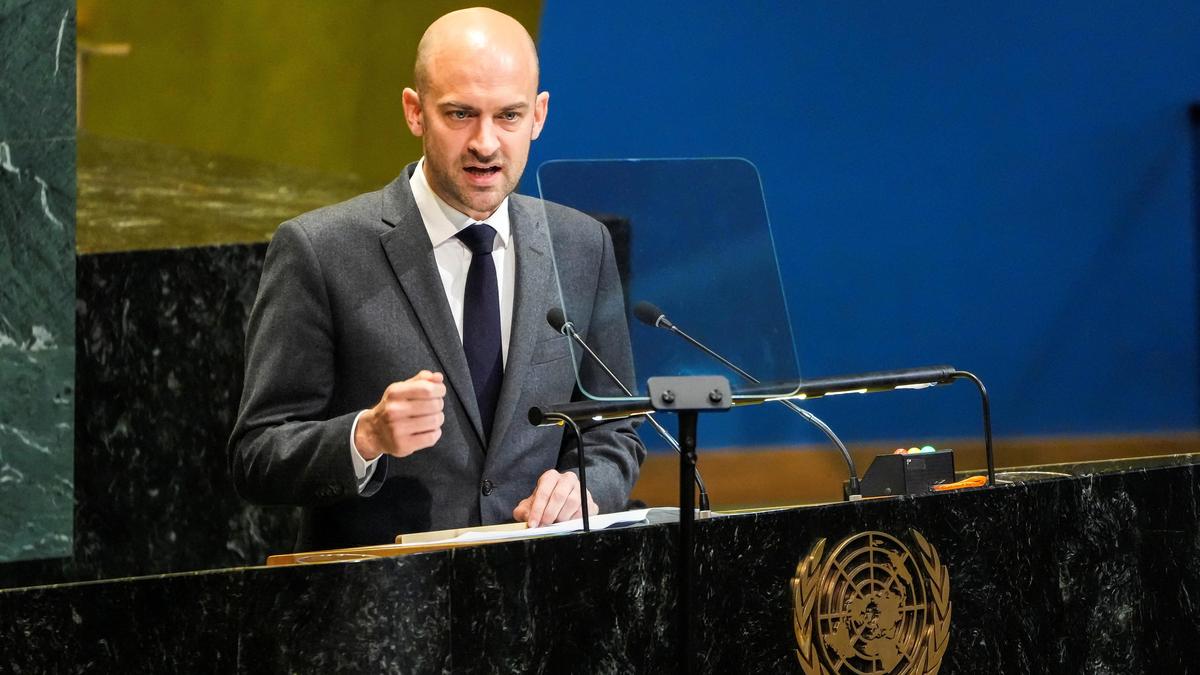
Jean-Yves Le Drian, the French Foreign Minister, recently made it clear that a European-led maritime mission isn't "in competition" with the American-led Operation Sentinel. He’s trying to be diplomatic, but let’s be real. Europe thinks the U.S. approach is too aggressive. By creating a separate surveillance mission, France, the U.K., and others are trying to de-escalate a situation that’s one bad radio transmission away from a total blackout of global energy markets.
Why the US Operation Sentinel Makes Europe Nervous
The U.S. vision for the Strait of Hormuz is basically a massive show of force. They want a coalition that screams "don't touch us." While that sounds great on paper, the French perspective is that this looks like a provocation. The U.S. pulled out of the 2015 nuclear deal (JCPOA) and has been squeezing Iran’s economy ever since. Iran has responded by harassing shipping.
If European ships join a U.S.-led fleet, they’re basically endorsing the "maximum pressure" campaign. France wants to protect ships without being seen as an appendage of the Pentagon. That’s a delicate dance. You can’t just sail a destroyer into a contested waterway and pretend you’re a neutral observer.
The European-led mission is designed to be "de-escalatory." They want to provide maritime domain awareness. In plain English, that means they want to watch what’s happening and provide a reassuring presence without looking like they’re preparing for a full-scale invasion. It's a "police beat" vs. a "military siege" mentality.
The Geography of Global Energy Chokepoints
To understand why this matters, you have to look at the map. The Strait of Hormuz is tiny. At its narrowest, the shipping lanes are only two miles wide in either direction. About 21 million barrels of oil pass through there every single day. That's roughly 20% of global liquid petroleum consumption.
When Iran threatens to close the Strait, they aren't talking about a permanent wall. They’re talking about making it so dangerous and expensive to insure a tanker that the world’s oil supply effectively stops moving. Even a minor skirmish can cause oil prices to spike 10% in an afternoon. That hits your wallet at the gas station within days.
Breaking Down the Competing Missions
The U.S. mission, Operation Sentinel, focuses on "escorting" vessels. This involves naval assets providing a direct shield for commercial tankers. It’s high-profile. It’s loud.
The French-led initiative—often referred to as EMASOH (European Maritime Awareness in the Strait of Hormuz)—operates out of a naval base in Abu Dhabi. It emphasizes diplomatic coordination. The U.K. initially tried to bridge the gap, but they’ve been oscillating between the two camps depending on who is in power in London and how many of their tankers get seized.
The friction here isn't just about ships. It’s about the future of the Iran nuclear deal. France, Germany, and the U.K. are still trying to save what’s left of that agreement. They know that if they join a U.S. military coalition, Iran will officially declare the nuclear deal dead. That opens the door to uranium enrichment levels that keep every intelligence agency in the West awake at night.
The Real Risks of a Divided Front
You might think that having two separate missions is a mess. It kind of is. If a tanker is attacked, who responds? If a French frigate is nearby but the U.S. has the "lead" in that sector, does the French captain wait for orders from Abu Dhabi or listen to a U.S. commander in Bahrain?
Confusion at sea is dangerous. Ships move slow, but missiles move fast. The lack of a unified command structure means there’s a higher risk of "blue on blue" incidents or, worse, a delayed response that lets a tanker get hijacked. We’ve seen this happen before with the Stena Impero and the Grace 1.
The U.S. says they welcome any contribution. They say there’s no rivalry. But behind closed doors, Washington is frustrated that its oldest allies won't get in line. Meanwhile, Paris is frustrated that Washington won't stop poking the hornet's nest.
The Hidden Player in the Gulf
Don't forget about the private sector. Shipping companies are the ones actually in the crosshairs. These companies don't care about the geopolitics of Paris or D.C. They care about insurance premiums.
Since these tensions began, the cost to insure a single voyage through the Strait of Hormuz has gone up by over 1,000% for some operators. Some ship owners are even avoiding the region entirely, opting for longer, more expensive routes or just idling their fleets. This adds "friction" to the global economy. It’s an invisible tax on everything from plastic to jet fuel.
The Strategy for De-escalation
So, how does this end? France’s bet is that by maintaining a separate, more "neutral" presence, they can keep a line of communication open with Tehran. They want to be the "good cop."
If you’re watching this play out, don't expect a sudden merger of these naval forces. Expect more diplomatic double-speak. The U.S. will continue its show of force. France will continue its "surveillance" mission. And as long as they don't start shooting at each other—or the Iranians—the oil will keep flowing, albeit under the shadow of a lot of gray-hulled warships.
If you’re involved in international trade or energy markets, you need to watch the "Rules of Engagement" for these missions. That’s where the real story lives. If the European mission shifts from "awareness" to "interdiction," you’ll know the diplomatic route has failed. Until then, keep an eye on the insurance markets. They usually know a war is starting before the generals do.
Check the daily maritime security charts from the International Maritime Bureau. They track every "harassment" incident in real-time. If the number of incidents drops while the European mission is active, Le Drian’s "not in competition" strategy might actually be working. If not, we're all just waiting for the next spark in the world's most dangerous sandbox.