Every foreign policy pundit in South Asia is currently hyperventilating over December 2026.
They see the thirty-year expiration date of the 1996 Ganga Water Sharing Treaty looming on the calendar and immediately reach for the panic button. Their headlines are predictable. They frame the impending deadline as an existential crisis for India-Bangladesh relations, a ticking hydro-political time bomb made worse by recent political upheavals in Dhaka.
They are wrong. Completely, fundamentally wrong.
The lazy consensus assumes that letting a thirty-year-old bilateral treaty lapse is a diplomatic catastrophe. In reality, renewing the 1996 Ganga Water Treaty in its current form would be an act of hydrological malpractice. Both New Delhi and Dhaka are clinging to a legal relic designed for a climate that no longer exists, a river morphology that has physically shifted, and a political era that died decades ago.
If you are watching the diplomatic cables to see if India and Bangladesh can sign a quick extension before the clock runs out, you are asking the wrong question. The real danger isn't the treaty expiring. The real danger is politicians rushing to sign a copy-paste renewal just to score a cheap diplomatic win, locking two hundred million people into another thirty years of guaranteed water scarcity.
The Arithmetic of a Dying Document
To understand why the 1996 treaty is broken, you have to look at the math baked into its foundation.
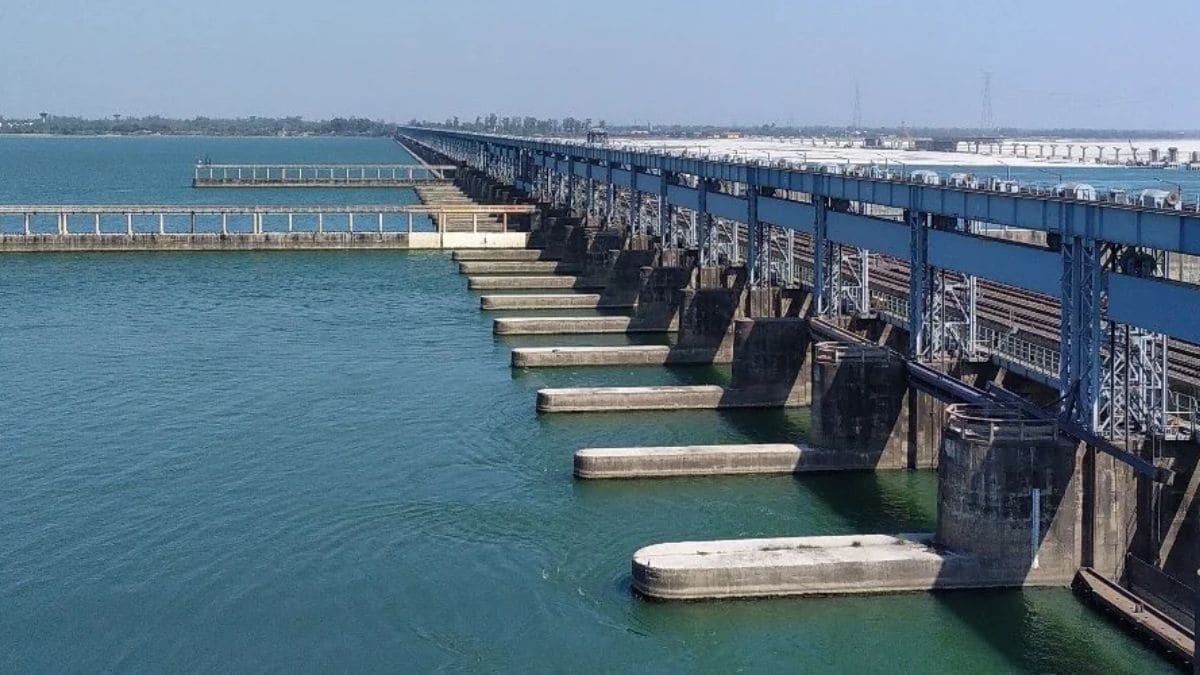
Signed in December 1996 by Indian Prime Minister H.D. Deve Gowda and Bangladeshi Prime Minister Sheikh Hasina, the treaty was hailed at the time as a triumph of regional cooperation. It established a formula for sharing the lean-season waters of the Ganga—measured at the Farakka Barrage in West Bengal—between January 1 and May 31 each year. The agreement split this five-month dry period into fifteen ten-day cycles.
Here is the fatal flaw: the negotiators based their entire allocation formula on historical flow data collected between 1949 and 1988.
They treated the Ganga as a static pipe. They assumed that the average water availability measured during the mid-twentieth century would remain constant well into the twenty-first. Under the treaty’s annexures, if water availability at Farakka drops below 70,000 cusecs (cubic feet per second), India and Bangladesh split the water fifty-fifty. If the flow sits between 70,000 and 75,000 cusecs, Bangladesh receives 35,000 cusecs and India takes the rest. Above 75,000 cusecs, India gets a guaranteed 40,000 cusecs, leaving the remainder for Bangladesh. There is also a critical clause guaranteeing that during three specific ten-day cycles between March 11 and May 10, each country receives at least 35,000 cusecs in alternating turns.
On paper, it looks equitable. On the riverbed, it is pure fiction.
I have spent years reviewing hydrological audits and basin management plans across South Asia, and the pattern is always the same: diplomats negotiate over water that isn't there. Since 1996, massive upstream extractions in Uttar Pradesh and Bihar—driven by booming populations, unregulated groundwater pumping, and expanding agricultural irrigation—have starved the main stem of the Ganga long before it ever reaches the Farakka Barrage. Add accelerated Himalayan glacier melt, erratic monsoon patterns, and extreme heatwaves that spike evaporation rates, and the 1949–1988 baseline becomes a fairy tale.
When total flow at Farakka routinely plummets below the critical 50,000 cusec threshold during peak dry months, the treaty’s emergency consultation clause kicks in. And what does that clause actually accomplish? Nothing. It merely instructs both governments to meet and discuss how to share the deficit. You cannot divide zero by two and expect to irrigate rice paddies.
The Myth of the Farakka Bottleneck
Mainstream commentary loves a simple villain, and in the Ganga dispute, the Farakka Barrage always plays the part.
Commissioned by India in 1975, the barrage was built with a singular, hyper-specific engineering goal: to divert 40,000 cusecs of water from the Ganga into the Bhagirathi-Hooghly river system to flush out silt and keep the Kolkata Port navigable. Bangladeshi analysts routinely blame Farakka for starving the Gorai River, accelerating salinity intrusion in the Sundarbans mangrove forest, and crippling agriculture in southwestern Bangladesh. Indian state officials in West Bengal counter that they aren't even getting enough water to save Kolkata's port, while upstream states like Bihar demand the barrage be dismantled altogether because they blame it for catastrophic riverbed siltation and annual flooding.
Everyone is pointing fingers at the concrete structure, completely ignoring the sediment dynamics choking the entire basin.
The Ganga is not just water; it is one of the highest sediment-load river systems on earth, carrying over a billion tons of silt down from the Himalayas every year. When you throw a massive concrete barrier across a sediment-heavy alluvial river, you fundamentally alter its physics. Upstream of Farakka, the river slows down, drops its heavy silt load, raises the riverbed, and spills over its embankments into Bihar every monsoon. Downstream, the water released into Bangladesh is "hungry water"—stripped of its natural sediment, eroding riverbanks at terrifying speeds, while failing to deposit the nutrient-rich silt needed to keep the Bengal Delta from sinking below rising sea levels.
Renewing a treaty that only measures cubic feet per second of water at a single checkpoint while completely ignoring sediment transport, groundwater depletion, and delta subsidence is like treating a Stage 4 cancer patient with cough drops.
The Elephant in the Basin
If you want to expose the sheer absurdity of the current India-Bangladesh talks, look at a map of the Ganga-Brahmaputra-Meghna (GBM) basin.
The Ganga does not belong solely to India and Bangladesh. It is a transboundary system draining parts of China, Nepal, India, and Bangladesh. Yet, for three decades, New Delhi and Dhaka have insisted on treating the Ganga as a strictly bilateral affair.
This bilateral obsession is India’s greatest strategic blind spot, and Bangladesh’s biggest diplomatic trap.
Roughly 45 percent of the Ganga's total annual flow—and up to 70 percent of its critical dry-season flow—originates in the snow-fed rivers of Nepal: the Karnali, the Gandaki, and the Koshi. You cannot engineer a sustainable dry-season solution at Farakka without building high-altitude storage reservoirs in Nepal to capture monsoon runoff and release it during the lean months of March, April, and May.
Yet New Delhi has historically resisted multilateralizing the basin, fearing that bringing Nepal—and inevitably China—into the negotiating room would dilute India's regional hegemony. Meanwhile, Dhaka has been forced to negotiate from a position of structural weakness, trapped as the lowest riparian state with zero physical control over the taps.
Imagine a scenario where three roommates share a single water tank, but two of them lock the third one out of the kitchen while arguing over who gets the last drops at the bottom of the barrel. That is South Asian hydro-diplomacy in a nutshell. Until Nepal is sitting at the table as a full, equal partner in basin-wide storage and flow management, any bilateral deal signed between India and Bangladesh is just rearranging deck chairs on a dry riverbed.
Dismantling the "Strained Ties" Fallacy
The competitor's narrative leans heavily on the idea that recent political turbulence in Dhaka—the ouster of Sheikh Hasina’s government, the rise of an interim administration, and the resulting chill in bilateral relations—is the primary obstacle to saving the treaty.
Let’s dismantle that premise immediately.
First, domestic politics in India is a far bigger roadblock to a water deal than anything happening in Dhaka. Under India's constitution, water is primarily a state subject, though interstate and international rivers fall under the Union list. In practice, New Delhi cannot operationalize a single drop of a transboundary water treaty without the political buy-in of the state government in Kolkata. West Bengal Chief Minister Mamata Banerjee has repeatedly demonstrated her willingness to torpedo central government water agreements—most famously derailing the Teesta water-sharing deal in 2011 and refusing to budge ever since. Kolkata views every drop sent to Bangladesh as a direct theft from West Bengal's farmers and industries. No prime minister in New Delhi, regardless of how friendly or hostile the government in Dhaka happens to be, can easily override Kolkata's veto without paying a steep electoral price.
Second, pinning the fate of a transboundary river on the personal rapport between two political leaders is terrible statecraft. For fifteen years, commentators praised the "golden chapter" of India-Bangladesh relations under Narendra Modi and Sheikh Hasina. Yet even at the absolute peak of that diplomatic honeymoon, they couldn't sign the Teesta treaty. They couldn't stop illegal border killings. And they didn't modernize the Ganga treaty.
A water-sharing framework that only functions when two specific political parties are in power isn't a treaty; it's a temporary favor.
What People Are Actually Getting Wrong About the Stakes
When people search for the stakes of the Ganga treaty expiration, they usually fall into three distinct traps of conventional wisdom. Let’s clear the wreckage.
Misconception 1: If the treaty expires on December 12, 2026, India will immediately shut off the water to punish Bangladesh.
India cannot physically shut off the Ganga, nor would it ever want to. Even during the darkest days of bilateral hostility between 1975 and 1996—when no formal long-term treaty existed—water still flowed down the Padma (as the Ganga is known in Bangladesh). Why? Because Farakka is a barrage, not a massive storage dam. Its pondage capacity is tiny. It can divert a fraction of the river into the feeder canal, but during the monsoon, it has to open all its gates or watch West Bengal drown. During the dry season, if India tried to divert every drop, the feeder canal would silt up and overflow. The real risk isn't a sudden cutoff; it's the loss of predictable, monitored ten-day data exchanges and joint inspection teams at Farakka and Hardinge Bridge. Without verified joint data, rumors become policy, and every dry spell triggers nationalist hysteria on both sides of the border.
Misconception 2: Bangladesh has no leverage in these negotiations.
Dhaka constantly acts like a helpless victim, and Indian hawks treat Bangladesh like a junior supplicant. Both are misreading the chessboard. Bangladesh sits squarely across India’s vital transit arteries to its landlocked Northeast states. Over the past decade, India has poured billions into developing road, rail, and port connectivity through Bangladesh—using Chittagong and Mongla ports to slash transit times to Tripura, Assam, and Meghalaya. Furthermore, Bangladesh is critical to India’s internal security architecture along a porous 4,096-kilometer border. If New Delhi weaponizes water or lets the treaty collapse into acrimony, Dhaka holds the keys to India’s eastern connectivity and security perimeter. Water isn't negotiated in a vacuum; it is traded in the currency of transit, trade, and regional stability.
Misconception 3: Ecological flow is just an environmentalist buzzword.
When hydrologists talk about "environmental flows" (e-flows)—the minimum quantity, timing, and quality of water required to sustain freshwater and estuarine ecosystems—politicians roll their eyes and talk about megawatts and crop yields. This is sheer economic illiteracy. In the Bengal Delta, ecological flow is a hard national security metric. When dry-season freshwater flow drops, the Bay of Bengal pushes saltwater miles inland. That salinity destroys drinking water aquifers, ruins agricultural soil for decades, and kills off the Sundarbans—the single largest natural bioshield protecting both Kolkata and coastal Bangladesh from catastrophic super-cyclones. Destroying the river's ecological flow to grow thirsty, water-intensive cash crops upstream is an economic suicide pact.
The Contrarian Blueprint: Let It Die, Build Something Real
I will admit the glaring downside to my own argument: letting the 1996 treaty lapse without an immediate replacement creates a dangerous legal vacuum. In an era of rising nationalism and weaponized disinformation on social media, an uncodified river invites mutual paranoia. If crops fail in Rajshahi in April 2027, Bangladeshi media will blame Indian sabotage, even if the culprit is a failed Himalayan snowpack.
That risk is real. It is also worth taking if the alternative is signing another thirty-year straitjacket.
Instead of a panicked, rubber-stamped extension of a broken 1996 text, negotiators in New Delhi and Dhaka need to execute a radical reset. Here is what an actual, modern river agreement looks like:
Sign a Three-Year Interim Protocol, Not a Thirty-Year Treaty.
Stop pretending we can predict Himalayan hydrology in 2056. Replace the rigid thirty-year timeline with a rolling, three-year transitional protocol. Maintain the existing joint observation teams at Farakka and Hardinge Bridge so data transparency never breaks down, while giving engineers and diplomats a strict deadline to draft a completely new, climate-adjusted allocation model.Tie Water Allocations to Real-Time Percentages, Not Dead Cusec Numbers.
Scrap the 1949–1988 flow tables immediately. Base future dry-season sharing on dynamic percentages of actual, real-time basin runoff, paired with mandatory, non-negotiable minimum ecological flow thresholds that neither country can touch—even during severe droughts.Create a Basin-Wide Sediment and Groundwater Compact.
A water treaty that ignores groundwater is a joke. Both India and Bangladesh are mining their aquifers at unsustainable rates, which directly drains baseflow from the Ganga during the dry season. Any new agreement must mandate joint groundwater recharge zones, coordinated dredging, and sediment-flushing protocols so the delta doesn't sink while farmers pump it dry.Bring Nepal Into the Room.
India must drop its outdated allergy to multilateralism. Establish a trilateral Ganga Basin Commission with Nepal, India, and Bangladesh. Pool capital from international development banks to build joint storage infrastructure in the Nepalese foothills, trading hydropower revenues for guaranteed dry-season water releases downstream.
The Verdict
The mainstream media wants you to believe that the fate of the Ganga rests on whether diplomats in New Delhi and Dhaka can put aside their political differences and ink a renewal before December 2026.
They are looking at the wrong threat.
Politicians love signing ceremonies. They love handshakes, photo ops, and declaring victory over complex problems they haven't actually solved. If India and Bangladesh simply renew the 1996 Ganga Water Treaty as-is, the diplomats will pop champagne, the headlines will celebrate a diplomatic breakthrough, and the river itself will keep dying.
You cannot negotiate with physics. You cannot sign a bilateral treaty with a glacier. And if South Asia doesn't stop worshipping a thirty-year-old piece of paper, there won't be enough water left in the Ganga to argue over.