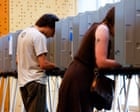
The political commentary class is having another collective meltdown. The catalyst this time is the sudden termination of the remaining commissioners on the U.S. Election Assistance Commission. According to the standard narrative dominating news feeds, this is a calculated plot to rig the upcoming midterm elections, throw voting systems into state-sponsored chaos, and dismantle democratic guardrails.
It makes for great television. It is also entirely detached from the boring, operational reality of how American elections actually work.
Stripping the leadership from a deadlocked, toothless federal agency does not break an election. If anything, it exposes a truth that career bureaucrats have spent decades trying to hide: the federal government does not run your elections, and it never should.
The panic surrounding this agency purge relies on the lazy assumption that centralized federal oversight equals security. It does not. The frantic warnings of impending administrative collapse ignore the mechanics of state election administration, the statutory limits of the agency in question, and the functional realities of its remaining staff.
The Myth of the Essential Federal Arbiter
To understand why this outrage is manufactured, you have to look at what this agency actually does, or more accurately, what it cannot do. The body was created under the Help America Vote Act in 2002 as a reactionary measure following the disputed 2000 presidential recount in Florida. It was built to be a clearinghouse, an advisory board that issues voluntary guidance and distributes federal grants.
It possesses zero regulatory power. It cannot force a single county clerk to change a ballot layout. It cannot dictate polling place hours. It cannot penalize a state for a poorly managed voter roll.
I have watched local election administrators operate across multiple election cycles. They do not wait around for an email from Washington to tell them how to secure a precinct. They look to their state laws, their local budgets, and their direct technical vendors.
The mainstream consensus laments that with no commissioners left, the body cannot vote to take formal action, updating voting standards or changing the federal registration form. This is framed as a democratic catastrophe. In reality, freezing the agency’s ability to implement sweeping, top-down policy shifts right before a major vote is a stabilizing factor, not a chaotic one.
Imagine a scenario where a highly polarized, four-member board attempts to rewrite federal voter registration guidelines three months before a major midterm election. That is how you generate authentic operational chaos. Leaving the agency in an administrative holding pattern prevents last-minute rule tinkering that confuses voters and overwhelms local clerks.
The Structural Failure of Forced Bipartisanship
The loudest complaints focus on the destruction of a bipartisan structure. The agency was deliberately designed to have an even split of Republican and Democratic commissioners, supposedly guaranteeing neutral, balanced decision-making.
This is a fundamental misunderstanding of bureaucratic design. Even splits do not create neutrality; they create paralysis.
For the better part of its twenty-plus years of existence, this agency has been a case study in institutional inertia. When commissioners disagree on hot-button issues like mail-in voting security or proof-of-citizenship requirements, the board splits down the middle. The result? Deadlock. Nothing moves. No guidance is issued. The agency routinely stalls on updating voluntary voting system guidelines for years at a time because neither side wants to give the other a perceived political edge.
The executive branch’s recent decision to clear out these positions draws on recent legal precedents regarding presidential removal powers. The administration cited recent Supreme Court jurisprudence, including what officials termed the Slaughter precedent, which affirmed the executive's authority to terminate independent agency heads to ensure administrative alignment. Critics call this an authoritarian power grab. In reality, it is the execution of constitutional authority designed to make the executive branch functional and accountable.
When an agency is perpetually frozen by design, it serves no one but the bureaucrats collecting salaries. Clearing the board forces a conversation about whether this centralized advisory model makes sense anymore.
The Staff Still Works When the Bosses Leave
The most deceptive part of the current media freak-out is the implication that the entire agency has locked its doors and turned off the lights. This is operationally false.
The agency’s professional staff—the engineers, testing specialists, and program directors—are still at their desks. According to analyses from election governance groups, the technical staff retains the authority to execute day-to-day operations. They can still process voting equipment certifications, maintain the current federal voter registration form, and disburse existing election security funds.
The missing commissioners are political appointees. Their absence means the agency cannot adopt new policy positions or vote on new systemic guidelines. But it does not halt the machinery that already exists.
- Voting Machine Certification: Testing laboratories continue to check hardware against existing benchmarks.
- Grant Distribution: Funds allocated by previous congressional actions continue to flow based on established formulas.
- Information Clearing: The staff continues to publish historical data and technical manuals.
To argue that the absence of three political figures in Washington will cause a printing press malfunction in a county office in Ohio is absurd. The actual work of election security is technical, not political. The people doing the technical work are still there.
Decentralization Is America's Ultimate Security Feature
The core flaw in the "rigged election" narrative is its failure to grasp the hyper-decentralized structure of American voting systems.
Foreign adversaries and internal bad actors face a massive hurdle if they want to systematically manipulate an American election: there is no single target to hit. We do not have a national election system. We have fifty distinct state systems, broken down further into more than 10,000 separate local voting jurisdictions.
Each jurisdiction selects its own machinery, designs its own ballots, hires its own poll workers, and establishes its own physical security protocols. Some counties use hand-marked paper ballots; others use electronic ballot-marking devices. Some states rely heavily on universal mail-in voting; others strictly enforce in-person voting with narrow absentee exceptions.
This fragmentation is frequently criticized by international observers as inefficient and confusing. They miss the point entirely. Inefficiency is a feature, not a bug.
Because there is no central node, an administrative shake-up in Washington has a net effect of zero on the actual casting and counting of ballots in Nevils, Georgia, or Scottsdale, Arizona. The secretaries of state and local election supervisors retain full constitutional authority over their processes. They are the ones who bear the responsibility, and they are the ones voters can actually hold accountable at the ballot box.
Shifting Accountability Back to the States
For years, state officials have used federal advisory boards as a shield. When an election process fails or a system upgrade drags on, local politicians point their fingers at Washington, blaming a lack of federal guidance or a delay in federal funding approvals.
The removal of these commissioners strips away that shield. It forces state governors, legislators, and secretaries of state to own their election systems completely.
If a state lacks the resources to upgrade its cybersecurity infrastructure, it should look to its own state treasury, not wait for a divided federal panel to approve a grant package. If a local jurisdiction experiences an administrative error on election night, the local supervisor cannot blame an ambiguous federal advisory note.
This shift is uncomfortable for political figures who prefer diffused responsibility. But for the voter, it brings absolute clarity. You know exactly who designed the rules, who bought the machines, and who ran the precincts.
The idea that democracy is structurally fragile enough to shatter because a few beltway appointees lost their seats is an insult to the thousands of local workers who actually run the precincts. Stop mourning the empty boardrooms of Washington. The real work is happening exactly where it belongs: in your hometown.


