The automotive press is currently nursing a collective hangover. They are mourning the death of the hydrogen passenger car, writing obituaries for a "Hydrogen Highway" that never had a paved road to begin with. The narrative is as predictable as it is lazy: The cars were great, the tech was sound, but the infrastructure failed.
Stop. The infrastructure didn't fail. The entire premise was dead on arrival. Also making news in this space: Why Shrinking AI Models For Laptops Is A Complete Waste Of Silicon.
I have spent years watching venture capital and government grants incinerate themselves in the pursuit of "clean" energy solutions that ignore the fundamental laws of thermodynamics. When people look at the Toyota Mirai—a decent sedan with a 400-mile range—and call it a tragedy, they are falling for the sunk-cost fallacy. They are ignoring that the "problem" they blame for the failure, the distribution of fuel, is actually a feature of the physics involved.
The Physics of Futility
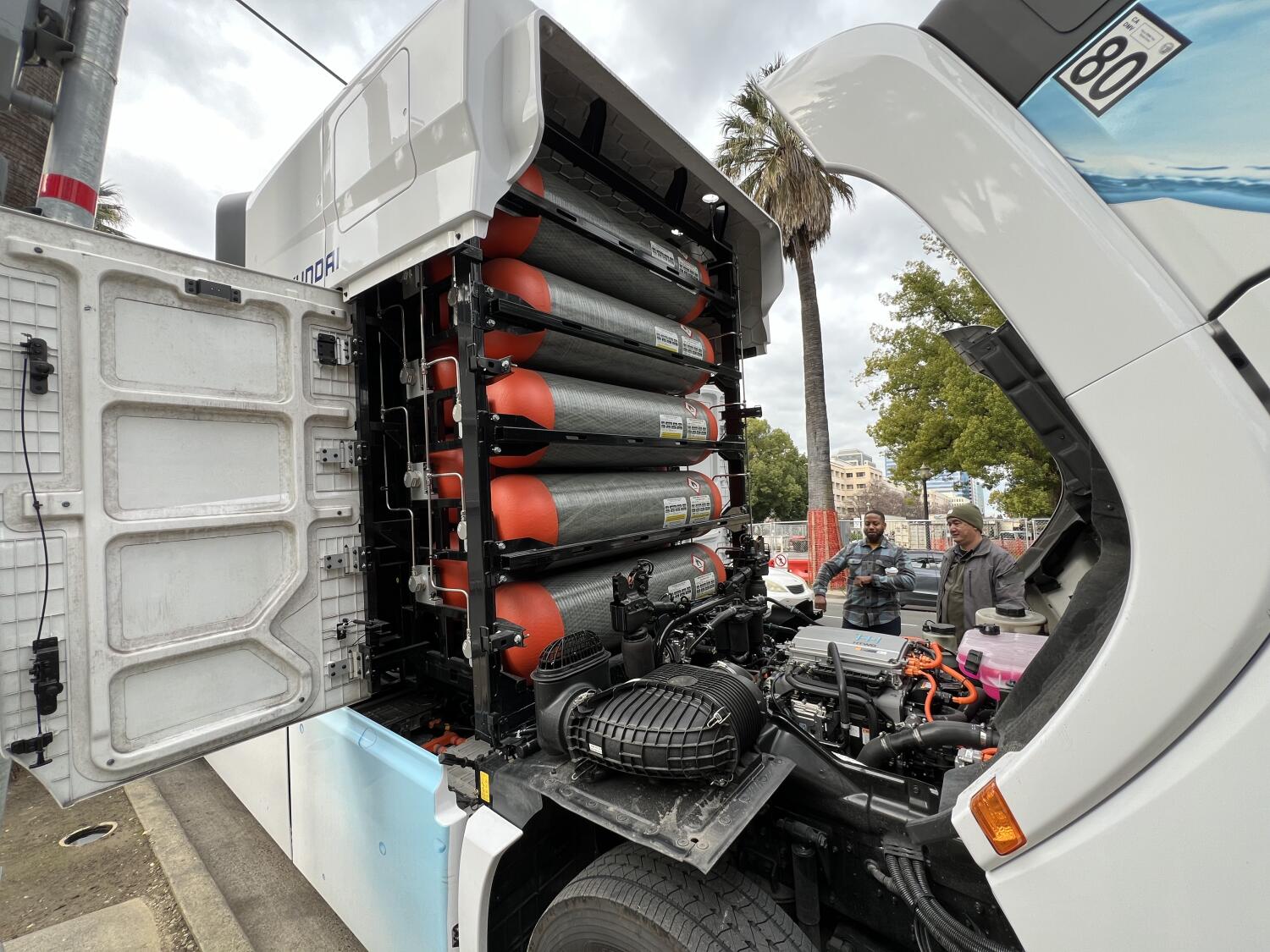
Hydrogen is the lightest element in the universe. To store it in a car, you must compress it to pressures that would make a scuba tank designer sweat or chill it to cryogenic temperatures that would make an astronaut pause. If you want to move that hydrogen from a production site to a pump, you are essentially trying to transport ghost molecules that want nothing more than to escape their containers. Additional information regarding the matter are explored by CNET.
The industry spent billions trying to solve the "last mile" problem of hydrogen distribution. They treated it like a logistical bottleneck—something that could be ironed out with enough scale and optimization. This is the mistake. It isn’t a logistics problem; it is a density problem. Battery electric vehicles (BEVs) move energy through copper wires. Hydrogen, in its current passenger-vehicle incarnation, requires moving physical mass through a fractured, high-maintenance supply chain. You are fighting the energy density of the storage medium every step of the way.
The Catalyst Mirage
Recently, researchers at Stanford and Seoul National University made headlines with a platinum catalyst that supposedly solves the cost of dehydrogenation. The tech press is salivating, claiming this "rewrites the economics" of the hydrogen chain.
Imagine a scenario where you have the most efficient bucket in the world. It is a scientific marvel, designed to hold water with near-zero leakage. Now, imagine you are trying to use that bucket to carry water from a distant, leaky pipe to your garden. No matter how perfect your bucket is, the leaky pipe is still going to leave your garden dry.
This is what the "breakthrough" catalysts ignore. Even if you make the chemical release of hydrogen marginally cheaper, you still have the compression, the transport, the specialized trucking, and the extreme safety overhead of high-pressure fueling stations. You are shaving pennies off a process that costs dollars because of the fundamental physics of the molecule.
Why Heavy Industry Is The Only Escape
The real industry insiders—the ones who aren't chasing the consumer car market—know exactly where hydrogen belongs: in applications where the fuel stays put.
Think of massive, centralized industrial hubs, shipping containers, and long-haul trucking fleets. In these spaces, you build a dedicated hydrogen pipeline or an on-site electrolyzer. You avoid the "pump" entirely. You don't need a sprawling, unreliable, taxpayer-subsidized retail network to keep a ship or a factory running.
When you hear pundits complain that "hydrogen failed," they are speaking from the perspective of a suburban commuter who wants a direct, drop-in replacement for their gas station visit. If that is your benchmark, then yes, hydrogen failed. But that is the wrong question to ask. The better question is: Why did we ever think a volatile, low-density gas was the right answer for individual consumer transport?
The answer is simple: We sold ourselves a fantasy of "green" mobility that mimicked the fossil fuel experience. We wanted the convenience of a 5-minute fill-up without realizing that we were forcing an inherently difficult fuel into a system built for liquid hydrocarbons.
The Real Cost of "Green" Hubs
California’s massive investment in hydrogen hubs, and the subsequent political fallout, shows a deeper rot. We are pouring capital into infrastructure that relies on "clean" hydrogen production—which, let's be honest, is often just green-washed natural gas production—because we are too terrified to admit that the battery-electric path has already won the consumer war.
This isn't about being anti-hydrogen. Hydrogen is a necessary tool for decarbonizing heavy steel production, ammonia manufacturing, and maritime logistics. These are sectors where batteries physically cannot provide the power-to-weight ratio needed. But by trying to shove the same technology into a sedan, we’ve muddied the water for legitimate energy transition. We’ve turned a industrial-grade solution into a consumer-grade toy, and then acted surprised when it didn't hold up in the real world.
The market has already voted. The sales numbers for fuel cell vehicles are abysmal because the end user is not stupid. A car that requires you to hunt for an elusive, expensive, and frequently broken fueling station is not a vehicle; it is a burden.
Stop trying to fix the refueling experience. Stop trying to force a square peg into a round hole. Let the hydrogen industry grow up, leave the passenger car market to the batteries, and focus on the industrial processes where it might actually be worth the immense cost of entry.
Everything else is just expensive noise.