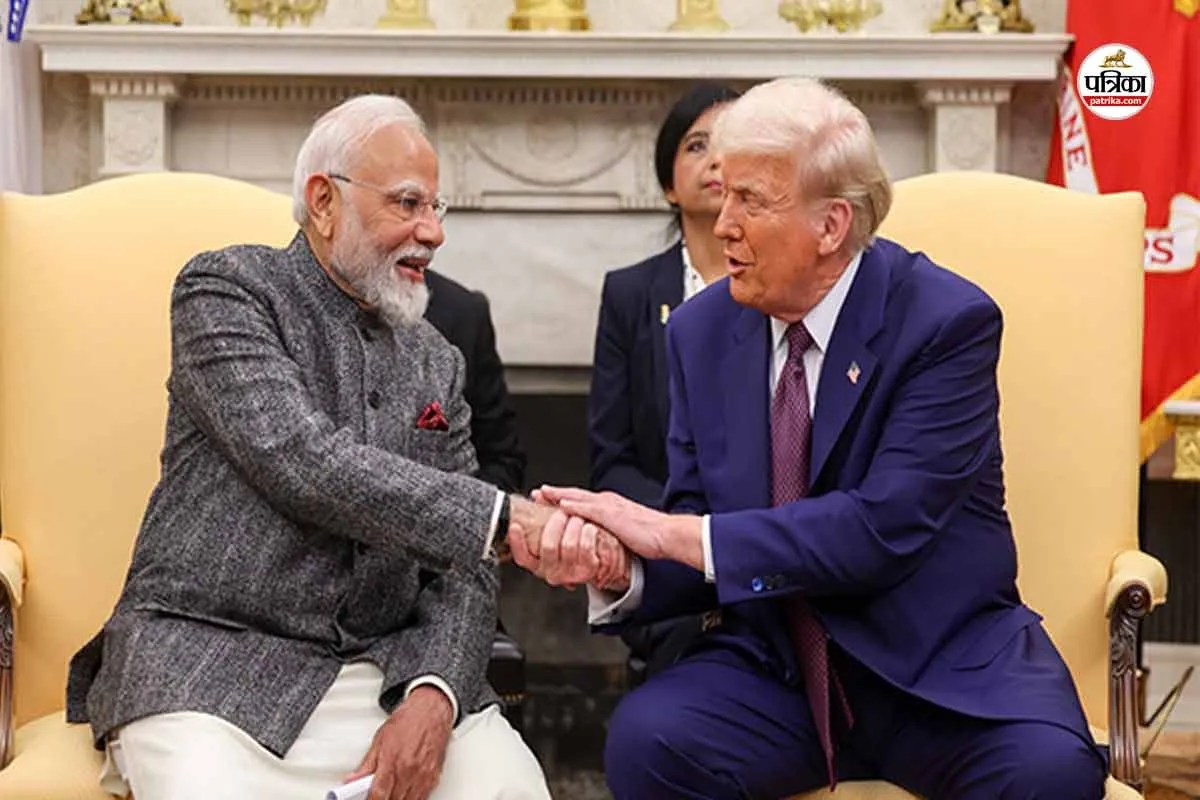
Mainstream foreign policy coverage treats every Quad leaders' meeting on the sidelines of an ASEAN summit like a historic breakthrough for Indo-Pacific security. According to standard diplomatic reporting, Prime Minister Narendra Modi's attendance at a Quad gathering alongside the 23rd ASEAN-India Summit and the 21st East Asia Summit signals unified deterrence, regional stability, and seamless strategic alignment.
That narrative misses the structural reality of Asian geopolitics. Also making headlines in this space: The Quiet Hunger Behind Empty Pledges.
When four major powers—India, the United States, Japan, and Australia—squeeze a leadership meeting into the margins of a crowded multilateral summit, they are not projecting overwhelming strength. They are managing a scheduling compromise. More importantly, holding that meeting directly on the sidelines of ASEAN exposes the central tension that neither New Delhi nor Washington wants to confront publicly. ASEAN states do not want to be forced into a binary geopolitical choice, and India refuses to turn the Quad into an Asian NATO.
I have spent years watching policy analysts and defense contractors misread diplomatic communiqués, mistaking polite photo opportunities for binding operational commitments. Every time a summit schedule drops, pundits rush to declare a new era of containment. Then reality sets in. Supply chains stay entangled, territorial disputes remain unresolved, and Southeast Asian capitals quietly hedge their bets. Further details on this are explored by The Washington Post.
The Sideline Fallacy in Indo-Pacific Diplomacy
Diplomatic reporting loves the word "sidelines." It sounds urgent, exclusive, and decisive. In practice, a sideline meeting at the East Asia Summit is an exercise in diplomatic triage.
Consider the logistics and political optics of the 23rd ASEAN-India Summit and the 21st East Asia Summit. Heads of state arrive with bloated agendas, bilateral trade grievances, and strict time limits. When Quad leaders carve out ninety minutes between plenary sessions, they are signaling that the grouping remains relevant, yet not quite urgent enough to warrant a standalone trip at that exact moment.
Geopolitical strategists like Ashley Tellis at the Carnegie Endowment for International Peace and C. Raja Mohan have long pointed out that the Quad's strength lies in its flexibility, not rigid institutionalization. Yet mainstream commentary consistently confuses flexibility with military alliance-building.
The Quad is not a mutual defense pact. There is no Article 5 equivalent. There is no unified command structure. Treating a sideline pull-aside as a hard-power counterweight misunderstands what the grouping actually does.
Why ASEAN Centrality and the Quad Clash
The conventional wisdom claims that the Quad effortlessly supports "ASEAN centrality"—the principle that Southeast Asian nations should sit in the driver's seat of regional architecture. Diplomatic statements repeat this phrase endlessly to soothe nerves in Jakarta, Kuala Lumpur, and Bangkok.
Look beneath the diplomatic boilerplate, and the friction is obvious:
- Divergent Threat Perceptions: While Washington views Beijing primarily through the lens of systemic competition and military deterrence, most ASEAN members view China as their largest trading partner and an indispensable source of infrastructure capital.
- Institutional Dilution: The East Asia Summit was designed as a broad, inclusive forum where major powers engage under ASEAN's rules. When the Quad meets right next door, it creates an exclusive inner circle that subtly undermines the very centrality it claims to uphold.
- India's Balancing Act: New Delhi relies on ASEAN for its Act East policy, needing Southeast Asian partners for trade integration and maritime connectivity. If India appears too eager to use ASEAN venues as a staging ground for Quad signaling, it alienates the exact regional partners it wants to court.
Why India Refuses to Play Washington's Script
Western commentators frequently portray Prime Minister Modi's participation in Quad meetings as proof that India has abandoned non-alignment and fully embraced the American security umbrella. That reading is fundamentally flawed.
India practices multi-alignment, or what External Affairs Minister S. Jaishankar has described as advancing national interests by engaging all major powers simultaneously without binding alliances. New Delhi participates in the Quad while maintaining active membership in BRICS and the Shanghai Cooperation Organisation. It buys defense hardware from France, Israel, Russia, and the United States.
For India, the Quad is a tool to raise its diplomatic profile, secure access to critical technologies, and expand maritime domain awareness in the Indian Ocean. It is not a vehicle to fight someone else's war in the Taiwan Strait.
Imagine a scenario where a severe maritime crisis erupts in the South China Sea during the same week as an East Asia Summit. Washington would immediately seek a joint Quad statement condemning aggressive naval maneuvers and signaling coordinated military readiness. New Delhi would almost certainly push back against hard military commitments, opting instead for calibrated language supporting international law under UNCLOS while keeping its naval assets focused on the Andaman Sea and the Malacca Strait.
The Real Metrics of Quad Utility
If you want to evaluate whether Modi's Quad meeting matters, ignore the joint statement's opening paragraphs about shared democratic values. Look at the unglamorous, technical deliverables:
- Maritime Domain Awareness (MDA): The Indo-Pacific Partnership for Maritime Domain Awareness uses commercial satellite data to track dark shipping and illegal fishing. This gives smaller ASEAN coastal states real-time intelligence without forcing them to host foreign warships.
- Subsea Cable Infrastructure: Data flows through underwater fiber-optic cables, not satellites. Quad initiatives funding trusted cable networks across the Pacific and Indian Oceans directly challenge Chinese state-backed telecom monopolies.
- Critical Mineral Supply Chains: Processing rare earth elements remains heavily concentrated in China. Quad working groups attempting to build alternative refining capacity address a genuine strategic vulnerability, even if commercial viability lags behind political rhetoric.
Answering the Questions Foreign Policy Pundits Dodge
When readers search for news about PM Modi attending the Quad meeting alongside the ASEAN-India and East Asia Summits, they are usually trying to figure out one thing: is Asia heading toward a Cold War bloc system?
Asking whether the Quad will become an Asian NATO is the wrong question entirely. The four countries lack the geographic contiguity, shared threat prioritization, and domestic political consensus required for a formal military alliance.
A better question is whether the Quad can deliver public goods fast enough to keep Southeast Asian nations from drifting entirely into Beijing's economic orbit. Right now, the record is mixed.
Does the Quad Actually Deter Beijing?
In the short term, diplomatic summits do not alter military realities on the ground—or in the water. China continues to expand its coast guard presence in the South China Sea and modernize its naval fleet regardless of how many sideline meetings take place in Southeast Asia.
Deterrence requires credible military capability, clear red lines, and political will. While bilateral defense ties—such as US-Japan alliance upgrades, AUKUS submarine deals, and US-India defense technology transfers—contribute to deterrence, the Quad itself functions primarily as a diplomatic and economic coordination mechanism. Confusing the Quad's diplomatic signaling with hard military deterrence leads to dangerous strategic complacency.
What Happens If ASEAN Fractures Over Great Power Competition?
ASEAN operates by consensus, which makes it notoriously slow to respond to security crises. As competition between Washington and Beijing intensifies, internal divisions within ASEAN become harder to paper over. Mainland Southeast Asian states often lean closer to Beijing's economic gravity, while maritime states like the Philippines face direct territorial friction.
By holding the Quad meeting on the sidelines of the 21st East Asia Summit, Modi and his counterparts are walking a tightrope. They want to demonstrate solidarity to maritime Southeast Asia without triggering a diplomatic backlash from non-aligned ASEAN members who resent great power posturing on their turf.
The Strategic Risks of Over-Indexing on Summits
Admitting the limitations of this contrarian view is necessary: diplomatic signaling does carry weight in international relations. High-level optics reassure nervous allies, establish bureaucratic momentum across four distinct governments, and force national security councils to prioritize regional coordination. Without regular leader-level engagements, middle-level diplomats lose the political cover needed to push through complex technology-sharing agreements.
Yet over-indexing on summitry creates its own traps:
- Announcement Fatigue: Rolling out rebranded infrastructure and vaccine initiatives at every meeting without transparent completion metrics breeds cynicism across the Global South.
- Strategic Overreach: Promising regional public goods that domestic legislatures refuse to fund leaves a credibility gap that competitors eagerly exploit.
- Neglecting Bilateral Friction: Smooth multilateral communiqués often mask unresolved bilateral disputes over tariffs, visa restrictions, and digital trade rules between Washington and New Delhi.
How to Actually Read Indo-Pacific Summit News
Stop measuring diplomatic success by the number of handshakes or the length of joint statements released after a sideline meeting. When coverage of PM Modi's attendance at the Quad, ASEAN-India, and East Asia Summits hits your feed, apply three filters:
First, check the budget lines. A geopolitical initiative without appropriated capital is just a press release. Look for concrete funding commitments from development finance institutions, not vague pledges of private-sector mobilization.
Second, watch who shows up at the working-group level six months later. Leaders set the direction, but mid-level technocrats in telecommunications, coast guard operations, and semiconductor supply chains determine whether anything actually gets built.
Third, track ASEAN's response, not Washington's or New Delhi's. If Southeast Asian capitals quietly adopt Quad maritime data tools and subsea cable standards while maintaining their public neutrality, the strategy is working. If they treat the sideline meeting as an unwelcome distraction from regional trade talks, the optics have failed.
Diplomacy in the Indo-Pacific is not a team sport with clean jerseys and clear scoreboards. It is a messy, overlapping web of transactional partnerships where nations cooperate on maritime surveillance on Tuesday and argue over agricultural tariffs on Wednesday.
The next time a headline celebrates a sideline summit as a decisive turning point, look past the podium. Real power in Asia is built in ports, fiber-optic trenches, and bilateral trade ministries—not in ninety-minute gaps on a conference schedule.