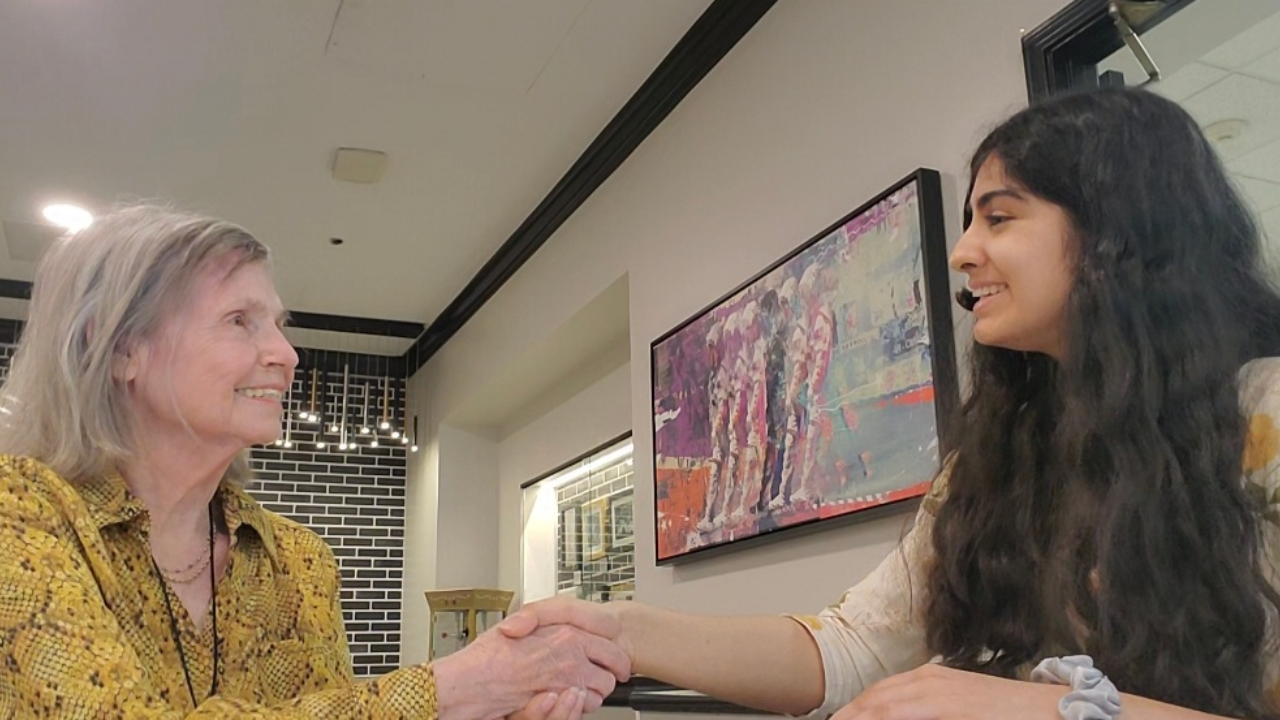
We love a good prodigy story. A fourteen-year-old gets turned away by a sterile nursing home front desk, gets mad, rallies five hundred classmates, and suddenly everyone is writing feel-good profiles about how youth will save our geriatric crisis. It makes for viral headlines. It makes for heartwarming morning show segments. It is also a complete delusion.
Every year, well-meaning teenagers descend on long-term care facilities armed with poster boards, acoustic guitars, and zero clinical training. The media paints this as an intergenerational renaissance. The reality on the ground is far uglier. Facilities love free labor and positive public relations optics. Families buy into the comforting myth that companionship is the primary cure for institutional decay. Meanwhile, underpaid aides are left cleaning up the administrative chaos, and residents are treated like props for a college application essay.
I have spent over a decade watching institutional care facilities operate from the inside. I have seen corporate operators scramble to stage photo-ops when local youth groups show up, only to lock medication carts, slash nurse-to-patient ratios, and ignore basic sanitation twenty minutes after the cameras leave. We treat elder care like a charity bake sale when it is actually an industrial-scale logistical and medical challenge.
Why do we pretend that youthful enthusiasm can substitute for systemic reform? Because systemic reform is expensive, politically toxic, and boring. It requires confronting Medicare reimbursement rates, punishing labor shortages among certified nursing assistants, and dismantling the architectural prison of the traditional nursing home model. A high school club cannot fix a broken balance sheet or a toxic corporate healthcare conglomerate.
Let us define what actual elder care requires. It demands high nurse-to-resident ratios, fair wages that retain certified professionals, medical infrastructure, and dignity built on autonomy rather than scheduled crafts activities. When a fourteen-year-old shows up to play bingo, the underlying rot of the facility does not vanish. It gets glossed over with cheap glitter.
Now, let me be entirely transparent about the downside of this perspective. Calling out youth volunteer movements makes me sound like a cynic who hates community service and youthful ambition. Critics will argue that any interaction is better than isolation, that these teenagers are learning empathy, and that mocking youth involvement discourages civic engagement.
They are missing the point entirely.
Empathy without competence is dangerous. When you substitute structural investment with high school volunteers, you provide political cover for corporate operators who cut corners on care. You tell the public that lonely seniors just need a teenager to talk to, rather than adequate medical staff, physical therapy, and safe living conditions. You shift the burden of care from the institutional system that profits off the elderly onto unpaid youth who lack the tools to help.
Imagine a scenario where a hospital asks high school volunteers to perform basic triage because the nursing staff walked out over wages. Everyone would rightly call that medical malpractice and societal collapse. Yet when a nursing home relies on teenagers to supply social stimulation while ignoring chronic understaffing and neglect, we hand out awards and write inspiring profiles. The double standard is staggering.
Let us examine the operational reality of these youth movements. A five-hundred-student senior care network sounds impressive on paper. In practice, coordinating hundreds of minors across multiple regulated healthcare facilities creates an administrative nightmare for staff who are already drowning in paperwork. Background checks, liability waivers, scheduling conflicts, and supervision requirements pull valuable staff away from actual patient care.
Facilities accept these programs not because they elevate care standards, but because free volunteers act as a marketing shield. A facility with a failing health inspection report suddenly looks community-oriented when local teenagers show up for a holiday sing-along. The optics mask the rot.
What about the residents? For every senior who genuinely enjoys a visit from a polite teenager, there are dozens who find the revolving door of well-meaning amateurs exhausting, performative, or condescending. Elders are not passive charity cases waiting for youthful saviors to validate their existence. They are adults who spent decades building lives, careers, and communities. Treating them like museum exhibits for teenagers to practice civic virtue strips them of their agency.
We must also look at the economic incentives driving the narrative. Corporate elder care is a multi-billion-dollar industry built on maximizing profit margins by squeezing labor and skimping on quality. Over the past twenty years, private equity firms have bought up thousands of nursing homes, loading them with debt, extracting management fees, and cutting staffing levels to the bone. When the media focuses on teenage volunteers changing the system from the bottom up, it shifts blame away from the executives and financial engineers who engineered this crisis. It turns a structural failure of public policy into a heartwarming human interest story about individual grit.
The financial architecture of modern long-term care is designed to extract wealth from vulnerable populations while deflecting regulatory accountability. Facilities operate on razor-thin staffing models where a single certified nursing assistant is often responsible for twenty or thirty frail residents. In that environment, basic human needs like hydration, turning bedridden patients to prevent pressure ulcers, and timely medication administration are frequently missed.
A group of teenagers singing carols in the lobby does nothing to change the ratio of aides to residents on the third floor. It does not prevent falls. It does not restock incontinence supplies. It provides emotional theater that placates visiting families while the core engine of the facility continues to grind down its residents and staff.
Consider the labor dynamics involved. Certified nursing assistants form the backbone of American elder care, providing upwards of eighty to ninety percent of direct care. They endure grueling physical labor, low pay, hazardous conditions, and minimal benefits. Yet our cultural obsession with youth voluntarism sends a clear message: instead of paying professional caregivers a living wage and stabilizing the workforce, we can rely on enthusiastic teenagers donating their Saturday afternoons. This devalues professional care work, framing it as an act of charity rather than skilled labor that demands professional compensation and respect.
When we romanticize unpaid volunteerism in a sector starved of professional investment, we undermine the fight for structural labor reform. You cannot volunteer your way out of a labor shortage driven by poverty wages. You cannot sing songs to fix a broken plumbing system or an outdated HVAC unit in a facility that has deferred maintenance for a decade.
Furthermore, the historical trajectory of institutional care reveals why these band-aid solutions persist. Modern nursing homes evolved directly from nineteenth-century almshouses and poorhouses—institutions designed as warehouses for society's most marginalized individuals. Despite rebranding with comforting terms like senior living communities and care centers, the foundational architecture of institutional isolation remains largely intact. Residents are separated from society, subjected to institutional routines dictated by shift changes and medication schedules, and stripped of personal autonomy.
A youth movement that visits an institution once a month does not challenge this warehousing model. It reinforces it. It accepts that elders must live segregated lives behind locked doors, punctuated only by occasional visits from outsiders who bring entertainment before returning to the real world.
True reform requires dismantling this institutional model entirely, not decorating its waiting rooms with youthful energy. Look at innovative alternative housing frameworks such as the Green House Project or small-house cooperative models, where elders live in normalized residential homes with stable, well-paid worker cooperatives acting as self-managed teams. In these environments, care is integrated into daily life, residents retain decision-making power, and professional staff are valued as core team members rather than disposable cogs in a corporate machine.
These models require capital investment, regulatory overhaul, and a societal willingness to pay the true cost of elder care through taxes and insurance reform. They require confronting the uncomfortable truth that society as a whole has systematically underfunded and ignored aging populations.
That reality is far harder to swallow than a heartwarming story about a fourteen-year-old girl starting a club. It is much easier to applaud youthful initiative than it is to tax corporate operators, enforce strict minimum staffing mandates, and unionize healthcare workers.
Consider the systemic failure of state health department inspections. Across the country, nursing home oversight is notoriously toothless. Surveyors are overworked, underfunded, and often constrained by bureaucratic loopholes that allow substandard facilities to repeatedly cycle through minor fines without fixing underlying hazards. When a facility receives a citation for severe understaffing or infection control violations, the financial penalty is frequently negligible compared to the profits generated by keeping staffing minimal. A high school volunteer program does nothing to reform this broken regulatory enforcement mechanism. In fact, it provides a convenient distraction, allowing facility managers to point to smiling teenagers as evidence of a vibrant community life while state inspectors look the other way on core clinical deficiencies.
If you actually care about older adults, stop starting a high school club. Stop looking for extracurricular achievements that look good on a college application or a resume. If you want to change elder care, fund labor union organizing for care workers. Lobby for mandatory minimum staffing ratios at the state and federal levels. Push for the dismantling of large institutional nursing homes in favor of decentralized, home-like environments.
Support legislation that ties facility reimbursement rates directly to worker wages, benefits, and direct-care hours. Sue private equity operators who commit systemic neglect. Demand absolute transparency in facility ownership records so that shell companies cannot hide behind complex corporate structures when residents suffer.
These solutions are unglamorous, politically fraught, and fiercely resisted by powerful lobby groups. They do not fit into a two-minute morning show segment. They will not win you a youth leadership award. But they are the only things that actually work.
Stop looking for teenage saviors. The elderly do not need your high school club. They need systemic justice, professional competence, and the unglamorous enforcement of basic human dignity.
Clean up your own backyard before you try to fix an entire industry with acoustic guitars and poster boards.