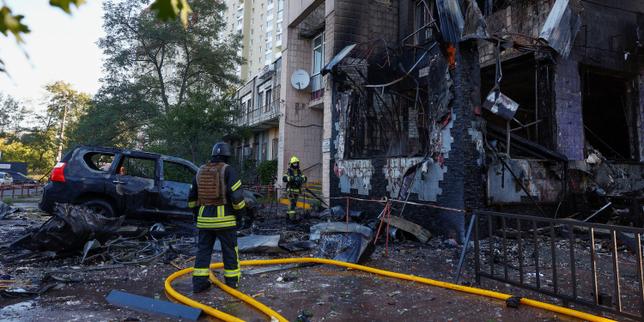
Every morning, the media machine churns out the same grim ritual. We are fed casualty lists down to the exact oblast, treated to breathless hourly tickers of strikes in Kyiv, Dnipropetrovsk, and Kharkiv, and spoon-fed a narrative that treats every tactical escalation as a decisive turning point. It is exhausting, it is performative, and it completely misses the structural reality of modern industrial warfare.
We are watching a slaughter get gamified.
The lazy consensus in mainstream reporting is that this is a conflict of momentum, where every village captured or defended alters the strategic arc of Europe. That is a comforting lie for editors chasing clicks, but it bears zero resemblance to how protracted high-intensity conflict actually operates. What we are witnessing is not a cinematic chess match. It is a grinding, mathematical equation of steel, demographics, and manufacturing capacity.
The Attrition Trap Nobody Wants to Name
For years, military analysts have warned about the illusion of the decisive strike. Yet, headlines still treat individual bombardments as if they carry systemic weight. When two lives are snuffed out in the capital and others fall in the eastern industrial belt, the coverage reacts with shock and moral outrage, as though war were supposed to observe civil safety codes.
Warfare at this scale has discarded the pretense of surgical precision. It is an industrial meat grinder. The side that wins is not the one with the most righteous live-updates or the most eloquent condemnation on international airwaves. It is the side capable of sustaining the burn rate of artillery barrels, electronic warfare components, and infantry replacements longer than the opponent.
I have watched strategists in defense think-tanks model these depletion curves for decades, and the math is brutal. When you reduce a continental conflict to a daily tragedy ticker, you obscure the macro-level logistics. You hide the fact that ammunition stockpiles dictate timelines, not political rhetoric.
Why the Media Loves the Static Frontline Illusion
The news cycle demands narrative progression. A static trench line spanning hundreds of kilometers does not sell advertisements. Consequently, media outlets desperately search for micro-dramas within the macro-tragedy. They frame localized missile barrages as strategic shifts.
This creates a cognitive distortion. It leads the public to believe that peace is perpetually just one breakthrough away, or alternatively, that total collapse is imminent based on yesterday's casualty report. Both extremes are wrong.
Let us look at the mechanics of defense economics. Modern state actors engaged in total war do not pivot on dime-sized tactical victories. They absorb blows until their industrial base fractures or their financial backing evaporates. Measuring this conflict by the number of daily sirens in Kharkiv is equivalent to diagnosing a terminal illness by counting how many times a patient coughs in an hour. It is a symptom, not the disease.
The Uncomfortable Truth About Escalation Dominance
Another pillar of the conventional narrative is that escalation is a ladder we can control step-by-step. Western commentators love to debate whether supplying specific missile systems will cross a red line, as if state survival operated on a strict code of etiquette.
History shows the opposite. When nations face existential exhaustion, red lines blur into meaningless background noise. The attrition rate dictates the ceiling of violence, not diplomatic warnings. Every escalation is met with counter-escalation because neither side can afford the political cost of backing down first.
If you want to understand where this is heading, stop reading the minute-by-minute casualty ticker. Look instead at steel production indices, foreign currency reserves, and conscription demographics. Those are the boring, unsexy metrics that actually determine who is standing when the music stops.
How to Consume Conflict Coverage Without Losing Your Mind
If you are still reacting emotionally to every headline about regional strikes, you are falling for the oldest psychological trap in geopolitics. You are being manipulated by a news apparatus that monetizes your anxiety.
To break out of this cycle, adopt a cold structural lens. Treat daily tactical updates as white noise. Focus entirely on the structural capacity of the combatants to endure pain.
The tragic reality is that lives will continue to be consumed by the thousands in eastern and central regions because the underlying structural incentives for peace do not yet exist for either leadership. Until the calculus of endurance shifts, the daily bulletins are just background music to a slow-motion catastrophe.
Turn off the live feeds. Look at the balance sheets. The war will end not when a missile misses its target, but when the math finally runs out.


