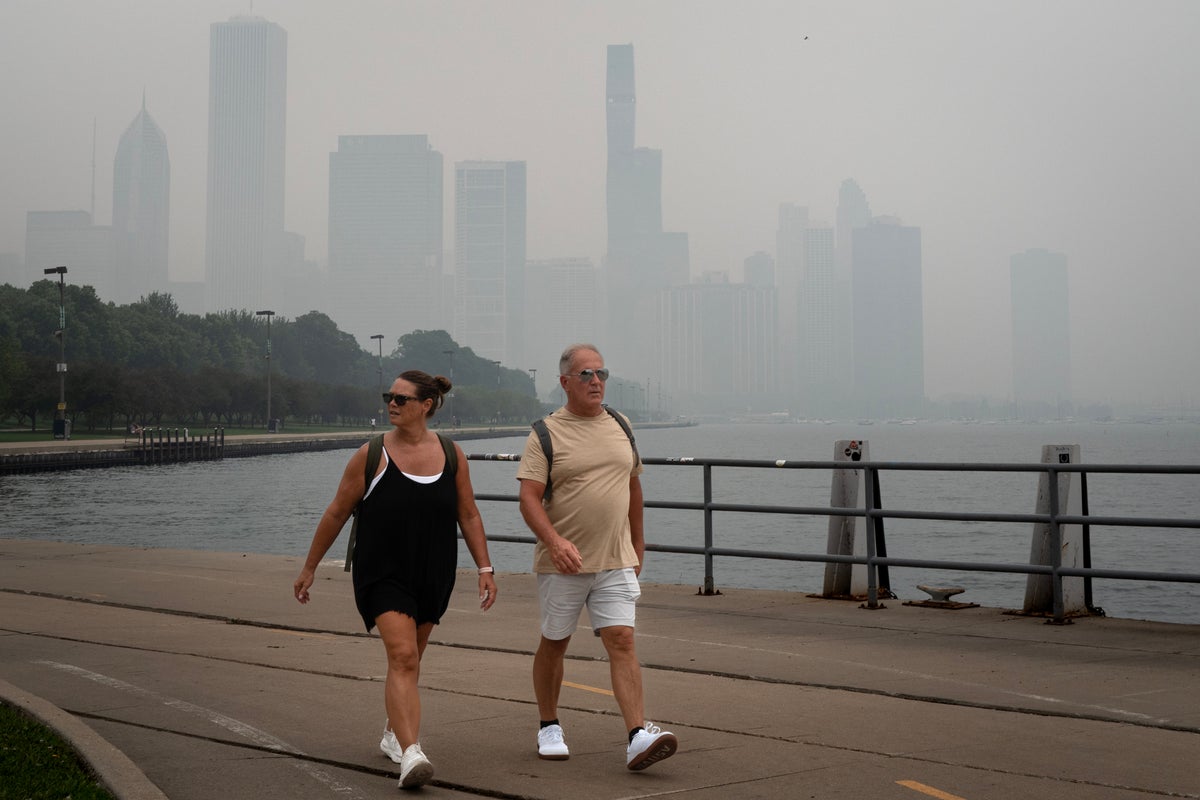
Every summer, mainstream news outlets roll out the exact same play: a bright purple air quality map, a dramatic play-by-play comparing today’s particulate count to last Tuesday’s, and a list of generic warnings telling you to stay inside.
It is useless theater.
Tracking whether today's smoke plume is ten AQI points higher or lower than last week’s haze misses the entire point. It treats a systemic forestry and public health issue like an unpreventable rainstorm. We are trained to stare at weather radars, wring our hands over Canadian winds, and treat wildfire smoke as a recurring seasonal anomaly we just have to endure.
That framing is fundamentally broken.
The Media’s Obsession With Incrementality
When news outlets analyze whether this week's smoke overlay is slightly worse than last week's, they are feeding a cycle of passive panic. They turn a public health crisis into a spectator sport. You check the index, groan, post a photo of a hazy skyline, and buy another disposable mask.
Comparing two distinct weeks of smoke drift is irrelevant to your actual health outcomes. Particulate matter does not care about week-over-week analytical trends. PM2.5—particles smaller than 2.5 micrometers—enters your lungs and bloodstream regardless of whether the air index is 160 or 190.
I have spent years looking at environmental policy data and public infrastructure responses. The reality is simple: obsessing over short-term meteorological tracking distracts the public from demanding actual structural prep.
The Real Crisis Is Inside Your House
The mainstream narrative tells you to stay indoors. What it fails to mention is that most American homes have terrible filtration systems that let outdoor air cycle right through.
Sitting in a living room with an outdated furnace filter while Canadian forests burn does not protect your lungs. It merely tricks you into feeling safe.
If you actually want to protect your health during a smoke wave, stop refreshing weather apps and audit your living space:
- Ditch standard fiberglass air filters. Standard MERV 4 filters exist only to protect your HVAC equipment from dust, not your lungs from fine smoke particles. You need MERV 13 or higher.
- Stop relying on basic cloth face coverings. Cloth masks do almost nothing against sub-micron particles. Without an N95 or better, sealed properly to your face, outdoor exposure remains significant.
- Run dedicated air purifiers with HEPA filtration continuously. Do not turn them off when the sky looks slightly clearer. Fine particulate matter lingers long after the orange tint fades.
Decades of Deforestation Policy Failure
We blame Canada's weather patterns for bringing smoke across the border, but the root cause lies in a century of terrible forestry management across North America.
For decades, government agencies enforced zero-tolerance fire suppression policies. Fire was treated as an absolute enemy rather than a natural mechanism of ecosystem regeneration. The result? Underbrush piled up year after year, turning forests into massive powder kegs.
Indigenous nations managed forests with controlled burns for thousands of years to clear this exact debris safely. Modern management ignored that wisdom in favor of aggressive suppression, leaving behind millions of acres choked with dry fuel. When an ignition occurs today—whether by lightning or human error—the resulting fires burn hotter, faster, and unmanageably larger than historical norms.
Focusing on the wind direction of the week covers up the core truth: these fires burn out of control because our forest management policies created the conditions for them to burn out of control.
The Flawed Questions People Keep Asking
People ask the wrong questions during every wildfire cycle.
"When will the air clear up?"
This is the wrong frame of mind. Fire seasons are longer, hotter, and more intense. Smoke waves are a predictable feature of North American summers for the foreseeable future. Planning for "clean air returning next week" is reactive coping. Designing your home, workplace, and routines for recurring poor air quality is practical preparation.
"Is it safe to go outside if the AQI is under 150?"
Air Quality Index thresholds are arbitrary political constructs designed to balance public warnings with economic activity. Chronic low-level exposure to PM2.5 carries long-term inflammation risks that standard health advisories rarely highlight. Exposure is cumulative.
Fix Your Air, Stop Watching The News
Checking the smoke forecast five times a day will not clean your lungs. Comparing this week’s skies to last week’s skies will not prevent the next megafire.
Buy proper filtration. Upgrade your living space. Demand that municipal and national leaders fund aggressive land clearing and controlled burns instead of emergency fire containment after the damage is done.
Put down the weather app and seal your windows.