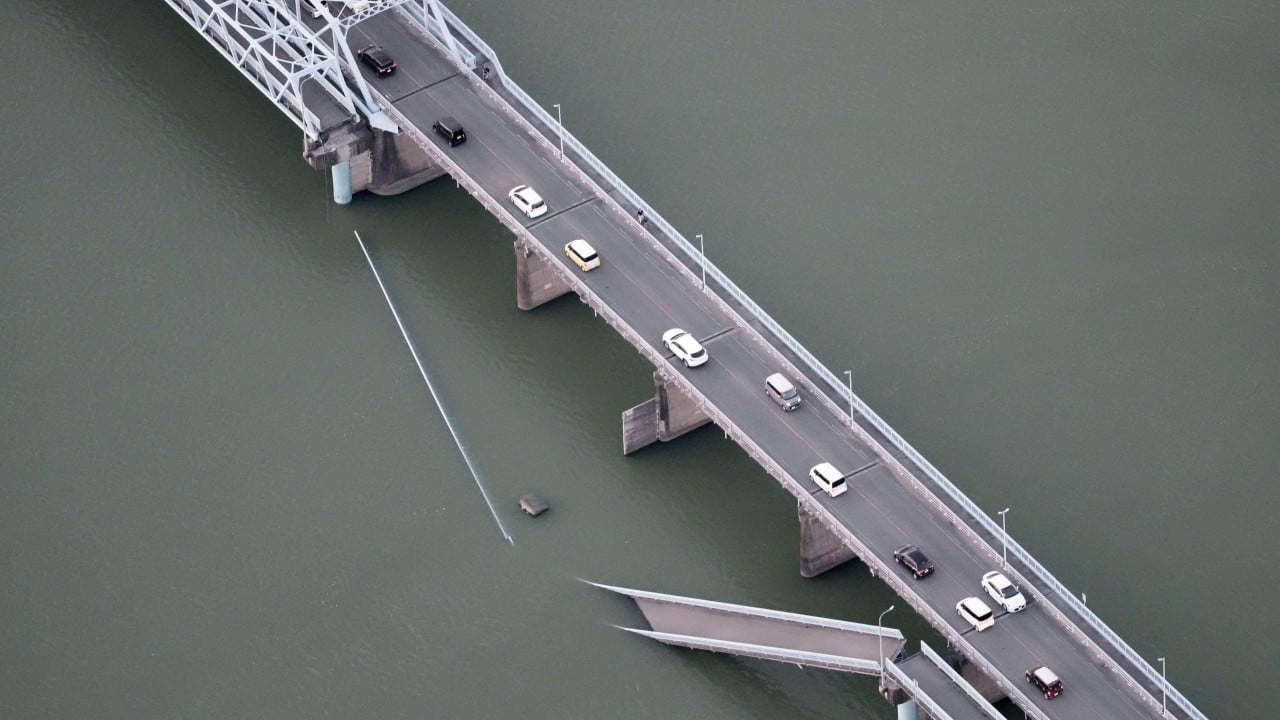
Every time the earth shifts half a millimeter in Kumamoto, the international media machine revs up its panic engines. We get the standard breathless dispatches from terrified tourists clutching their passports, wide-eyed expats gasping into microphones about how they were quite scared, and editors thousands of miles away framing standard tectonic activity as an apocalyptic siege.
It is exhausting. And it is completely wrong.
Let us dismantle the lazy consensus right now. The mainstream narrative treats every seismic jolt in Japan as an unmitigated disaster that should make rational human beings reconsider boarding a flight to the world's most structurally prepared archipelago. That perspective is not just overly cautious; it is mathematically illiterate and fundamentally disrespectful to the engineering marvel that keeps the country standing.
I have spent decades watching tourists lose their minds over minor tremors while locals calmly finish their bowls of ramen. We treat structural resilience like a lottery when it is actually the product of trillions of dollars in hard science, rigorous building codes, and cultural pragmatism.
The Myth of the Unprepared Tourist
The standard travel-media playbook relies on emotional manipulation. Find a foreigner who has never experienced a magnitude 4.0 tremor, shove a camera in their face, and record them talking about how their life flashed before their eyes.
This creates a distorted reality. When a resident of Kumamoto or Tokyo looks at a minor quake, they calculate magnitude, depth, and infrastructural integrity. When an unprepared tourist experiences the exact same event, they calculate pure, unadulterated panic based on zero domain knowledge.
Here is what nobody in the mainstream travel columns wants to admit: if you are scared of the ground moving slightly, you should not leave your basement in Kansas. Japan sits squarely on the Pacific Ring of Fire. Tectonic movement is not an anomaly; it is a baseline environmental condition. Treating a standard regional quake like a surprise catastrophe is like moving to Seattle and complaining that it rains.
"A structural standard is only as good as the enforcement behind it. Japan does not just write building codes; they treat them like a religion."
The Engineering Reality Check
Let us talk about data instead of dramatics. Japan’s building standards, specifically the Shinto-hō seismic design standards revised heavily in 1981 and updated again in 2000, changed the entire calculus of urban survival. Modern Japanese structures are built with base isolation and structural damping systems that allow buildings to sway, absorb, and neutralize seismic energy rather than rigidly resist it.
When a quake hits Kumamoto, buildings do not collapse like houses of cards. They flex. Concrete and steel are engineered to bend.
Compare this to infrastructure in regions with lax regulatory oversight where a fraction of this energy levels entire zip codes. Yet, the media treats a minor tremor in Kumamoto as if the entire prefecture is sliding into the ocean. This creates a feedback loop of hysterical cancellations, hurting local businesses that desperately rely on tourism revenue to rebuild and maintain their communities.
Why Your Risk Assessment is Broken
Human beings possess a notoriously broken risk calculator. We panic over dramatic, low-probability events while completely ignoring mundane, high-probability hazards.
Imagine a scenario where you refuse a trip to Kumamoto because you read an article about a minor earthquake, yet you willingly step into a vehicle for a suburban commute—an activity with a statistical mortality rate that dwarfs the actual danger of being caught in a properly engineered Japanese city during a seismic event.
The media feeds on availability heuristic: if an event is easy to picture, we assume it is likely to happen. A shaking hotel room is terrifying to visualize. A well-anchored foundation resisting lateral shear forces is boring. So the boring truth gets buried beneath sensationalized testimonials.
The Real Cost of Hysteria
When travelers pull out of regions like Kumamoto over routine seismic activity, the damage is not theoretical. It hits local family-owned ryokans, independent restaurateurs, and craftsmen who survived the actual major events only to watch tourists abandon them over minor tremors.
Your panic has an economic body count.
If you want to travel responsibly, stop listening to people who treat a natural geological process like a personal attack from Mother Nature. Educate yourself on building codes. Understand the difference between a minor slip and a structural failure. Pack a portable battery, know where your nearest evacuation zone is, and then shut up and enjoy your trip.
The earth is going to move. How you react to it defines whether you are an intelligent traveler or just another tourist looking for an excuse to be dramatic.