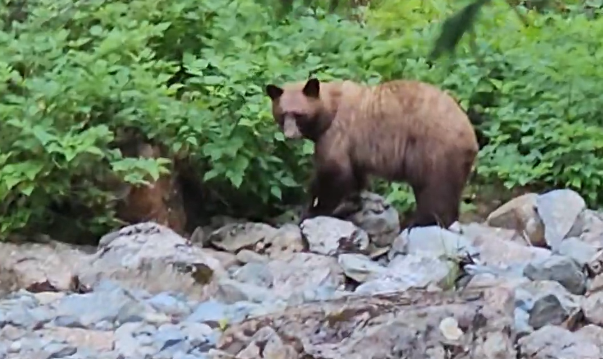
Every single summer, the panic returns on cue. A grainy photograph surfaces in a local Lions Bay Facebook group. A dark silhouette moves through a backyard fern bed or ambles across a rocky outcrop above the Sea-to-Sky Highway. Instantly, the digital town square erupts. Expert armchair biologists swear blind it has the shoulder hump of an interior grizzly. The municipal alarmists call for hazard warnings. The local media runs with the tired, lazy headline about experts being divided over whether a wandering bruin is a black bear or a coastal grizzly pushing south.
Stop. Breathe. Look at the data instead of your own shadow. In related updates, read about: The Structural Mechanics of Clemency Why Thirty Years Changes the Equation.
The entire debate is built on a fundamental misunderstanding of wildlife movement, coat genetics, and human municipal anxiety. The lazy consensus among headline-chasers is that an unusual sighting near Lions Bay represents an ecological anomaly, a rare transient grizzly encroaching on suburban garbage cans, or a mutant black bear sporting deceptive proportions.
The reality is far simpler and much more boring: you are staring at a standard coastal black bear, and your brain is tricking you because you desperately want every outdoor encounter to carry cinematic danger. Al Jazeera has analyzed this fascinating topic in extensive detail.
The Anatomy Of A Mass Delusion
Let us dismantle the core misconception driving these cyclical panic attacks. The primary panic trigger in any Lions Bay bear debate is the silhouette. People point to a rounded shoulder profile, a slightly dished face, or unusually long claws visible in a blurry smartphone zoom and shout grizzly.
I have spent years tracking wildlife management reports across British Columbia, consulting with provincial conservation officers who are quietly exhausted by this seasonal hysteria. Here is what the textbooks actually teach versus what weekend hikers choose to believe.
A coastal black bear (Ursus americanus) is not just a smaller version of a grizzly (Ursus arctos). More importantly, black bears exhibit an astonishing degree of color polymorphism. They are not always black. In British Columbia’s coastal ecosystems, you will find black bears that are blonde, cinnamon, chocolate brown, blue-grey glacier phases, and pale silver. Color is a terrible diagnostic tool for species identification. When a stressed, lanky, phase-shifted black bear walks through deep shadows on a steep slope, lighting tricks the human eye into inventing anatomical features that simply are not there.
The shoulder hump—the holy grail of amateur grizzly identifiers—is another optical trap. A black bear standing uphill with its head lowered or feeding aggressively on spring skunk cabbage will bunch its scapular muscles, creating a very convincing pseudo-hump. Combine that with a thick winter coat shedding in clumps during May, and you have all the ingredients for a mistaken identity crisis that keeps local newsrooms fed for a week.
Why The Experts Are Not Actually Divided
Media reports love to claim that experts are divided. They quote a retired biologist who urges caution, a local tracker who smells a grizzly, and a municipal councillor who wants to put up signs. That is not a scientific division; that is manufactured ambiguity designed for click-through rates.
Real carnivore biologists working with the Ministry of Environment are rarely divided. They rely on genetic evidence, hair snags, and telemetry data, not pixelated JPEGs uploaded from a deck in Lions Bay. The historical and contemporary range data for Ursus arctos along the immediate Howe Sound corridor does not support a sudden permanent resurgence of breeding grizzly populations in dense Lions Bay backyards. While grizzly bears do occasionally roam coastal mainland watersheds where salmon runs are robust, mistaking every lanky suburban black bear for a grizzly creates a false narrative of imminent danger that serves nobody.
When you scream grizzly every time a four-hundred-pound black bear waddles past a recycling bin, you obscure the actual problem. The problem is not an encroaching apex predator from the northern interior. The problem is human entitlement meeting lazy waste management.
The Real Threat Is Our Own Laziness
Let us address the Elephant in the valley, or rather, the bear in the green bin.
Every time a community focuses its energy on debating species taxonomy, it ignores the behavioral ecology that brought the animal into the neighborhood in the first place. Bears do not care about municipal boundaries. They do not read the Lions Bay zoning bylaws. They follow scent gradients.
A bear is an optimal foraging machine. It operates on a strict caloric cost-benefit analysis. If wandering through a residential neighborhood yields a three-thousand-calorie jackpot of unlatched organic waste, poorly secured fruit trees, and bird feeders, that bear will memorize the route. It does not matter if it has black bear DNA or grizzly DNA. A food-conditioned bear is a dead bear, regardless of its shoulder profile.
I have seen municipalities spend tens of thousands of dollars on public awareness campaigns, expert panels, and debate forums while leaving commercial-grade garbage accessible behind flimsy latches. It is a masterclass in treating symptoms while ignoring the disease.
Rewriting The Playbook For Living With Wildlife
If you actually care about wildlife safety in places like Lions Bay, discard the amateur taxonomy and focus on systemic behavioral changes. Here is the operational reality of coexisting with large carnivores in the Pacific Northwest.
- Secure the attractants first, argue species second. Assume every bear visiting your property is a food-conditioned threat to itself. Lock down the garbage until morning of pickup, strip fruit trees before the fruit ripens, and take down the hummingbird feeders.
- Stop relying on visual identification. Treat any large bear with healthy, cautious respect. Approaching an animal to figure out if it is a grizzly or a black bear for an Instagram story is a great way to earn a spot in local trauma statistics.
- Hold local government accountable for infrastructure. Municipalities that fail to mandate bear-resistant bins across entire neighborhoods are legally and morally complicit in every wildlife destruction order that follows.
The next time a fuzzy photo drops into your local feed and the panic button gets pressed, remember what is actually happening. You are watching a native black bear navigate a fragmented landscape that humans carved out of its ancestral territory. It is looking for an easy meal, not a debate on speciation.
Stop looking for grizzlies where there are only garbage cans. Secure your yard, respect the wildlife, and stop letting bad media framing turn a standard wildlife encounter into an existential crisis.