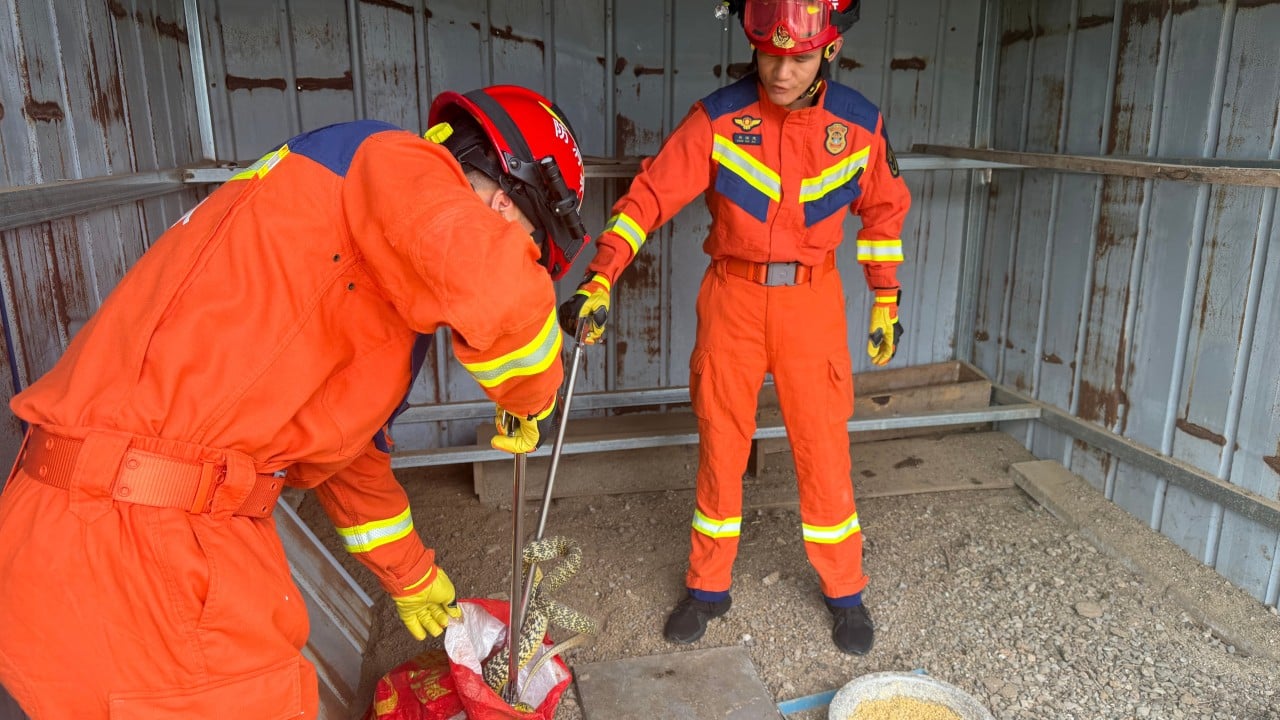
Every summer, like clockwork, the headlines hit the media ecosystem with the subtlety of a car crash.
"Snakes alive!"
"Warmer weather brings flurry of sightings!"
The narrative is always identical. Temperatures tick up in Beijing, a few residents spot a keelback or a racer in Chaoyang Park, and suddenly the media manufactures a narrative of an urban invasion. They paint a picture of a city under siege by slithering hordes, driven mad by climate change.
It is lazy journalism. It is scientifically illiterate. And it completely misses the point of urban ecology.
The mainstream press wants you to believe that a spike in snake sightings means a spike in the snake population. It sells clicks. It fuels the primal, deep-seated fear humans have harbored toward reptiles since the dawn of time. But if you actually analyze the data and understand herpetology, you realize that the "flurry of sightings" is not a snake problem at all.
It is a human density problem. And honestly? We should be hoping for more snakes, not fewer.
The Flawed Logic of the Summer Spike
Let’s dismantle the core argument of the panic-mongers. The premise is simple: the weather gets hot, snakes multiply, and they enter human spaces to terrorize the populace.
Here is why that logic is broken.
First, ectothermic animals—cold-blooded creatures like the Siberian pit viper (Gloeudius halys) or the red-backed ratsnake (Oraphis dione), both native to the Beijing area—do not suddenly create new populations because the calendar turned to June. Their metabolic rates are tied to external temperatures. During the freezing Beijing winters, they brumate. They hide in rock crevices, under concrete foundations, and deep in the soil of the Olympic Forest Park.
When the ground warms up, they move. They do not move to attack humans; they move to thermoregulate and hunt.
Second, the "flurry" of sightings is a statistical illusion caused by human behavior, not reptile behavior. Look at the data of when these sightings occur. They peak on warm weekend afternoons and early evenings. Why? Because that is exactly when millions of Beijing residents leave their high-rises to crowd into Liangma River banks, Xiangshan Park, and the city’s green belts.
You do not have more snakes. You have more eyeballs in the places where snakes live.
Imagine a scenario where we placed thousands of motion-activated cameras in every dark alleyway of Beijing. We would see millions of rats. Yet, we do not write breathless articles about a "flurry of rodent sightings" every time someone sees a rat near a dumpster at 2:00 AM. We accept it as background noise. The moment a non-venomous elapid or colubrid wanders near a jogging path, however, it becomes front-page news.
The Brutal Ecology of Beijing’s Concrete Jungle
I have spent years tracking how wildlife adapts to rapid urbanization. I have seen municipal governments spend fortunes trying to eradicate species that were actually keeping their cities habitable. Beijing is no exception.
The city's rapid expansion over the past few decades replaced wetlands and shrublands with concrete and manicured lawns. But nature is highly opportunistic. When you build a massive city, you create a perfect environment for rodents. The sheer volume of food waste generated in a metropolis like Beijing supports a massive population of rats and mice.
Do you know what keeps those rodent populations from triggering actual public health crises? Apex urban predators. And in Beijing, since we long ago drove out the mammalian predators, snakes are doing the heavy lifting.
- The Red-Backed Ratsnake: An absolute machine when it comes to rodent control. A single adult can consume dozens of mice a year.
- The Short-Tailed Pit Viper: While venomous, it stays deep in the mountainous areas like Huairou and Miyun, rarely interacting with humans unless stepped on by an off-trail hiker.
- The King Ratsnake: Locally known as wubaishu, this massive, non-venomous snake actively hunts other snakes, keeping even the venomous populations in check.
When journalists frame the presence of these animals as a crisis, they are advocating for the destruction of Beijing’s natural pest control system. If you wipe out the snakes, you inherit the rats. Choose your poison.
Dismantling the Panic
Let’s address the questions that inevitably flood community forums the moment these articles drop—questions that local authorities usually answer with generic, useless platitudes.
Are Beijing’s snakes getting more aggressive?
No. This is a classic case of anthropomorphizing animal behavior. A snake hiss or defensive posture is not an act of aggression; it is a plea to be left alone. A snake looks at a 180-pound human the same way a human looks at a thirty-story building. They know they cannot eat you. They know you can crush them. Their entire survival strategy relies on either staying invisible or scaring you away so they can escape.
Should the city implement removal programs in public parks?
Absolutely not. Eradication programs are an expensive, short-sighted waste of taxpayer money. Every time a city tries to systematically remove a native predator, the ecological vacuum is immediately filled by something worse. Removing snakes from a park like Chaoyang or Temple of Heaven would trigger an immediate explosion in the vole and rat populations, leading to damaged infrastructure and a higher risk of tick-borne diseases.
What is the actual risk of dying from a snake bite in Beijing?
Statistically? Effectively zero. The vast majority of snakes encountered in urban Beijing are completely harmless colubrids. Even in the mountainous districts where vipers exist, hospital networks across the capital maintain robust stocks of antivenom. You are infinitely more likely to be hospitalized by a reckless e-bike driver on a Beijing sidewalk than by a snake bite in a park.
The Cost of Eco-Illiteracy
The real danger here is not the wildlife. It is the profound ecological illiteracy peddled by mainstream outlets. By treating the natural movement of native species as an anomaly or a threat, we create a population that panics at the sight of a leaf moving.
We see property management companies pouring toxic chemical repellents around apartment complexes—repellents that do absolutely nothing to deter snakes but successfully poison local bird populations and runoff water. We see citizens killing harmless, beneficial animals out of misplaced fear.
True conservation and urban management require a shift in perspective. We need to stop asking how we can rid our cities of nature and start asking how we can tolerate the remnants of the ecosystems we paved over.
The next time you see a headline screaming about the snake invasion of Beijing, ignore the hype. The snakes aren't invading. They were here first, they are working for free, and they are the only things standing between your neat urban paradise and a biblical plague of rodents.
Leave them alone and let them do their job.