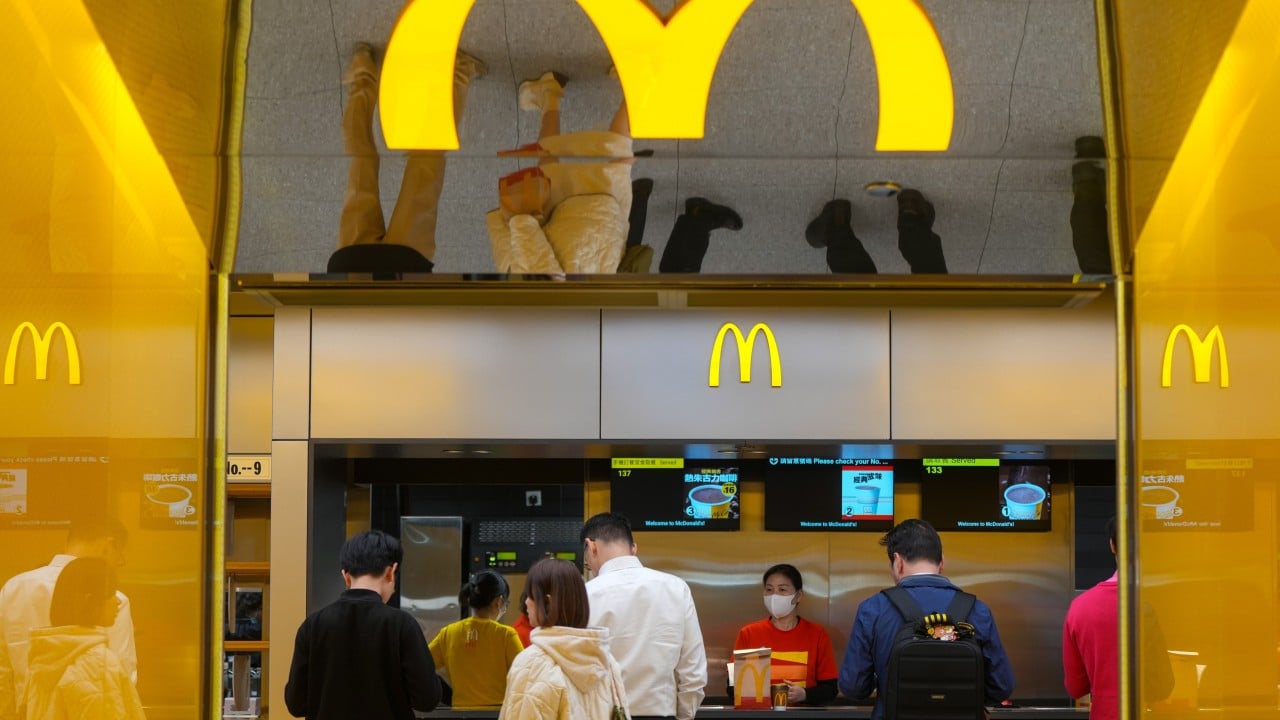
A mainland tourist wins a cash and prize bundle worth ten thousand Hong Kong dollars. Instead of performing the mandated ritual of gratitude for the cameras, the visitor looks at the inclusion of fast-food vouchers and delivers a brutally honest public verdict: "Who wants McDonald's?"
The mainstream media covered this moment like a quirky local anecdote. Commentators chuckled about ungrateful guests, regional friction, or the eccentricities of modern social media culture. Editorial boards treated it as a minor PR hiccup for a city desperately trying to claw back its pre-pandemic tourism glory.
They are completely wrong.
That single, dismissive sentence is not a story about bad manners. It is an indictment of institutional tone-deafness. It exposes a tourism strategy built by committee members who think they are running a campaign in 2012, completely oblivious to the fact that the consumer base they depend on has evolved past them by light-years.
I have watched destination marketing organizations burn tens of millions of dollars on bureaucratic spray-and-pray campaigns that belong in a faded travel agency brochure. When a city tries to buy back its cultural relevance with fast-food coupons and petty lucky draws, it deserves every ounce of public ridicule it gets.
To understand why that tourist’s reaction was entirely rational, we have to dismantle the lazy consensus currently poisoning how industry analysts talk about Hong Kong’s economic pivot.
The Ghost of 2014
The fundamental error underlying Hong Kong’s current tourism playbook is a stubborn refusal to accept that the mainland Chinese traveler changed forever while the border was shut.
For two decades, the formula was simple. You packed tour buses with shoppers from second- and third-tier cities, brought them to Tsim Sha Tsui or Causeway Bay, and watched them clear out pharmacies, luxury boutiques, and cosmetic counters. Volume was the metric of success. The economic model treated visitors as passive wallets with legs, eager to buy imported goods that carried massive tariffs back home.
That model is dead. It is not resting, it is not recovering, and it is never coming back.
Today's urban traveler from Guangzhou, Shenzhen, Shanghai, or Chengdu does not need to cross a border to buy luxury handbags or imported skincare. They have Hainan duty-free islands offering cut-rate prices, domestic ecommerce infrastructure that delivers luxury goods to their doors in hours, and world-class local retail districts in their own backyards that put traditional Hong Kong shopping malls to shame. Shenzhen’s MixC and Shanghai’s Xintiandi offer spatial design, dining integration, and experiential retail that make standard Hong Kong commercial property look like a suburban office park from the late nineties.
Yet, tourism boards keep rolling out the same tired incentive structures: lucky draws, promotional discount codes for multinational fast-food chains, and generic retail vouchers. Handing a middle-class urbanite from a hyper-modern mainland tech hub a voucher for a Big Mac is not an incentive. It is an insult disguised as hospitality.
The Economic Reality of the Ten Thousand Dollar Prize
Let us look at the math that tourism bureaucrats refuse to compute.
A ten thousand dollar prize package sounds impressive in a press release. But when you break it down into component parts—hotel discounts with strings attached, airline ticket rebates with blackout dates, and corporate-sponsored coupons for mass-market consumer goods—the actual utility drops precipitously.
Modern travelers value time and friction reduction above all else. If a prize package forces you to jump through administrative hoops, navigate restrictive terms and conditions, and redeem items at corporate chains you can find in any airport terminal on the planet, the cognitive load outweighs the cash value.
When the tourist asked "Who wants McDonald's?", they were making an economic calculation. They were pointing out that corporate tie-ins with global fast-food conglomerates add zero destination value. If I fly to a global culinary capital—a city historically famed for cha chaan tengs, Michelin-rated street food, and Cantonese gastronomy—my reward for winning a city-sponsored prize should not be a discounted burger patty mass-produced in a centralized kitchen.
It is a profound failure of imagination. Destination branding is not about subsidizing multinational corporations that already have multi-billion-dollar marketing budgets. It is about channeling capital directly into the independent, localized micro-economies that give a place its soul.
The Myth of the Unfriendly Host
Whenever tourism numbers stutter in Hong Kong, lazy analysts default to a tired narrative: poor service attitudes, linguistic friction, and cultural friction between locals and visitors.
This is a convenient scapegoat. It allows tourism executives to blame frontline service staff and cultural attitudes rather than examining their own structural failures.
The friction people experience in Hong Kong right now is not about rudeness. It is about structural anxiety. When commercial rents are among the highest on the planet, when independent shopkeepers are squeezed out by chain pharmacies and jewelry stores selling identical gold chains, and when the entire urban landscape feels like a high-stakes real estate extraction machine, the human element suffers.
Tourists do not feel unwelcome because a waiter did not smile wide enough. They feel underwhelmed because the city has sanded down its own edges in pursuit of high-density retail uniformity. When every high street features the exact same sequence of cosmetic shops, luxury watch boutiques, and chain bakeries, the city ceases to be a destination and becomes a giant open-air shopping mall.
And nobody travels across a border to visit a mall they could replicate in a suburban parking lot outside Beijing.
What Actually Works
If Hong Kong wants to stop embarrassing itself with tone-deaf lucky draws and corporate fast-food partnerships, it needs to execute a brutal, unsparing operational reset.
First, kill the corporate sponsorships. No tourist comes to Hong Kong for a discount on a global fast-food chain. Direct every dollar of marketing subsidy into neighborhood-level grants for independent creative spaces, indie music venues, historic preservation projects, and traditional craft artisans who are currently being priced out of existence by landlords.
Second, stop measuring success by raw headcounts. Pumping millions of low-yield transit passengers through immigration checkpoints to buy cheap bottled water at convenience stores does not build a sustainable economy; it strains public infrastructure and creates local resentment. The metric must shift from headcounts to dwell time and local economic capture. How many days are visitors staying? How deeply are they penetrating neighborhood economies outside the tourist traps of Tsim Sha Tsui and Central?
Third, embrace radical authenticity. The most vibrant parts of contemporary Hong Kong culture—its indie zine publishers, underground coffee culture, working-class maritime heritage, and neighborhood wet markets—are treated by official tourism bodies as embarrassing blemishes to be swept under the carpet in favor of sanitized, sterile mega-events.
When you whitewash a city to make it appealing to an imaginary corporate sponsor, you strip away the exact friction and character that made people want to visit in the first place.
The Bottom Line
The tourist who mocked the fast-food voucher did us all a favor. They punctured the polite fiction that bureaucratic tourism campaigns are working.
Until the people running these initiatives stop treating visitors like credulous peasants who can be bought off with corporate coupons, and until they stop treating their own city like a glorified tax-free warehouse, these embarrassing viral moments will continue.
Stop handing out corporate fast-food vouchers. Stop celebrating empty headcounts. Stop trying to revive a dead retail model from twenty years ago.
Give people a city worth exploring, or get out of the way of those who actually know how to build one.