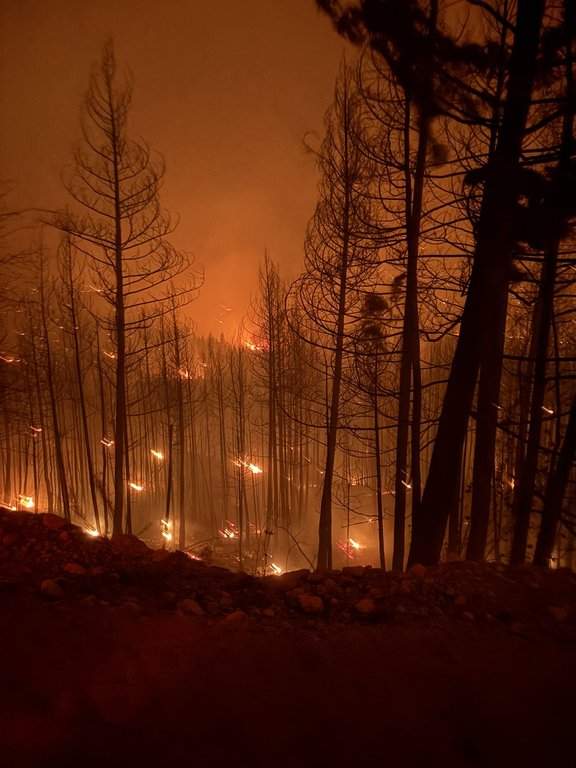
Every single summer, the script plays out on our screens with clockwork predictability. Officials stand at podiums, update the casualty counts of timber, furrow their brows, and report that another hundred fires are chewing through British Columbia. The public gasps. The politicians promise more water bombers, more heavy equipment, and a total war footing against nature.
It is a complete farce.
The lazy consensus in every newsroom and government briefing room is that every spark is an emergency and every acre burned represents a failure of human management. That mentality is not just wrong. It is actively fueling the mega-fires we dread.
I have spent decades watching agencies throw billions of dollars at total suppression, treating the symptom while starving the underlying mechanics of a healthy ecosystem. We are managing forests the way a bad accountant manages cash flow—hoarding every penny today to guarantee bankruptcy tomorrow.
The Mathematical Trap of Total Suppression
Let us look at the fundamental mechanic of forest ecology that the nightly news ignores. Forests are not static museums. They are dynamic, volatile biological systems designed by evolution to burn.
When you suppress every low-intensity ground fire for a century, you do not prevent fire. You merely defer it. You create an uninterrupted canopy of fuel, a dense mattress of deadfall, pine needles, and overcrowded underbrush.
Imagine a scenario where a bank keeps all its doors locked, hoards every piece of cash inside, and refuses to let minor debts settle naturally. Eventually, the vault pressure builds to a point where a tiny spark blows the entire building to atoms. That is modern fire suppression.
When B.C. reports that over one hundred fires are burning, the knee-jerk reaction is to deploy every resource to crush them all simultaneously. This feels proactive. It satisfies the political imperative to look busy. But every fire you put out today with absolute prejudice is a tax penalty you are doubling for the next generation. You are trading a manageable, cleansing surface fire today for a raging, crown-devouring firestorm ten years from now that vaporizes soil nutrients and sterilizes watersheds.
Why the Drought Narrative Misses the Mark
The standard media framing always points to drought as the primary villain. It is hot. It is dry. Therefore, the fires happen.
Drought is a variable, not the root cause. You can control neither the jet stream nor the summer heatwave. What you can control is the fuel load. Focusing entirely on weather patterns is a convenient deflection mechanism for decades of atrocious forestry policy.
When a system is starved of its natural disturbance cycle, even a normal dry spell turns catastrophic because the landscape is carrying three times the biomass it evolved to handle. We have engineered a tinderbox and then act shocked when someone strikes a match.
The hard truth nobody in government wants to admit is that smoke in the summer is the price of admission for living near a boreal forest. Clean air policies that demand absolute zero smoke during fire season are ecologically illiterate. They force agencies into an unwinnable war against physics.
The Economics of Letting It Burn
Let us talk about money, because that is usually what forces institutional stupidity. Billions of dollars vanish into the ether every fire season on retardant, overtime pay, charter aircraft, and emergency infrastructure protection.
Much of that capital is spent protecting remote, low-value timber stands or vacation properties built in high-risk zones without defensible space. We are subsidizing high-risk real estate choices with public tax dollars, creating a moral hazard where homeowners build luxury cabins in the middle of a literal matchstick ecosystem and expect the taxpayer to bail them out with an armada of helicopters.
A rational economic strategy would triage landscapes ruthlessly.
- Protect critical human infrastructure.
- Let natural fires burn in backcountry zones where they act as ecological reset buttons.
- Stop treating every acre of scorched earth as a regional tragedy.
Instead, we spend millions to save a stand of trees today, only for those exact same trees to burn hotter and more destructively in a decade because the underlying density was never addressed.
Controlled Burns Versus Political Cowards
The alternative to total suppression is prescribed burning and managed wildfire allowance. Foresters know this. Scientists have published thousands of papers on this. The science is not contested.
The barrier is entirely political.
If a forestry agency sets a prescribed burn to clear out underbrush, and that burn accidentally escapes containment—as happened with the infamous prescribed burn failures in other jurisdictions—the public outcry is instantaneous. Heads roll. Careers end. Politicians panic.
It is safer for a bureaucrat to let a hundred accidental fires rage out of control because "nature caused it" than it is to intentionally light one fire that gets away from them. The system incentivizes catastrophic inaction over calculated risk.
We punish the people who try to fix the system proactively and reward the people who manage disasters reactively. Until we flip those incentives upside down, nothing changes.
The Uncomfortable Reality of Coexistence
Living with fire requires a cultural shift that modern society is deeply unequipped to handle. We want zero risk, zero smoke, and total control over natural processes that have operated for millions of years before humans invented municipal fire departments.
You cannot fireproof a continent. You can only choose how the fire happens.
You can have frequent, low-intensity fires that keep the forest floor clean, keep large trees alive, and pump nutrients back into the soil. Or you can have infrequent, apocalyptic mega-fires that turn entire watersheds into moonscapes, choke cities in toxic haze for months, and bankrupt emergency funds.
B.C. will keep counting its fires every summer. Officials will keep looking grave at press conferences. They will ask for more planes, more personnel, and more emergency declarations, all while ignoring the basic reality that their own policies are keeping the furnace stoked.
Stop trying to conquer the ecosystem. Get out of the way of the flames, clear the fuel while the weather allows, and accept that nature always collects its debts in the end.


