The media is suffering from a collective delusion that federal law enforcement can be fixed with a retail transaction.
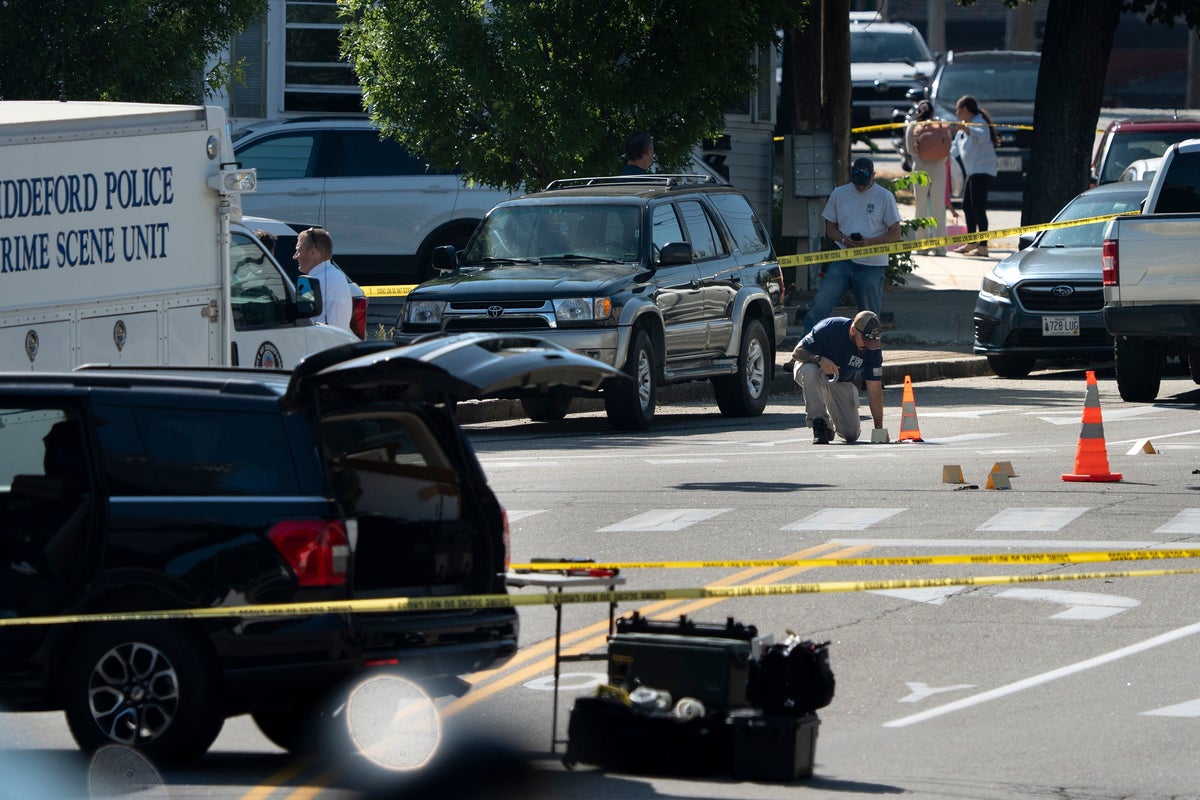
When news broke that ICE agents involved in shootings in Maine and Texas weren’t wearing body-worn cameras, the outrage machine fired up on schedule. The narrative was predictably simplistic: Congress handed the Department of Homeland Security $20 million to purchase body cameras, yet agents are still operating in the dark. The lazy consensus screams that this is a case of deliberate foot-dragging, a blatant cover-up, or sheer bureaucratic incompetence.
It is none of those things.
The belief that you can simply write a check for $20 million, buy a few thousand cameras off the shelf, strap them to tactical vests, and instantly achieve "accountability" is a fantasy. It ignores the brutal physical realities of high-risk federal operations, the nightmare of federal IT procurement, and the legal minefield of federal data management.
I have spent years analyzing federal law enforcement operations and procurement pipelines. I have watched agencies blow tens of millions of dollars trying to force consumer-grade tech solutions into high-threat tactical environments, only to watch those systems fail when the pressure mounts.
The $20 million congress allocated is not a solution. It is a rounding error that barely covers the cost of planning the meetings to discuss the deployment.
The $20 Million Illusion
To understand why ICE agents are not wearing cameras, you have to look at the math. The public looks at a $20 million budget and thinks of the price of an individual camera—roughly $800 to $1,000 for a commercial, law-enforcement-grade unit. By that logic, $20 million should buy 20,000 cameras.
This is a fundamental misunderstanding of government technology procurement.
The camera itself is the cheapest part of the ecosystem. The real expense is the tail.
+-------------------------------------------------------------+
|               THE TRUE COST OF FEDERAL BODY CAMS             |
+-------------------------------------------------------------+
|  [ Hardware ]  ->  10% of total budget                      |
|  [ Cloud Storage & GovCloud Servers ] -> 40% of total budget |
|  [ FOIA Redaction & Legal Compliance ] -> 30% of total budget|
|  [ Program Management & Union Negotiations ] -> 20% of budget|
+-------------------------------------------------------------+
When a federal agency deploys a body camera, they are not just buying hardware. They are building a highly secure, CJIS-compliant, end-to-end data ingestion pipeline. Every second of high-definition footage recorded by an agent must be uploaded, cataloged, encrypted, and stored in secure government cloud environments (like AWS GovCloud) for years.
If an agent records an eight-hour shift, that creates gigabytes of data. Multiply that by thousands of agents, and you are talking about petabytes of highly sensitive, restricted data every single month. The storage fees alone will eat a $20 million budget alive before the first camera even leaves its box.
The Undercover Threat and the Redaction Nightmare
Local beat cops patrol public streets. They interact with citizens in plain view, and their footage is relatively straightforward to manage.
ICE—particularly its Homeland Security Investigations (HSI) division—operates in an entirely different universe.
HSI is a federal investigative agency. Their agents are targeting transnational criminal organizations, human trafficking rings, drug cartels, and child exploitation networks. This work relies heavily on:
- Confidential Informants (CIs) whose lives depend on absolute anonymity.
- Undercover agents embedding deep within violent criminal enterprises.
- Cooperative witnesses inside active, ongoing operations.
What happens when a tactical team busts into a stash house wearing active body cameras? They record the faces of informants, the layout of safe houses, the identities of undercover assets, and proprietary tactical methods.
Under the Freedom of Information Act (FOIA), that footage is subject to public release requests. The administrative burden of manually redacting every frame of video to protect classified assets, undercover identities, and innocent bystanders is staggering.
A single minute of tactical footage can take hours of manual, frame-by-frame editing by highly paid legal specialists to ensure a cartel does not identify the informant who gave up the warehouse. If a federal agency slips up and releases unredacted footage, people die.
The infrastructure to manage this level of security does not exist for $20 million. It requires dedicated legal teams, specialized software, and rigorous security clearances.
Tactical Failures in High-Stress Environments
The public wants to believe that body cameras are passive observers that always work. In the field, technology is a liability.
Imagine a high-risk warrant execution in a cramped, dark trailer in rural Texas. The Special Response Team (SRT) is moving fast. They are wearing heavy body armor, carrying entry tools, and managing high-stress physical confrontations.
In these environments, body cameras routinely fail in three distinct ways:
1. The Obstructed View
Tactical vests are cluttered with gear—mag pouches, radios, tourniquets, and hydration tubes. A body camera mounted on the chest is frequently blocked by an agent’s rifle sling, their hands when they raise a weapon, or the tactical gear shifts during a physical struggle. The result is often hours of useless footage of a nylon strap or black fabric.
2. The Physical Vulnerability
Under pressure, tech breaks. Cameras get ripped off mounts during physical struggles. Batteries drain rapidly in extreme cold or heat. Lenses get covered in dirt, mud, or blood.
3. The Cognitive Load
We expect agents in life-or-death situations to remember to tap their chests to activate a camera. In a fraction-of-a-second threat scenario, an agent's brain is processing survival, not administrative compliance. Automated activation triggers (like drawing a sidearm) exist, but integrating those sensors across thousands of disparate duty weapons and holsters is a massive, ongoing engineering challenge, not an instant upgrade.
The Hidden Policy War
The biggest bottleneck to deployment is not physical hardware; it is federal labor relations and administrative policy.
Every federal agency must negotiate the deployment of new monitoring technology with its employee unions. For ICE, this means bargaining with the National ICE Council and other labor representatives. These negotiations are highly adversarial and grind on for years.
   [Congress Appropriates Funds]
                 │
                 ▼
     [Drafting Agency Policy]
                 │
                 ▼
    [Union Labor Negotiations] <─── (This is where progress dies)
                 │
                 ▼
  [Pilot Program Deployment]
                 │
                 ▼
 [Full-Scale Fleet Integration]
Unions argue—often successfully—that body camera footage can be weaponized by management for selective enforcement of minor policy infractions, or used unfairly in disciplinary hearings without proper context. They demand strict guardrails on when cameras are turned on, who has access to the footage, and how that footage can be used in internal investigations.
Until those collective bargaining agreements are signed, sealed, and delivered, the cameras sit in warehouses.
The Wrong Solution to a Real Problem
The outrage over the lack of body cameras in the Maine and Texas shootings is a classic example of treating a symptom while ignoring the disease.
We have been conditioned to believe that if we cannot watch a tragedy on high-definition video, justice cannot be served. This has turned body cameras into an expensive form of public relations theater. They give the public a sense of security while doing very little to change the systemic issues within federal law enforcement.
If the goal is reducing the frequency of officer-involved shootings and ensuring accountability, there are far more effective ways to deploy resources:
- Drastically improved de-escalation and tactical training. Federal tactical teams need realistic, ongoing scenario training that emphasizes containment and negotiation over immediate entry.
- Independent, external investigation protocols. Instead of relying on video footage to prove what happened, establish automatic, independent federal civilian oversight boards that investigate every single discharge of a firearm by a federal agent.
- Clearer, stricter federal use-of-force policies. Standardize when and how agents are allowed to deploy lethal force, removing the gray areas that lead to tragic outcomes.
Throwing money at body cameras is the easy way out for politicians. It allows them to point to a line item in a budget and claim they are fixing the problem, all while ignoring the hard, unglamorous work of policy reform, labor negotiations, and structural oversight.
Stop asking why the agents weren't wearing cameras. Start asking why we are still trying to solve complex institutional failures with a tech-support ticket.