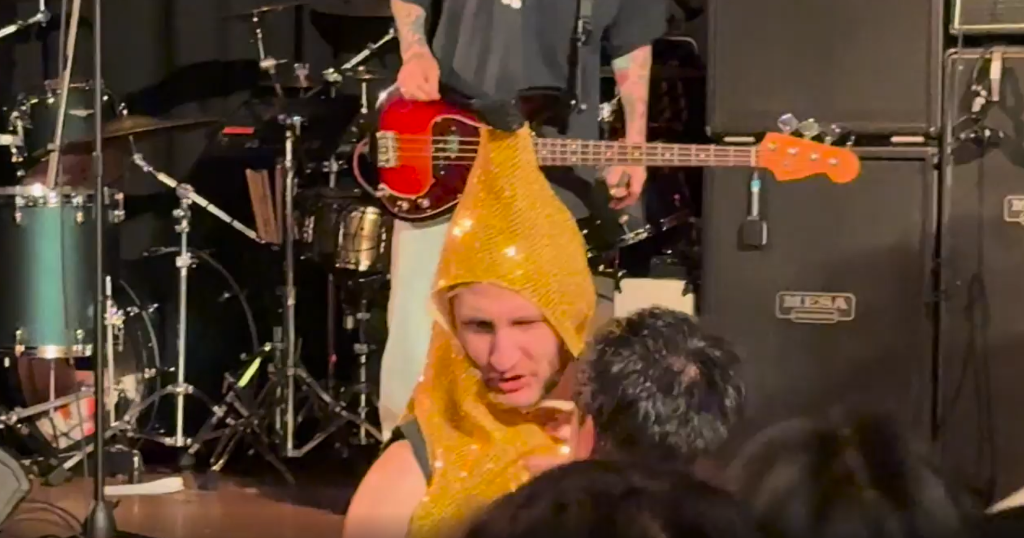
The Toronto indie music community is currently throwing a collective tantrum over what they call the Banana Man situation. For the uninitiated, the outrage centers on a algorithmic anomaly—or a highly aggressive guerrilla marketing campaign—where an obscure, novelty track featuring a guy singing about bananas keeps invading Spotify autoplay queues across Canada. Indie artists are furious. They claim this absurdity is stealing their listeners, cannibalizing their streams, and making a mockery of curation.
They are entirely wrong.
The outrage surrounding the Banana Man phenomenon is a classic case of projection. Local musicians and indie labels are blaming a single, goofy algorithm quirk for a systemic failure of their own making. The lazy consensus says that Spotify is broken and that the tech monopoly is actively suppressing organic talent in favor of brain-dead noise. The truth is much colder. The Banana Man isn’t stealing your audience. Your audience was never yours to begin with, because you built your entire career on rented land.
The Myth of the Stolen Stream
Let’s dismantle the math that indie artists are crying about. The prevailing argument is that every time the algorithm plays a novelty track via autoplay, a local indie pop band loses a fraction of a cent and a potential lifelong fan.
This premise is fundamentally flawed. Autoplay is the digital equivalent of Muzak in a dentist's office. It is passive consumption. When a user finishes listening to an album and lets Spotify spin into auto-generated recommendations, their engagement level drops significantly. They are washing dishes. They are driving. They are typing an email.
I have spent fifteen years looking at backend streaming analytics for mid-tier labels. Do you know what happens when an independent artist gets lucky and lands on a massive algorithmic autoplay loop? Their monthly listeners skyrocket by 400%. Do you know what happens to their merch sales, ticket sales, and direct fan engagement? Absolutely nothing.
Passive ears do not buy vinyl. A stream generated because a user was too lazy to reach for their phone to skip a track is economically worthless. The Banana Man isn’t bankrupting Toronto indie rock. The scene's reliance on passive tech curation to build a fanbase is what's bankrupting it.
The Algorithmic Safe Space is a Lie
Independent musicians treat streaming platforms like a public utility that owes them an audience. They believe that if they make good music, tag it correctly, and play the local circuit, the digital ecosystem should naturally pipeline listeners to their catalog.
Consider how the Spotify recommendation engine actually operates. It is an optimization matrix designed to keep users on the application for as long as possible to serve ads or justify a premium subscription. It relies on collaborative filtering and acoustic analysis. If an absurd novelty track has a ridiculously high retention rate—even if that retention is driven by sheer confusion or meme culture—the machine will feed it. The machine does not possess artistic taste. It does not care about the historic preservation of the Queen West music scene.
[User Finishes Album] ➔ [Algorithm Chooses Next Track]
                             │
            ┌────────────────┴────────────────┐
            ▼                                 ▼
   [High-Retention Meme Track]      [Low-Retention Indie Track]
   (Result: User stays on app)     (Result: User closes app)
            │                                 │
            ▼                                 ▼
    ALGORITHM WINS                   ALGORITHM LOSES
When you rely entirely on algorithmic discovery, you are playing a rigged game against entities that optimize for dopamine, not art. If a guy singing about fruit can out-optimize your deeply personal, three-year-in-the-making indie anthem, the problem isn't the platform. The problem is that your music failed to create a distinct enough cultural imprint to make the user actively search for your name.
Stop Trying to Fix the Feed
The most common question asked in local industry panels right now is some variation of: "How can independent artists combat algorithmic hijacking?"
The question itself is broken. You don't combat it. You ignore it.
Every hour an artist spends optimizing their metadata, pitching to editorial playlists that change every Friday, or complaining on social media about platform bias is an hour stolen from actual career building.
Look at the artists who survived the transition from physical media to the streaming era without losing their shirts. They did not do it by maintaining a pristine algorithmic presence. They did it by owning their distribution channels.
- Direct-to-Consumer Communication: If you have 50,000 monthly listeners on a streaming service, you have zero fans. You have data points belonging to a tech conglomerate. If you have 2,000 people on a private email list who will open a message from you on a Tuesday night, you have a career.
- Physical Vulnerability: The modern independent circuit has abandoned the hard work of physical community building in favor of digital convenience. The Toronto scene used to be defined by physical spaces—the venues, the zines, the record shops. When you digitize the entire subculture, you shouldn't be surprised when a digital entity colonizes it.
- Aggressive Friction: Good art creates friction. Algorithmic music is designed to slide smoothly into the background. If your music sounds like it belongs on a "Chilled Indie Vibes" playlist, you are creating background noise. You are competing directly with the Banana Man, and he is better at being background noise than you are.
The Cost of True Independence
Admitting this reality is painful because it requires actual work. It means accepting that the convenience of digital distribution comes at the cost of creative sovereignty. The contrarian approach to surviving the current music industry landscape requires stepping backward to move forward.
It means refusing to distribute your music exclusively through major aggregators. It means putting your music behind paywalls, selling physical media first, and treating streaming platforms as a secondary promotional tool rather than the destination.
The downside to this approach is obvious: your vanity metrics will plummet. Your monthly listener count will drop to a number that looks embarrassing on a screenshot. Your friends in the industry will think you’ve given up.
But your bank account will tell a different story. One hundred loyalists paying ten dollars a month directly to a creator via a subscription or direct-sale platform generates more predictable, sustainable revenue than millions of passive, accidental streams.
The Toronto music scene doesn't have a Banana Man situation. It has a dependency situation. Stop looking at the feed. Shut down the dashboard. Pull your music out of the background noise matrix and force your audience to look you in the eye.