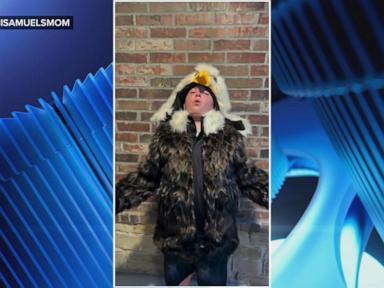
Every few months, the internet finds a kid who can imitate a red-winged blackbird or a barred owl and loses its collective mind. We treat a pre-teen hitting high-pitch vocal cord oscillations like they just solved room-temperature superconductivity. Headlines scream about viral sensations, morning talk shows hand out oversized coffee mugs, and millions of adults pat themselves on the back for supporting youth talent.
It is exhausting, shallow, and entirely misses the point of what human vocal physiology is actually doing.
I spent twenty years behind glass in recording studios, dissecting the acoustics of voice actors, Foley artists, and extreme vocalists. I have watched classically trained ornithologists listen to human copycats and shake their heads. When a twelve-year-old goes viral for mimicking one hundred bird calls, the public sees magic. I see a kid with flexible cartilage, a decent ear for pitch matching, and an algorithm that rewards novelty over precision.
The lazy consensus in every mainstream write-up of these viral clips is that this is an inexplicable gift, a natural anomaly of pure genius that cannot be taught. That is false. It is mechanics, repetition, and anatomical luck exploited by social media algorithms. Let us tear down the myth of the avian prodigy and look at the brutal acoustic reality.
The Anatomy Myth
People assume that reproducing animal sounds requires some rare genetic mutation of the vocal tract. It does not.
Human speech and animal vocalization share the same fundamental hardware: lungs, vocal folds, pharyngeal cavity, tongue, teeth, and lips. Birds do not even use vocal folds; they use a syrinx located at the tracheobronchial junction. A human mimicking a bird is not replicating the physical instrument of the animal. Instead, they are using acoustic trickery—filtering human breath through extreme resonance shifts to trick the human ear into hearing a frequency match.
When a kid makes a stellar chickadee call, they are manipulating formant frequencies. They are changing the shape of their oral cavity and the tension of their soft palate to mimic the specific harmonic overtones of the bird's whistle. It is essentially vocal gymnastics, akin to beatboxing or whistling through your teeth.
Treating this as a mystical occurrence rather than a mechanical skill does a disservice to everyone involved. It turns a disciplined physical practice into a freak show attraction. The kid gets five minutes of digital adoration, and the audience learns nothing about how sound actually works.
Why Viral Fame Ruins Potential
Imagine a scenario where a young athlete can throw a baseball at ninety miles per hour at age twelve. If you hand that kid a viral contract, put them on morning talk shows, and tell them they are already a master, you destroy their development. You create an ego bubble that insulates them from rigorous critique.
The same thing happens to acoustic mimics. Real field ornithologists and master decoy callers spend decades studying behavioral ecology, habitat acoustics, and subtle regional dialects within bird populations. A viral prodigy rarely knows the difference between a distress call and a territorial challenge. They can mimic the waveform, but they have zero context for the biology.
When you reward raw replication without understanding, you breed stagnation. The child peaks at thirteen because they never had to learn the grueling, unglamorous work of actual field research or advanced acoustic engineering. They got high on the cheap dopamine of double-taps and retweets.
I have seen talented acoustic artists blow their voices out by age twenty because they skipped the foundational breath support training required for extreme vocal modulation. Viral fame does not build careers; it burns out novelties.
The Problem With the Questions We Ask
If you look at the comment sections and the "People Also Ask" boxes surrounding these viral moments, you see the same superficial inquiries over and over.
How did they learn to do that?
The answer is always the same: they imitated what they heard on YouTube or in their backyard until muscle memory took over. There is no secret formula.
Can anyone learn to mimic birds?
Yes. With enough practice, almost anyone with standard vocal dexterity can master basic pitch-matching and resonant filtering. But nobody wants to hear that, because hard work does not go viral. Magic goes viral. Effort is boring.
We are asking questions designed to manufacture wonder rather than questions designed to foster competence. We want to believe in prodigies because it absolves us of the responsibility of practicing hard things ourselves. If talent is innate, you never have to feel bad about not being good at it.
The Contrarian Framework for Acoustic Mastery
If you actually want to understand animal vocalization or master advanced audio mimicry, you have to throw out the viral playbook.
- Stop listening to human copycats and start listening to raw field recordings. Analyze sonograms. Look at the pitch contours and frequency modulations in software like Audacity or Pro Tools.
- Study animal behavior. A bird does not call in a vacuum. It calls to establish territory, warn of predators, or attract a mate. If your imitation lacks the behavioral cadence and timing of the actual animal, real wildlife will ignore you or flee.
- Train your breath support. True control comes from the diaphragm, not the throat. If you are straining your vocal cords to hit a high-frequency warble, you will ruin your voice within an hour.
The obsession with twelve-year-old viral sensations is a symptom of a culture that consumes art and skill as fast-food entertainment. We chew them up, spit them out, and move on to the next clever trick.
Stop cheering for the novelty. Start studying the physics.
Put the phone down and go learn how a formant works.