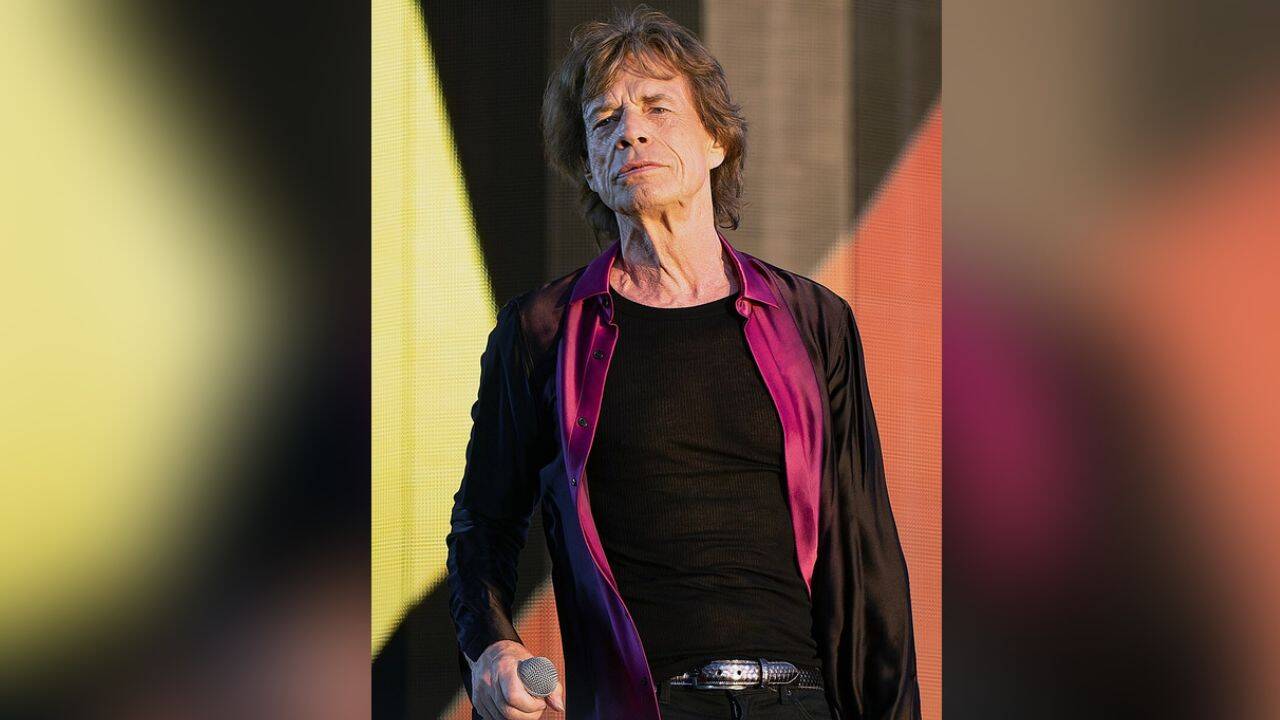
Film critics have spent the last week fawning over the sonic architecture of Robert Eggers’ Werwulf. The prevailing wisdom goes like this: medieval England was a mud-caked, pestilent nightmare, and the collaborative score from Ethel Cain and Robin Carolan makes that misery sound "immaculate."
That praise misses the entire point of historical sound design. When a horror score sounds immaculate, it fails to do its job.
I have spent fifteen years sitting in dubbing stages and mastering rooms watching directors ruin visceral period pieces by polishing the audio until it gleams like a luxury car commercial. When you take the visceral filth of thirteenth-century England and wrap it in pristine, museum-grade production, you do not elevate the horror. You anesthetize the audience. You turn physical dread into an aesthetic mood board.
The consensus around Werwulf treats beauty and brutality as an exciting contradiction. Critics love the juxtaposition of Hayden Anhedönia’s ethereal, Southern Gothic vocal textures against Carolan’s subterranean, low-end dread. On paper, pairing the architect of Preacher's Daughter with the composer who turned The Northman into a percussive fever dream sounds like a masterstroke. In practice, their approach reveals a growing problem in prestige horror: we have become so obsessed with making cinema sound expensive that we have forgotten how to make it sound dangerous.
The Lie of the Immaculate Soundscape
To understand why the Werwulf score stumbles, you have to look at what critics actually mean when they call an album "immaculate." They mean the frequency spectrum is balanced. They mean the dynamic range is controlled, the reverb tails are lush, and the sub-bass hits with surgical precision on a Dolby Atmos rig.
Medieval England was none of those things.
If you want to understand the acoustic reality of the Middle Ages, read historian Bruce R. Smith’s work on historical phenomenology, The Acoustic World of Early Modern England. Before the Industrial Revolution lowered the ambient noise floor of human civilization, sound was raw, unmediated, and terrifyingly close. There was no compression. There was no studio sheen. A human scream in a stone hall or a wind howling through a wattle-and-daub hut carried jagged, unpredictable harmonics that grated against the human ear.
Carolan and Cain give us the modern, curated version of that dread. Carolan’s orchestration relies heavily on bowed strings, scraped metal, and tuned percussion—techniques that have become the standard vocabulary of elevated horror since Mica Levi’s Under the Skin and Hildur Guðnadóttir’s Chernobyl. Cain layers her signature spectral, reverbed vocals over these textures, creating a sound that feels less like an authentic medieval curse and more like a high-fashion dark ambient record.
It sounds gorgeous. That is the flaw.
When music sounds that clean, the listener’s nervous system relaxes into appreciation. Instead of flinching at the violence on screen, the audience leans back and admires the production value. You stop worrying about the creature in the dark because you are too busy admiring the stereo imaging of the choir.
Why Prestige Horror Has a Polish Problem
The entertainment industry loves a clean narrative, and right now, the hottest narrative in genre filmmaking is "elevated horror." Studios want horror movies that win technical awards and sell limited-edition vinyl pressings to design-conscious collectors.
This commercial reality dictates how film scores are mixed and mastered. A score that genuinely replicates the auditory misery of medieval life would be nearly unlistenable in a modern multiplex. It would feature piercing, microtonal dissonance, abrupt frequency dropouts, and harsh, unpolished room acoustics that fatigue the ear within twenty minutes.
I once worked on an independent historical thriller where the director insisted on recording every musical element outdoors in the freezing rain using period-accurate bone flutes and gut-strung instruments. The raw tapes were haunting. They sounded brittle, erratic, and genuinely cursed. Then the post-production team got involved. By the time the mixing engineers finished applying noise reduction, digital reverb, and multiband compression to make it "theatrically viable," the recordings sounded like a generic fantasy video game soundtrack. We traded terror for clarity.
Werwulf falls into the exact same trap, albeit at a much higher level of artistry. Cain and Carolan are brilliant musicians, and their instincts for melody and atmosphere are sharp. Yet every time the film threatens to become truly unhinged, the score steps in with a velvety, calculated swell that reminds you that you are watching a prestige production.
Consider how differently this material would hit if the production had embraced genuine sonic discomfort:
- Dry, claustrophobic acoustics instead of cavernous, cathedral-sized digital reverbs that romanticize the misery.
- Unpitched, erratic percussion played off-grid rather than quantized, hypnotic rhythms that soothe the listener into a trance.
- Raw, unprocessed vocalizations stripped of the shimmering delay effects that define Ethel Cain’s pop-adjacent catalog.
By keeping Cain’s signature vocal processing intact, the filmmakers prioritized brand recognition over historical immersion. You do not hear a medieval peasant praying for mercy; you hear Ethel Cain doing an Ethel Cain feature over a Robin Carolan beat.
The Trap of Juxtaposition in Period Cinema
Defenders of the score will argue that the contrast between the visual squalor and the pristine music is intentional. They will point to Stanley Kubrick using György Ligeti or Wendy Carlos, or Sofia Coppola dropping post-punk tracks into Marie Antoinette, as proof that anachronistic beauty enhances period storytelling.
That comparison collapses under scrutiny.
Kubrick and Coppola used contrast to create psychological distance. In The Shining, the stark modernist compositions highlight the cold, geometric madness of the Overlook Hotel. In Marie Antoinette, modern rock underscores the teenage alienation of a young queen trapped in a gilded cage. In both cases, the music comments on the characters' internal detachment from their environment.
Eggers does not deal in detachment. His entire filmography—from The Witch to The Lighthouse to Nosferatu—is built on total, suffocating sensory immersion. His goal is to erase the barrier between the modern viewer and the historical past, forcing you to smell the rot, feel the damp wool, and believe in the superstitions of the era.
When your visual language is entirely committed to brutal realism, an "immaculate" score works against your own thesis. It creates a disconnect between what the eye sees and what the ear hears. Your eyes are stuck in the mud of fourteenth-century England, while your ears are floating in a state-of-the-art mastering suite in London or Los Angeles.
Mark Korven understood this when he scored The Witch for Eggers in 2015. Korven built a custom instrument—the Nyckelharpa-inspired Apprehension Engine—specifically to avoid clean, predictable musical tropes. That score did not sound immaculate. It sounded broken, metallic, and unstable. When those discordant strings scraped across the speakers, you did not admire the mix; you felt a physical urge to look over your shoulder.
Dismantling the Hype Around the Collaboration
If you look at the discourse surrounding Werwulf, you will notice that most of the praise is not actually about how the music functions inside the movie. It is about the cultural cachet of the artists involved.
Let us be brutally honest about the questions people are actually asking about this soundtrack:
Does the Ethel Cain and Robin Carolan score actually make Werwulf scarier?
No. It makes the film more atmospheric and emotionally resonant, particularly during its quieter, folkloric stretches. When the narrative demands pure, primal terror, however, the lushness of the arrangement softens the blow. Fear requires unpredictability, and there is nothing unpredictable about a impeccably mixed ambient crescendo.
Is this the best horror score of the decade?
Only if your metric for horror scoring is how good it sounds on high-end headphones while you answer emails. If you measure a horror score by its ability to destabilize an audience and linger like a psychological bruise, it falls well behind rawer, less polished works like Colin Stetson’s Hereditary or Bobby Krlic’s Midsommar.
Why did Robert Eggers move away from the harsher soundscapes of his earlier films?
Scale and expectation. As budgets grow and distribution widens, the pressure to deliver a cohesive, prestigious theatrical experience increases. Carolan proved on The Northman that he can deliver muscular, mythic scale without alienating mainstream audiences, and bringing in Cain taps directly into a massive, devoted demographic that treats melancholy as a lifestyle.
The Risk of Trading Filth for Prestige
There is an obvious counterargument to my critique, and it deserves fair acknowledgment. If Eggers, Cain, and Carolan had stripped away all the modern polish and delivered an uncompromisingly harsh, lo-fi medieval noise record, Werwulf would have been exhausting to sit through. A two-hour film scored entirely with abrasive, unmixed period acoustics would alienate ninety percent of its audience before the second act.
Cinema is a balancing act between sensory authenticity and audience endurance. You cannot genuinely torture the viewer’s eardrums and expect them to stay emotionally invested in a tragic narrative. Cain’s melodic sensibility brings a necessary human grief to the story—a reminder that the people suffering in this mud-soaked hell are still capable of grace, longing, and spiritual awe. Without that beauty, the horror risks becoming monotonous nihilism.
Yet acknowledging that risk does not excuse the overcorrection. You do not have to choose between an unlistenable noise experiment and a spotless ambient masterpiece. The greatest period horror scores live in the friction between the two. They allow beauty to exist, and then they actively rot it from the inside out.
Look at how Mica Levi handled Under the Skin, or how Jonny Greenwood approached There Will Be Blood. Greenwood’s strings are undeniably virtuosic, yet the performances are pushed to the absolute brink of physical collapse—bows digging too hard into the strings, microtonal shifts that induce vertigo, and sudden silences that feel like the air being sucked out of the room. Greenwood never lets the audience forget the physical labor and friction behind the sound.
In Werwulf, the friction has been sanded away. Every transition is smooth. Every vocal harmony lands cleanly in the pocket. The low end rumbles with controlled, theatrical authority rather than chaotic, earth-shaking violence.
How Sound Designers Should Actually Approach Medieval Horror
If filmmakers want to reclaim the visceral power of historical horror, they need to stop treating period scores like luxury products and start treating them like archaeological artifacts.
- Abandon modern reverb spaces. Stop putting medieval instruments inside digital concert halls. If a scene takes place in a cramped, smoke-filled hovel or a dense, fog-choked forest, the acoustics should be dead, absorption-heavy, and suffocatingly close.
- Keep the human flaws in the performance. Do not auto-tune period vocals, and do not time-align erratic percussion. The human ear is wired to detect slight rhythmic and pitch instabilities as signs of physical distress. Perfection signals safety; imperfection signals threat.
- Treat silence as an active weapon. Modern scores are terrified of quiet moments, constantly filling the space with low-frequency drones. In a world without electricity or engines, true silence was heavy, oppressive, and deafening. Dropping the score entirely during moments of peak violence forces the viewer to confront the wet, unvarnished reality of the foley work.
Werwulf is a remarkable visual achievement, and its music will undoubtedly dominate year-end vinyl lists and streaming playlists. Ethel Cain and Robin Carolan delivered a stunning piece of dark ambient art that captures the poetic tragedy of the story.
Just stop calling it immaculate as if that were a compliment. In a movie about monsters tearing flesh in the dark, immaculate is the last thing the music should ever be.