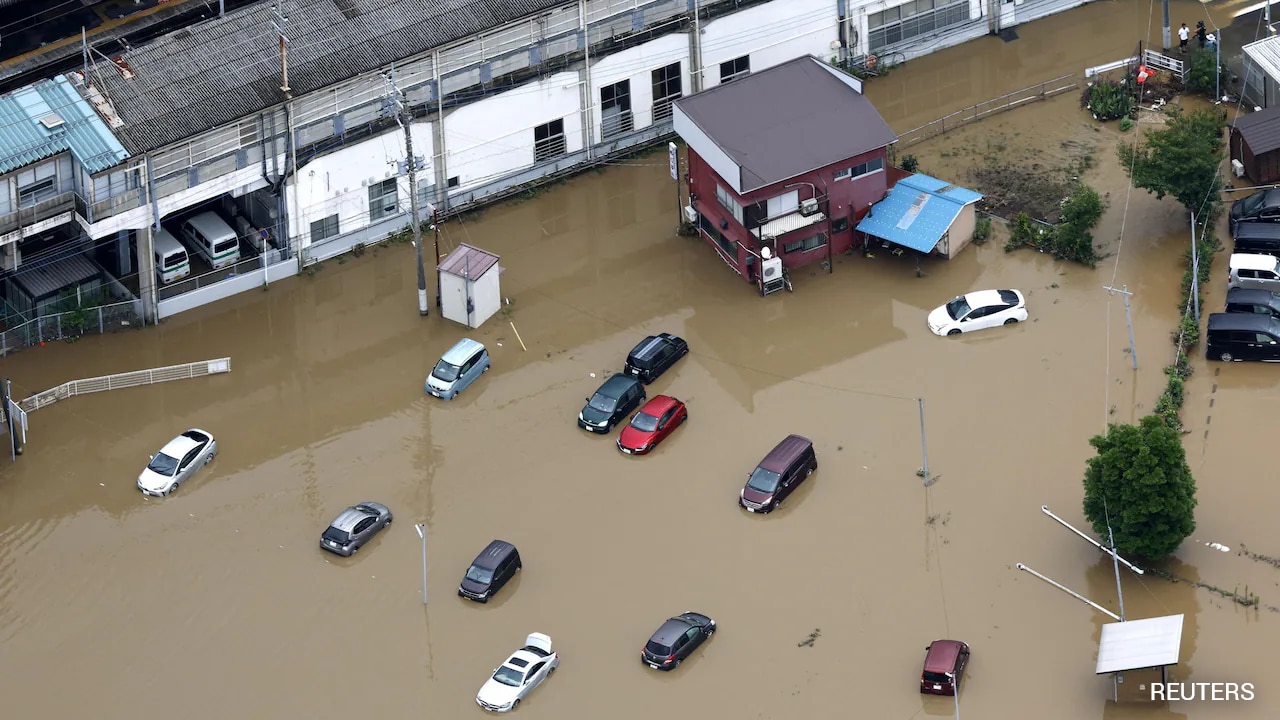
Every time a torrential downpour shuts down a Japanese transit hub or floods a coastal runway, the headlines scream the exact same lazy word. Unprecedented.
It is a fantastic marketing term for media outlets looking for clicks and a brilliant excuse for municipal planners who failed their civil engineering midterms. It suggests a freak accident of nature, a bolt from the blue that nobody could have possibly anticipated. It lets everyone off the hook.
Except the water has been rising for centuries, and we keep building billion-dollar tarmac right in its path.
I have spent the last fifteen years evaluating disaster response protocols across major transit corridors in East Asia. I have watched billions of dollars get funneled into cosmetic terminal upgrades while the foundational drainage engineering remains stuck in the Showa era. When four people die and thousands get stranded at an airport because heavy rain overwhelmed the drainage, the narrative immediately shifts to climate anxiety or meteorological anomalies.
Nobody wants to talk about zoning arrogance.
The Myth of the Freak Storm
Let us look at the data without the dramatic adjectives. Heavy precipitation events in the Kansai and Kanto regions are not statistical anomalies. They are seasonal certainties modified by a warming atmosphere that holds more moisture. Meteorologists have mapped these curves for decades. The peak rainfall totals hitting modern airports today match historical benchmarks recorded repeatedly across the twentieth century.
When an airport terminal floods, it is rarely because the rain defies human understanding. It is because the drainage pipes were spec'd for a baseline that was outdated twenty years ago.
Imagine a scenario where a private logistics corporation designed a warehouse with a roof leak they knew would breach every monsoon season, yet refused to fix it because the fix cut into quarterly dividends. You would call that gross negligence. Yet when a public-private transit hub experiences predictable flooding and paralyzing delays because stormwater retention basins were undersized to save on land acquisition costs, we call it an act of God.
It is not an act of God. It is an act of budgetary cowardice.
Why Airports Are Built to Fail
Modern aviation hubs are masterpieces of high-throughput architectural design. They feature sweeping glass facades, automated baggage handling grids, and miles of duty-free retail space engineered to extract every available dollar from a captive traveler.
They are also, almost universally, terrible at water management.
To build a modern airport, you need flat land. Lots of it. Historically, that meant reclaiming coastal shallows, paving over floodplains, or building on reclaimed islands sitting precariously at sea level. Kansai International Airport, built on an artificial island in Osaka Bay, is a textbook monument to this hubris. Engineers knew it would settle; they did not adequately model the compound threat of rapid subsidence combined with intensified storm surges and extreme precipitation.
When the skies open up, concrete and asphalt do not absorb water. They accelerate runoff. Every square meter of paved runway and parking apron acts like a funnel, channeling millions of gallons of water straight toward low-lying terminal basements and electrical sub-stations.
When the power goes out, the pumps fail. When the pumps fail, the tarmac turns into a lake. And when the tarmac turns into a lake, thousands of passengers are left stranded in terminal terminals with overpriced sandwiches and zero operational communication.
This is not a sudden crisis. It is a predictable design feedback loop.
The Cost of Reactive Governance
Governments love reactive spending. Writing an emergency relief check after a disaster plays well on the evening news. It allows politicians to put on hard hats, tour the flooded tarmac, and promise immediate funds for recovery.
Proactive engineering, on the other hand, is politically invisible. Nobody gets elected by cutting the ribbon on a massive, underground concrete retention vault buried fifty meters beneath a cargo bay. It does not look good in a brochure.
As a result, municipal authorities continuously defer underground hardening in favor of surface-level cosmetic expansions. They prioritize passenger capacity over hydrological capacity. They add another terminal concourse to handle international traffic spikes while ignoring the primary outfall channels that must drain that very same concrete footprint during a typhoon.
The human cost of this prioritization is unacceptable. Four lives lost in a sudden flash flood or structural collapse during a storm is four too many, especially when the vulnerability points were flagged in environmental impact assessments years prior.
Dismantling the Passenger Panic Playbook
When an airport strands thousands of travelers due to a weather event, the standard operating procedure for airlines and terminal management is an absolute masterclass in institutional evasion.
You hear the same announcements echoing through the concourse. We are experiencing weather-related delays.
That phrasing is deliberately vague. It conflates the rain falling from the sky with the operational collapse of the facility managing it. Rain is a natural phenomenon. Leaving critical electrical infrastructure in a subterranean flood zone is a human decision.
If you find yourself stranded in one of these events, stop waiting for the airline desk agent to offer clarity. They know less than you do; their screens are locked behind corporate liability scripts designed to delay compensation claims.
What You Should Actually Do
- Ignore the Gate Screens: Gate monitors are updated last because airlines protect their scheduling algorithms. Pull up local municipal radar and hydrological gauge data directly on your phone. You will know the storm has passed long before the gate agent receives authorization to board.
- Evacuate the Core Terminal Floor: If water starts breaching the primary concourse, move vertically immediately. Most multi-level modern airports have upper administrative or parking structures with structural integrity well above the flood plain. Do not stay on the ground floor waiting for baggage carousels that will not move for twelve hours.
- Bypass the Customer Service Queue: The line of five hundred people screaming at the transfer desk is a waste of your remaining battery life and mental energy. Use mobile booking channels or satellite data connections to lock down alternative transit or accommodation before the local cell towers get congested.
The Real Fix
We do not need another committee to study climate resilience. We do not need more press releases lamenting the fury of nature.
We need regulatory penalties for infrastructure owners who fail basic hydrological stress tests. If an airport authority cannot guarantee that a standard ten-year rainfall event will leave runways operational within two hours, executive bonuses should be clawed back, and municipal operating licenses should be put under direct receivership.
Until we stop treating predictable infrastructure failures as unavoidable acts of nature, airports will keep flooding, passengers will keep sleeping on terminal floors, and the word unprecedented will remain the ultimate shield for incompetence.