The lazy consensus sweeping international relations commentary is that the newly inked Mecca Joint Defence Agreement between Saudi Arabia, Turkey, and Pakistan represents an "Islamic NATO". Pundits are hyperventilating over headlines, claiming Donald Trump just endorsed the dismantling of American hegemony in West Asia because he stated he was thrilled to see these three nations take care of their own security.
It is a remarkably superficial reading of geopolitics.
I have watched analysts blow millions of words and hours of airtime misinterpreting regional realpolitik. They see a mutual defense clause—the stipulation that an attack on one is an attack on all—and immediately hallucinate an integrated command structure, shared military doctrines, and synchronized combat capabilities. They are evaluating a piece of strategic theater through a rigid Cold War lens.
Let us clear up the confusion immediately. This pact is not an alliance born of shared ideological trust. It is an insurance policy born of acute, pragmatic panic.
Deconstructing the Myth of Collective Trust
To understand why calling this arrangement a "Sunni NATO" is completely detached from reality, you have to look at the structural mechanics of real military alliances. NATO works because its members share an existential threat architecture and a unified command language dominated by Washington.
The Mecca pact features none of these elements.
Look at the participants. Turkey brings NATO’s second-largest standing army and independent regional ambitions. Pakistan provides nuclear deterrence alongside a deeply embedded military footprint in the Gulf. Saudi Arabia supplies capital and absolute vulnerability to ballistic missiles and proxy warfare.
These three states do not share a unified threat matrix. Turkey's primary security anxieties involve the eastern Mediterranean, Greece, and its southern borders. Pakistan focuses heavily on its eastern border and economic stabilization while quietly mediating between Riyadh and Tehran. Saudi Arabia remains utterly consumed by the fallout from the ongoing US-Iran conflict and the necessity of safeguarding its Red Sea trade corridors.
When analysts argue that this trilateral framework signals a permanent pivot away from Washington, they ignore how these states actually behave during a crisis. Imagine a scenario where an active kinetic exchange escalates in the Persian Gulf. Turkey will rely primarily on its Western alliances, Pakistan will balance its strategic dependencies on Beijing, and Saudi Arabia will still look to American air defense architecture to keep its infrastructure intact.
The Washington Blind Spot
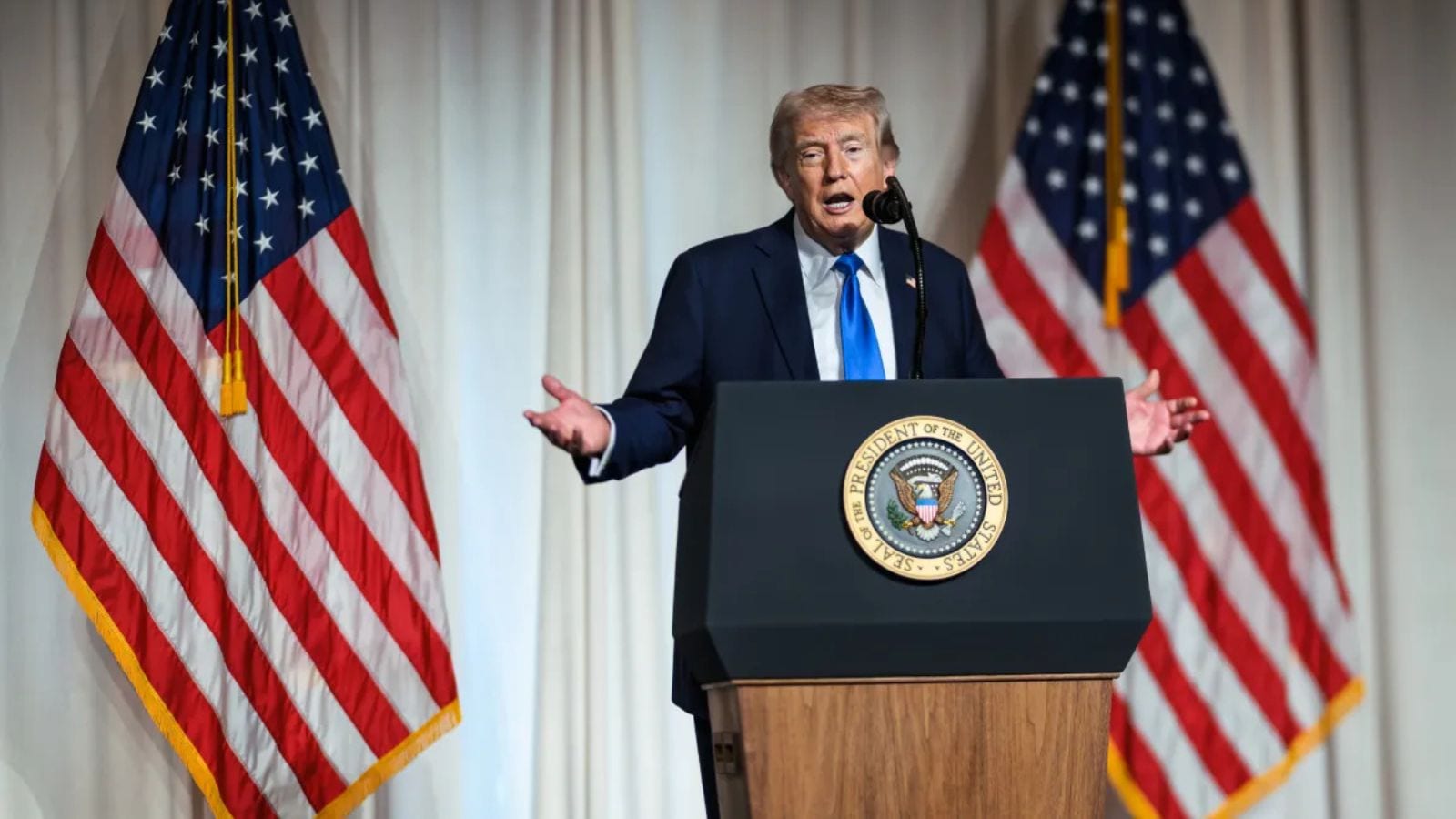
Donald Trump’s public blessing of the agreement on social media sent shockwaves through the commentariat. They interpreted his enthusiasm as an abdication of American leadership.
They are getting it backward.
For years, the loudest critique from the White House has been that Gulf monarchies are security free-riders. Trump’s reaction is not a sign that America is being pushed out of the region; it is validation of his core doctrine that regional partners must shoulder the financial and operational weight of their own defense.
The Mecca pact is a direct response to a fickle American security umbrella that failed to automatically retaliate or deter every single regional provocation. Riyadh, Ankara, and Islamabad are not trying to evict the United States. They are engaging in high-stakes portfolio diversification. They are buying localized insurance policies because relying on a single superpower's political whims is a dangerous strategy in a multipolar transition.
Why India and Iran Are Overreacting
Regional powers outside the pact are making the exact same analytical error as Western journalists. New Delhi is publicly examining the agreement for potential national security fallout, while Tehran attempts to downplay its strategic weight while noting the shift toward self-reliance.
Both capitals are treating the text on paper as a deployment capability on the ground. It is not. Deploying thousands of troops or coordinating joint tactical air defense requires years of integrated logistics, standardized communications, and joint exercises that simply do not exist between these three militaries.
What actually happened in Mecca on August 7 was the formalization of intelligence sharing, industrial defense collaboration, and a diplomatic signaling mechanism. It is a framework to manage regional flashpoints before they require outside intervention, not an expeditionary force preparing for joint offensive operations.
Stop looking at the Middle East through the prism of rigid blocs. The era of clean, binary alliances is dead. What we are witnessing is a fluid, transactional ecosystem where states borrow each other's strengths to survive a volatile neighborhood.
Saudi Arabia, Turkey and Pakistan make pact as tensions grow in Strait of Hormuz
The trilateral agreement is a symptom of regional security fragmentation rather than a cohesive new order.