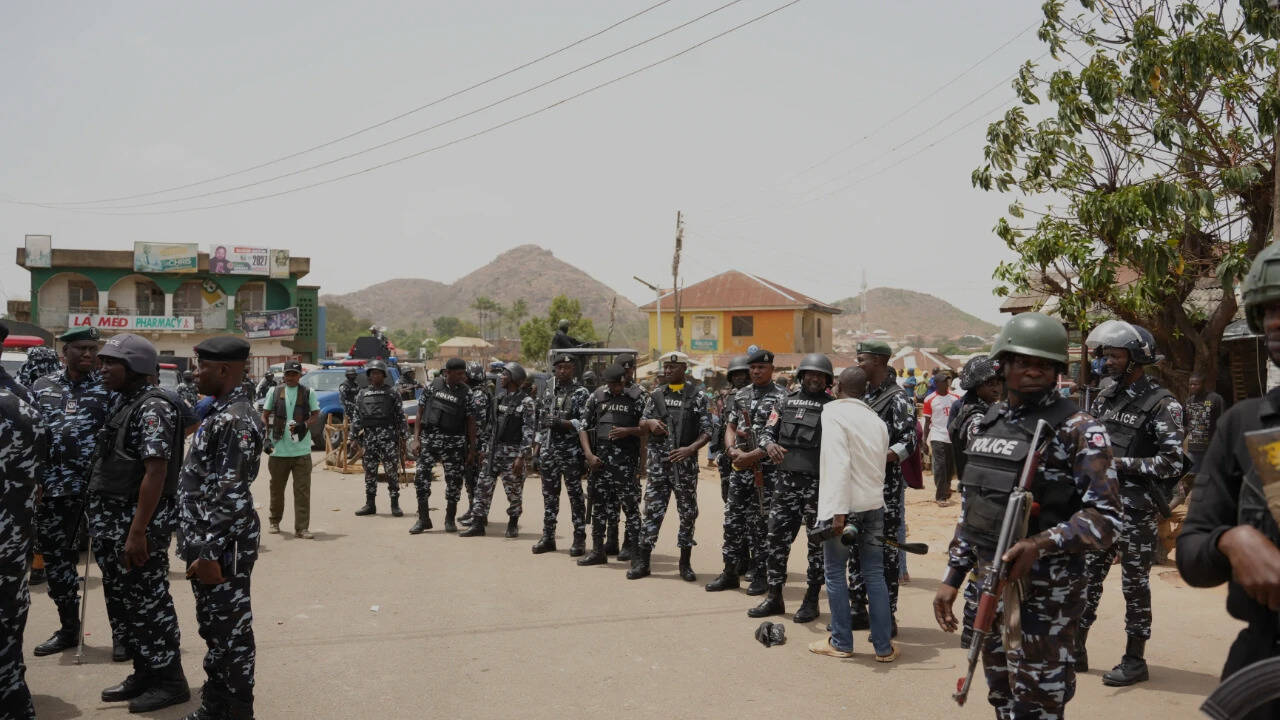
They aren't bandits.
Every time a mass-casualty attack rocks Northern Nigeria—like the recent slaughter of at least 62 civilians—mainstream headlines reach for the exact same sanitized, lazy label. They put "bandits" in quotation marks, throw up their hands, and frame the bloodshed as random criminal chaos driven by poverty and climate change.
It is an intellectual cop-out. And it is getting people killed.
When you call a heavily armed, organized, politically connected insurgent network a "bandit," you reduce a complex war economy to simple street crime. You absolve the state of its total collapse of monopoly on violence. Worse, you prescribe the wrong medicine. You don't solve a territorial insurgency with local policing and petty-theft task forces.
I have spent years tracking conflict economies and security breakdowns across West Africa. I’ve watched policymakers burn billions of dollars on kinetic military operations that fail within months because they refuse to name the enemy accurately. If you misdiagnose the disease, the patient dies. Right now, Northern Nigeria is bleeding out while analysts argue over semantics.
The Lie of the "Bandit" Label
Let’s define our terms precisely. A bandit is an opportunistic outlaw. A highwayman. Someone who robs a convoy for quick cash and disappears into the bush.
The syndicates operating across Zamfara, Katsina, Kaduna, and Niger states do not fit that profile. They field hundreds of fighters on motorbikes armed with anti-aircraft guns, rocket-propelled grenades, and military-grade rifles. They impose taxes on entire villages. They run parallel judicial systems. They negotiate directly with state governors and release hostages for millions of naira in ransom.
That is not banditry. That is warlordism.
The Nigerian government officially designated these groups as terrorists back in 2022, yet international newsrooms and local commentators still cling to the "bandit" moniker. Why? Because admitting that an entire region of Africa’s most populous nation has been carved up by non-state warlords forces uncomfortable questions about state legitimacy, elite complicity, and the failure of the modern postcolonial border.
As security scholars like Dr. Bulama Bukarti and researchers at the International Crisis Group have repeatedly documented, these groups operate with a clear business model. Kidnapping for ransom is just the entry-level cash flow. The real money is in illegal gold mining, cattle rustling on an industrial scale, and extortion taxes levied on farmers just to access their own land.
Calling them bandits is like calling a multinational drug cartel a neighborhood street gang. It misses the scale, the capital, and the political protection keeping them alive.
Why the Farmer-Herder Narrative is Obsolete
Whenever the international press tries to add "nuance" to these massacres, they default to the ancient trope of the farmer-herder conflict. They talk about shrinking grazing reserves, desertification in the Sahel, and ethnic friction between Fulani pastoralists and Hausa farmers.
That narrative is ten years out of date.
Yes, ecological stress and poorly managed land-use policies lit the match decades ago. Nobody denies that. When Lake Chad shrank and desertification pushed pastoralists south, friction over water and land was inevitable.
- Then: Disputes were settled with machetes, sticks, and traditional mediation.
- Now: Villages are wiped out with heavy machine guns and arson in coordinated midnight raids.
To frame the slaughter of 62 civilians as a "resource dispute" is an insult to basic logic. Starving herders looking for grass do not buy $2,000 assault rifles, satellite phones, and Starlink terminals. They do not coordinate simultaneous attacks across three local government areas to punish a community for refusing to pay a ten-million-naira protection levy.
The conflict has mutated. It was hijacked by opportunistic warlords who weaponized ethnic grievances to recruit foot soldiers, then pivoted entirely to organized crime and territorial control. The ethnic angle is merely the recruitment tool; the actual engine is cold, hard cash.
The Dirty Secret of the Conflict Economy
If you want to understand why 62 people were murdered and why another 62 will be murdered next month, stop looking at the gunmen in the forest. Start looking at the bank accounts in the cities.
An insurgency of this scale cannot survive in a vacuum. It requires supply chains. Who is importing the ammunition? Who is laundering the ransom money? Who is buying the stolen cattle in Lagos and Port Harcourt? Who is smelting the illegally mined gold from Zamfara and shipping it to Dubai?
You don't move thousands of head of stolen cattle across state lines without bribing checkpoints. You don't extract tons of gold from protected forest reserves without the quiet nod of traditional rulers, local politicians, and compromised security personnel.
Imagine a scenario where a mid-level commander in the forest runs out of 7.62mm ammunition. He cannot manufacture it under a tree. He relies on a network of urban fixers, corrupt armory officers, and cross-border smugglers who view the bloodshed as a quarterly revenue stream. For these middlemen, peace is bad for business. A stabilized North means the end of inflated security budgets, the end of illicit mining kickbacks, and the end of ransom commissions.
This is the brutal reality that polite diplomacy refuses to touch: The violence persists because too many powerful people are getting rich off it.
Why Military Surge Operations Always Fail
Whenever a massacre makes headlines, the public demands the same knee-jerk reaction: Send in the army. Bomb the forests. Wipe them out.
It sounds tough. It plays well on television. And it fails every single time.
Here is why kinetic military solutions are a trap in Northern Nigeria:
- Asymmetric Geography: The forests spanning the Northwest—like Rugu, Kamuku, and Kunduma—cover thousands of square kilometers of dense, unmapped terrain with zero road infrastructure. Conventional armored divisions are blind and slow there.
- The Air Strike Illusion: When the military drops bombs on forest camps, the warlords simply scatter on motorbikes, blend into rural communities, and wait out the storm. Worse, imprecise intelligence frequently leads to civilian casualties, driving angry survivors straight into the arms of the warlords for protection.
- Zero Holding Capacity: The Nigerian military is stretched across all 36 states, fighting Boko Haram and ISWAP in the Northeast, separatists in the Southeast, and oil thieves in the Niger Delta. They can clear a forest in the Northwest on Tuesday, leave on Friday, and watch the warlords move back in on Saturday.
Even the recent trend of state governments arming local vigilante groups—often called Yan Sakai or state-backed security outfits—is pouring gasoline on a fire. While born out of sheer desperation, unleashing poorly trained, unaccountable militias into an already volatile environment triggers endless cycles of reprisal killings. One ethnic militia raids a settlement; the warlords retaliate by burning three villages to the ground.
The Uncomfortable Solution Nobody Wants to Fund
If military force alone won't work, and peace deals with warlords only buy them time to rearm, what actually stops the killing?
You have to dismantle the economy of the forest and rebuild the architecture of the state. It is slow, unglamorous, and requires political suicide from the elites currently profiting from the chaos.
- Follow the Money, Not the Gunmen: Stop treating kidnappings as isolated police cases. Deploy forensic financial intelligence to freeze the assets of gold smugglers, cattle-market kingpins, and ransom negotiators. If you choke the urban logistics network, the fighters in the bush run out of bullets and fuel within ninety days.
- Formalize the Mining Sector: Zamfara and its neighbors sit on massive deposits of gold, lithium, and tantalite. As long as mining remains an unregulated wild west, warlords will use it to fund their armies. The federal government must either secure and license these sites to legitimate, heavily guarded industrial operators or shut them down entirely with strict aerial surveillance.
- Devolve Policing Immediately: A centralized police force controlled from Abuja cannot secure a remote village in Katsina. Nigeria needs constitutional reform to establish localized, community-rooted state police who actually speak the language, know the terrain, and have skin in the game.
- End the Ransom Economy: Paying ransoms—whether by desperate families or covertly by state officials—is pure madness. Every naira paid for a hostage buys three more rifles. Breaking this cycle requires strict enforcement against ransom facilitation paired with aggressive intelligence-led rescue operations, not blank checks.
The Downside of the Hard Truth
I won’t pretend this approach is clean or painless. Cracking down on the illicit cattle and gold trades will temporarily devastate the livelihoods of thousands of innocent rural workers who rely on those informal economies just to eat. Outlawing ransom payments means looking grieving families in the eye and telling them the state will not buy their loved ones back—a stance that feels impossibly cruel in the short term.
There is no bloodless exit ramp left. Northern Nigeria has crossed the threshold where soft compromises work.
Until journalists, policymakers, and citizens stop hiding behind comfortable words like "banditry" and confront the reality of an entrenched, state-enabled war economy, the body count will keep climbing. Stop waiting for the army to save villages that the political class has already sold out.


