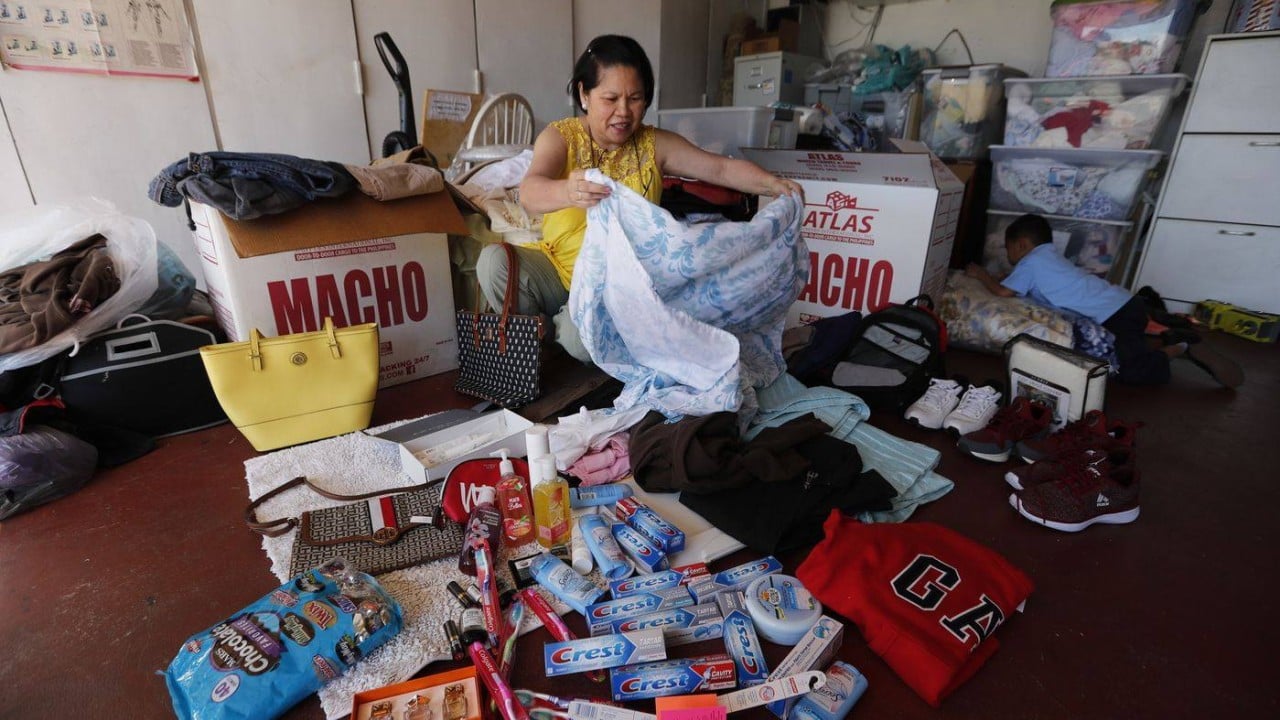
Every December, the exact same tragedy plays out on social media. Overseas Filipino Workers (OFWs) post tearful videos standing next to empty living rooms. They spent months stuffing cardboard boxes with canned goods, shoes, chocolates, and appliances. They paid a freight forwarder three months in advance. Then, Christmas morning arrives, and the box is sitting in a warehouse in Manila—or worse, it has vanished entirely.
Mainstream news outlets love this story. They frame it as a heartbreaking tale of evil, greedy logistics companies preying on hard-working heroes. They interview crying mothers, demand government crackdowns, and call for stricter regulations from the Department of Trade and Industry (DTI). Expanding on this idea, you can also read: The Economics and Operations of Storm Standby Personnel.
That narrative is comforting. It gives you a clear villain. It is also completely detached from the economic reality of international freight.
If your balikbayan box goes missing, gets ransacked, or sits rotting in a customs yard for six months, the freight forwarder is only half the problem. The other half is an industry built on impossible unit economics that consumers actively demand. You cannot demand to ship seventy kilograms of mixed, undeclared retail goods halfway across the planet for ninety dollars and expect white-glove, insured, air-freight reliability. When you buy a ticket on a sinking ship because it was the cheapest fare at the dock, you do not get to act shocked when your feet get wet. Analysts at Harvard Business Review have shared their thoughts on this matter.
The Math of the Ponzi Logistics Model
Let us look at the actual numbers behind consolidated sea freight. This is not guesswork; this is basic maritime economics.
When you hand a standard balikbayan box over to a consolidator in Dubai, Los Angeles, or Hong Kong, that company does not own a cargo ship. They are non-vessel operating common carriers (NVOCCs) or basic freight brokers. Their entire business model relies on filling a forty-foot high-cube shipping container (a 40' HQ) with roughly 400 to 450 individual boxes.
Here is where the wheels fall off.
To acquire customers in a hyper-competitive diaspora market, fly-by-night consolidators slash their prices below their actual operating costs. They offer "buy three, get one free" promos. They include free door-to-door pickup in rural suburbs and free delivery to remote islands in Mindanao.
I have audited freight operations across Southeast Asia and the Middle East for over a decade, and I have watched this exact collapse happen dozens of times. When a consolidator charges eighty dollars per box, they might gross $34,000 on a full container. Sounds great until you subtract the real costs:
- Origin drayage and warehouse stuffing: $3,500
- Ocean freight rates (which fluctuate wildly based on global alliances and Red Sea or Panama Canal disruptions): $4,000 to $12,000
- Philippine Bureau of Customs (BOC) brokerage, port handling, and arrastre fees: $5,000
- Deconsolidation and last-mile trucking across an archipelago of 7,641 islands: $12,000
- Overhead, marketing, and agent commissions: $6,000
The margin on a legitimately run, fully compliant balikbayan container is razor-thin. Sometimes it is negative.
So how do shady operators survive? They run a logistics Ponzi scheme. They use the cash collected from November's Christmas rush to pay the port fees and customs duties for the containers they shipped back in August. The moment freight rates spike or volume dips in January, the cash flow freezes. The containers sit at the Port of Manila accumulating massive demurrage and detention charges from the shipping lines. Once those daily storage penalties exceed the value of the freight, the forwarder simply turns off their phone, deletes their Facebook page, and abandons the cargo.
When the media demands "answers" from these companies, they are screaming into an empty room. The business was mathematically dead the day you handed over your cash.
Why Customs Clearance is a Self-Inflicted Wound
The second lazy consensus in every news report is that the Philippine Bureau of Customs is uniquely corrupt and intentionally holding family gifts hostage. While Philippine port bureaucracy is notoriously slow, blaming customs officials for abandoned balikbayan boxes ignores the massive compliance failures happening at the packing table.
Under the Customs Modernization and Tariff Act (CMTA), specifically Republic Act No. 10863, qualified OFWs are granted tax- and duty-free privileges for balikbayan boxes up to a specific value threshold (currently PHP 150,000, up to three times a year). To qualify, the contents must be strictly for personal use, non-commercial, and accurately declared on a packing list.
Walk into any consolidator's warehouse and look at the manifests. Half of them are total fiction.
Senders routinely hide commercial quantities of brand-new sneakers, luxury handbags, electronics, and supplements inside boxes alongside bags of rice and laundry detergent, declaring the entire shipment as "used clothing and canned goods." They do this because their local booking agent told them, "Just write 'personal effects' so it passes fast."
This is a catastrophic mistake. When Philippine customs uses non-intrusive x-ray inspection systems on a consolidated container, an anomaly in one single box flags the entire forty-foot container for a 100% physical examination.
Think about what that means. One sender trying to sneak ten undeclared iPhones into their box to resell in Greenhills causes a three-month delay for the other 449 families sharing that steel container. The deconsolidation warehouse has to strip the entire load, Customs Enforcement and Security Service (ESS) officers have to inventory every single item manually, and the legitimate consolidator gets hit with tens of thousands of dollars in port storage fees while the investigation drags on.
You are not just trusting your freight forwarder. You are trusting the honesty of 449 complete strangers whose boxes are stacked on top of yours.
The Myth of "Door-to-Door" Accountability
When a box finally clears the port, it enters the black hole of local Philippine subcontracting. Very few overseas consolidators own a fleet of delivery trucks in the Philippines. Instead, they hand the manifest over to a local deconsolidation partner, who then subcontracts the regional routes to smaller trucking outfits, who then hire independent drivers paid per drop.
By the time your box reaches a provincial hub in Visayas or Northern Luzon, it has changed hands six times. Nobody in that chain has a direct financial relationship with you.
If a box gets sliced open at a transfer hub and three pairs of Nike shoes disappear, who is liable?
- The overseas agent says they handed it over intact.
- The ocean carrier says the container seal was unbroken at the port.
- The Manila deconsolidator blames the provincial trucker.
- The provincial trucker claims the box arrived at their depot already damaged.
Without a clear chain of custody and a legally binding bill of lading that actually covers itemized value, accountability evaporates. Most balikbayan receipts contain fine print limiting the carrier's liability to $100 or $200 per box, regardless of whether you packed $2,000 worth of electronics inside. Senders rarely read the back of the waybill until the box vanishes, at which point they realize they have zero legal recourse.
Dismantling the Worst Questions Around Overseas Shipping
If you want to stop losing money and goods, you have to stop asking the wrong questions. Here is the brutal truth behind the most common misconceptions surrounding diaspora shipping.
"How do I know if a freight forwarder is accredited?"
Checking the DTI Fair Trade Enforcement Bureau (FTEB) list of accredited sea freight forwarders is the bare minimum, not a guarantee of safety. Accreditation simply means the company registered their business, paid their fees, and does not currently have an unresolved revocation order against them. Plenty of DTI-accredited companies have collapsed overnight due to cash flow insolvency. Accreditation proves a company exists on paper; it does not audit their balance sheet or prove they can survive a sudden spike in global container rates.
"Why can't the government just force them to deliver the boxes?"
Because the government cannot conjure money out of thin air to pay private shipping lines. When a rogue consolidator abandons twenty containers at the Manila International Container Terminal (MICT), Maersk, CMA CGM, or Evergreen still owns the steel boxes and demands their container detention fees. The Asian Terminals Inc. (ATI) or International Container Terminal Services, Inc. (ICTSI) still demands their arrastre and storage fees. Unless the DTI uses taxpayer money to bail out private freight defaults—which sets a massive moral hazard—those boxes remain legally encumbered until the port charges are settled or the cargo is auctioned off as abandoned property.
"Isn't shipping a physical box still the cheapest way to send love home?"
No. In most cases, it is the worst financial decision an OFW can make.
Let us run an honest thought experiment. Imagine you spend $400 buying bulk groceries, discounted clothing, and toiletries at a big-box store in California or Riyadh. You spend another $120 on the box, packing tape, and ocean freight. You wait ninety days, sweating over tracking numbers that never update.
Now consider the alternative. You wire that $520 directly to your family via a low-fee digital remittance platform, or you order the exact same groceries and appliances online through Lazada, Shopee, or WalterMart's online delivery portal directly from the Philippines.
Your family gets the items in 48 hours. There is zero customs risk. There is zero chance of melted chocolate or expired canned goods. Furthermore, buying goods locally injects capital directly into the Philippine retail economy rather than paying foreign shipping conglomerates to move heavy, low-value commodities across an ocean.
The balikbayan box persists largely out of nostalgia and psychological guilt—the idea that physical objects carry more emotional weight than digital currency. Freight scammers monetize that guilt every single day.
How to Actually Protect Your Cargo (If You Refuse to Stop Shipping)
There is an undeniable downside to abandoning the balikbayan box: for hyper-specific items that are either unavailable in the Philippines or heavily marked up due to import tariffs—like certain specialized medications, niche tools, or specific Western apparel—consolidated sea freight remains the only viable channel.
If you are going to ship physical goods, stop acting like a passive victim and start operating like a commercial supply chain manager.
- Reject any rate that is 20% below the market average. If every established, multi-decade carrier (like LBC, Atlas, or Forex) is charging $110 for a jumbo box and a random Facebook page is offering it for $75 with a free sack of rice, walk away. You are looking at an active cash-flow trap. You are subsidizing someone else's delinquent freight.
- Demand the Master Bill of Lading (MBL) container number. Do not settle for a proprietary internal tracking number that just says "In Transit" on a shoddy website. Ask your forwarder for the actual shipping line name and the eleven-character container number (e.g., MSKU1234567). You can plug that number directly into public vessel-tracking sites like MarineTraffic or the shipping line's own portal to verify that your container actually left the port of origin and arrived in Manila. If the forwarder refuses to give you the container number, your box is probably still sitting in their warehouse.
- Never pack high-value electronics or cash in consolidated sea freight. Sea freight is for bulky, low-value, non-fragile items: clothes, shoes, non-perishable food, and household goods. Anything worth over $200 that fits in a backpack belongs in your checked luggage when you fly home, or shipped via an express air courier (DHL, FedEx, UPS) with declared value insurance.
- Separate your declarations honestly. Write a granular, accurate packing list. Do not write "assorted groceries." Write "12 cans of Spam, 4 jars of peanut butter, 10 used cotton shirts." Keep the total declared value strictly under the PHP 150,000 threshold, and attach a copy of your valid Philippine passport (or dual citizenship documentation) as required by the BOC. Make your box boring to customs inspectors.
- Insure the shipment independently. Do not rely on the forwarder's default liability clause. If the contents genuinely matter to you, purchase third-party cargo insurance or pay the forwarder's explicit declared-value surcharge, and take a time-stamped video of yourself packing and sealing the box with tamper-evident tape before handing it to the driver.
Stop Buying Sympathy and Start Buying Reliability
The logistics industry does not run on emotional appeals, press conferences, or heartfelt apologies. It runs on diesel, steel, port tariffs, and cold, hard balance sheets.
Every time an OFW chooses the cheapest, unverified freight broker on social media to save twenty dollars, they are actively funding the exact predatory ecosystem that will eventually rob them. The tears on the evening news will not pay port demurrage fees in Manila. Stop treating international freight like a community charity, stop falling for impossible discounts, and either send the cash or pay what legitimate logistics actually costs.