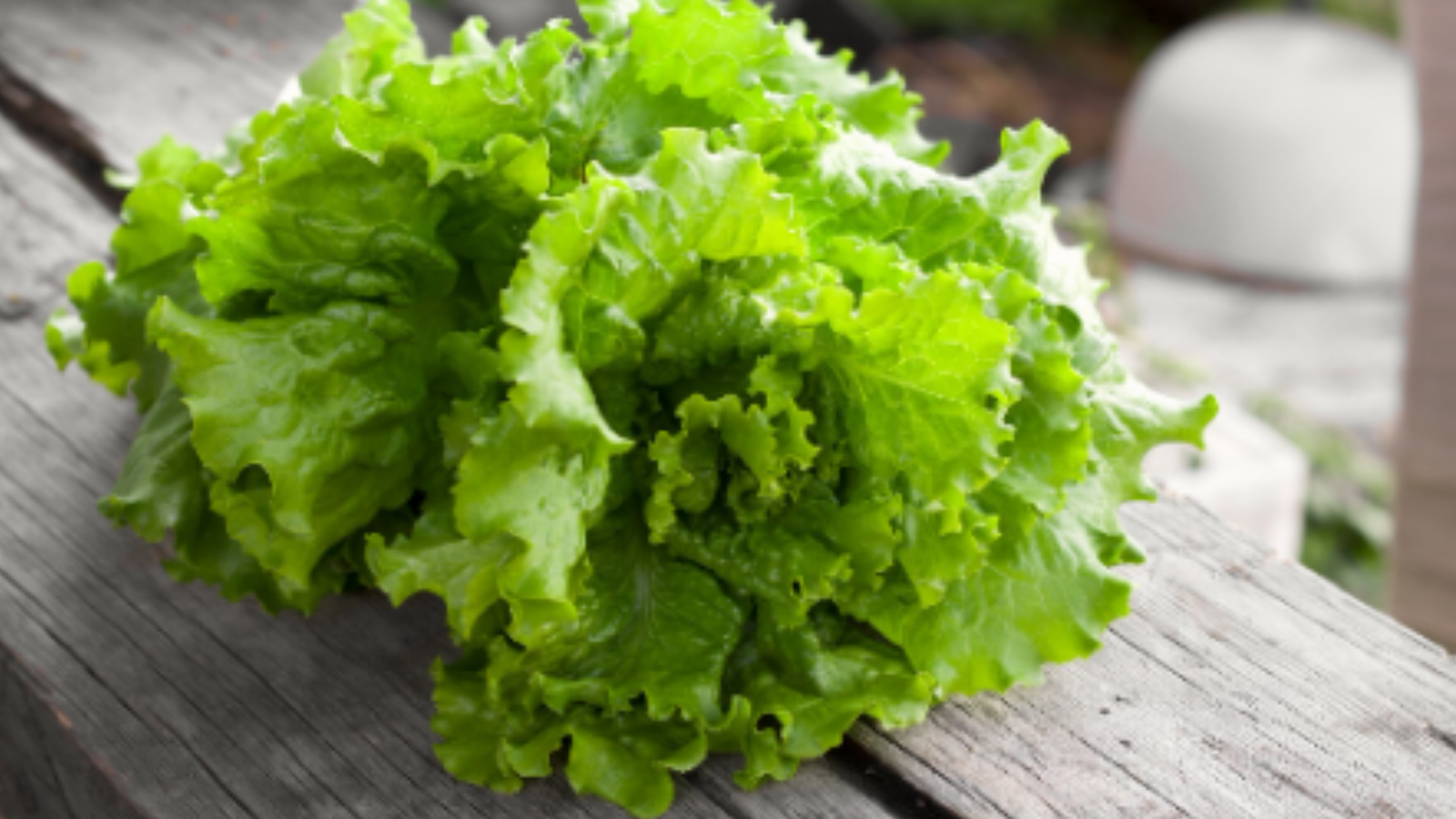
The media wants you to panic about your salad.
Newsrooms are hyperventilating over the Cyclospora cayetanensis outbreak ripping through Michigan and Ohio. Headlines blare warnings about "explosive diarrhea", while health departments issue toothless advisories telling restaurants to wash their greens more carefully.
It is a comforting narrative. It suggests the solution is simple: rub your snow peas harder, avoid raspberries, and trust the authorities to find the bad batch.
It is also completely wrong.
The current explosion of over 1,500 cases in Michigan alone is not a failure of kitchen hygiene. It is the predictable consequence of a broken industrial agricultural model and a federal regulatory system that actively chose to blindfold itself just one year ago.
Washing your lettuce will not save you. Here is the uncomfortable reality behind the outbreak that public health officials are too polite to tell you.
The Myth of the Clean Leaf
Every time a foodborne parasite hits the fan, the public relations machine wheels out the same advice: wash your produce.
I have spent fifteen years auditing food processing facilities and tracing agricultural supply chains. Let me tell you a secret that industrial growers know but never publicize: you cannot wash Cyclospora off a leaf.
Unlike bacteria, which can sometimes be sanitized with chemical rinses, Cyclospora oocysts are microscopic, sticky survival pods. They possess an incredibly tough outer wall that resists chlorine, triple-washing, and standard kitchen sanitizers. When a contaminated drop of irrigation water hits the textured surface of cilantro, a crinkled spinach leaf, or the microscopic crevices of a raspberry, that parasite attaches like industrial glue.
The Michigan Department of Health and Human Services recently suggested kitchens remove the outer layers of lettuce and scrub vegetables thoroughly. This is hygiene theater. If the irrigation water used on the farm was contaminated with human feces—which is how Cyclospora spreads—the entire crop is a biohazard. Telling a line cook to wash it better passes the buck from systemic agricultural failures to underpaid kitchen staff.
The CDC Quietly Blinded Us
The media treats Michigan as the epicenter of a freak biological anomaly. They are asking why the Great Lakes state is suddenly the worst hit in the nation.
They are asking the wrong question. Michigan is not necessarily sicker than the rest of the country; Michigan is just one of the few states actually looking.
On July 1, 2025, the Centers for Disease Control and Prevention (CDC) quietly made a disastrous bureaucratic pivot. They stripped Cyclospora from the mandatory tracking list of FoodNet, their primary foodborne illness surveillance network. Under current federal guidelines, state health departments are only forced to aggressively track and report two major pathogens: Salmonella and Shiga toxin-producing E. coli. Tracking parasites like Cyclospora became completely optional.
Michigan chose to keep tracking it. Most states did not.
When you see the CDC lagging weeks behind state data, or reporting small case counts across 28 other states, you are not looking at a contained outbreak. You are looking at a data vacuum. We are fighting a nationwide parasitic outbreak with an intentional, federally mandated blind spot. The real number of infections across the United States is likely thousands of cases higher than the official tally, hidden because routine medical tests do not even screen for this parasite unless a doctor explicitly demands an expensive stool PCR panel.
Centralized Processing is a Pathogen Amplifier
The prevailing wisdom says buying "pre-washed, bagged salad kits" is safer because they go through commercial sanitation systems.
The reverse is true. Industrial centralized processing does not contain outbreaks; it amplifies them.
Imagine a single commercial agricultural field in a region with poor water infrastructure. A small fraction of the crop is exposed to contaminated water. If that lettuce were sold as whole heads to local markets, the illness would be isolated to a few dozen households.
Instead, that lettuce is shipped to a massive, centralized processing plant. It is chopped, mixed, and dumped into giant communal wash bays with greens from dozens of other farms. This commercial washing process does not kill the parasite; it distributes it. One contaminated field effectively inoculates thousands of bags of salad mix, which are then shipped across state lines to grocery stores and fast-food chains.
Our obsession with convenience and cheap, year-round raw greens has created a hyper-efficient distribution network for pathogens.
How to Actually Protect Yourself
If you want to avoid spending the next four weeks bound to a bathroom, stop relying on the food safety tips printed on the back of a plastic salad bag. You need to change how you consume produce during the summer peak season.
- Accept the Raw Ban: If an outbreak is active in your region, stop eating raw, high-risk greens entirely. This includes cilantro, basil, bagged salad mixes, and raw snow peas.
- The 158-Degree Rule: Cyclospora is highly resistant to cold, and even freezing does not guarantee its destruction. Heat is the only absolute cure. The parasite dies instantly at $158^\circ\text{F}$ ($70^\circ\text{C}$). Cook your spinach. Saute your snow peas. Simmer your berries into a compote.
- Ditch the Pre-Cut Convenience: If you must eat raw lettuce, buy whole heads. Peel off and discard the outer leaves entirely. Wash the inner leaves under high-pressure running water to physically dislodge oocysts, rather than soaking them in a bowl where parasites can simply float to adjacent leaves.
The downside to this approach is obvious: it requires surrendering the convenience of the modern grocery store. It means accepting that raw produce is inherently risky in a globalized supply chain that relies on the feces-contaminated irrigation water of unregulated agricultural zones.
Stop waiting for the government to issue a recall on a specific brand. By the time investigators trace the single ingredient back to a distributor, the shelf life of the contaminated produce has expired, the food has been eaten, and thousands more people are already infected. The system cannot protect you from its own design. Cook your food or take your chances.