Every single time a storm system named Lala or anything else churns across the Pacific and clips the Hawaiian Islands, the media narrative follows a predictable, lazy script.
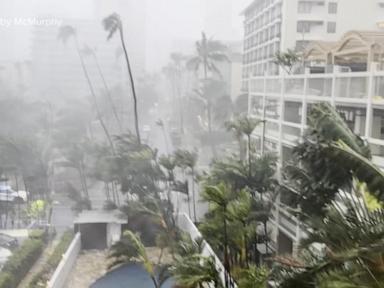
Cameras pan to wind-whipped palms, breathless reporters cling to streetlamps, and pundits nod gravely about the fury of Mother Nature. We are fed a steady diet of helplessness. We are told that paradise is fragile, that the elements are unbeatable, and that when a hurricane batters the coast, the resulting chaos is an act of God.
It is a comfortable lie. It absolves the people who built our modern vulnerabilities of any actual responsibility.
The truth is far more mundane and far more damning. The islands are not being destroyed by wind and water alone. They are being compromised by decades of deferred maintenance, archaic zoning laws, brittle power grids, and an over-reliance on mainland shipping logistics that treats food and fuel security as an afterthought.
When Lala battered the Hawaiian Islands, the storm did not invent new problems. It merely exposed the ones we refused to fix when the sun was shining.
The Myth of the Unbreakable Island Paradise
We romanticize geography until reality punches us in the mouth.
The standard media framing goes something like this: isolated in the middle of the Pacific Ocean, Hawaii is uniquely vulnerable to the whims of the meteorological gods. While there is geographical truth to isolation, it is weaponized as an excuse for systemic failure.
I have spent the last fifteen years auditing critical infrastructure resilience across vulnerable coastal zones, and I have seen municipal leaders blow millions of dollars on shoreline aesthetics while ignoring the sub-grade utilities sitting right beneath their feet. When a weather event hits, they point at the ocean and shrug.
Let us define what actually happens during these events. A Category 1 or Category 2 system brings sustained winds and heavy rainfall. That is not an extinction-level extinction event. That is routine weather for regions designed to handle fluid dynamics.
Yet, when Lala swept through, power distribution networks collapsed within hours. Why? Because utility poles erected decades ago remain vulnerable to falling Albizia trees, and underground cabling initiatives are perpetually stalled by bureaucratic red tape and community pushback over construction costs.
The problem is not the wind speed. The problem is fragile architecture masking as tropical charm.
Logistics Failures Wrapped in Aloha
Let us address the supply chain panic that instantly triggers the moment a storm warning flashes on local news.
Within forty-eight hours of a hurricane alert, grocery store shelves are stripped bare. Bottled water vanishes. Canned goods disappear. The narrative suggests that island communities are inherently precarious because of shipping lanes.
This is half-true, but deeply misleading. Hawaii imports roughly ninety percent of its food. That vulnerability is a policy choice, not a law of physics.
Decades of prioritizing real estate development for luxury tourism over localized agricultural production have left the islands uniquely exposed to supply chain shocks. When ports close for a few days due to high surf or wind warnings, the cushion evaporates immediately.
People ask: How long can the islands survive if cargo ships stop coming?
The better question is: Why have we allowed agricultural land to be paved over for resort expansions when self-sufficiency is the only real defense against isolation?
Blaming Lala for empty grocery aisles is a convenient distraction from the fact that local food security has been systematically defunded and ignored by successive administrations who preferred the predictable tax revenue of tourism over the hard work of agrarian infrastructure.
The Zoning Trap and Coastal Hubris
Look at where we build, and you will understand why every storm causes maximum economic damage.
For decades, real estate developers have crammed high-density commercial and residential properties onto low-lying coastal strips. Municipalities welcomed the property tax windfall. Insurance companies, backed by federal reinsurance programs, subsidized the risk, creating a moral hazard of epic proportions.
When a storm surge pushes ashore, it hits multi-million-dollar developments built on shifting sands and ancient wetlands that used to act as natural sponge buffers.
We drained the fishponds. We paved over the estuaries. We built seawalls that accelerate erosion on neighboring beaches, creating an artificial arms race against the ocean.
Then, when the water rises, we act surprised.
"Disasters are not natural. They are the intersection of natural hazards and human vulnerability."
That is not a poetic sentiment; it is an operational reality. Every dollar spent on emergency beach sand replenishment after a storm is a confession of systemic planning failure. Until we stop subsidizing coastal overdevelopment, storms like Lala will continue to act as expensive stress tests that we consistently fail.
Fixing the Blueprint
If you want to survive the next weather event without running out of toilet paper or losing power for a week, you have to throw out the playbook currently being used by local planners.
First, decentralize energy generation. Centralized grids dependent on long-distance transmission lines running through dense foliage are obsolete. Microgrids powered by localized solar arrays paired with battery storage are not a luxury; they are a baseline requirement for island resilience.
Second, rezone for defense. Stop treating coastal real estate as an endless gold mine. Managed retreat is a dirty word in politics because property values drop, but the alternative is bankrupting municipal governments through endless disaster recovery cycles.
Third, mandate agricultural redundancy. Every major population center on the islands should maintain a mandatory three-month strategic reserve of non-perishable staples and medical supplies stored locally, independent of container ship arrivals.
Lala was a gentle warning disguised as a battering ram. Next time, the system might not be so forgiving.
Stop waiting for the government to save you, and stop blaming the weather for human incompetence.