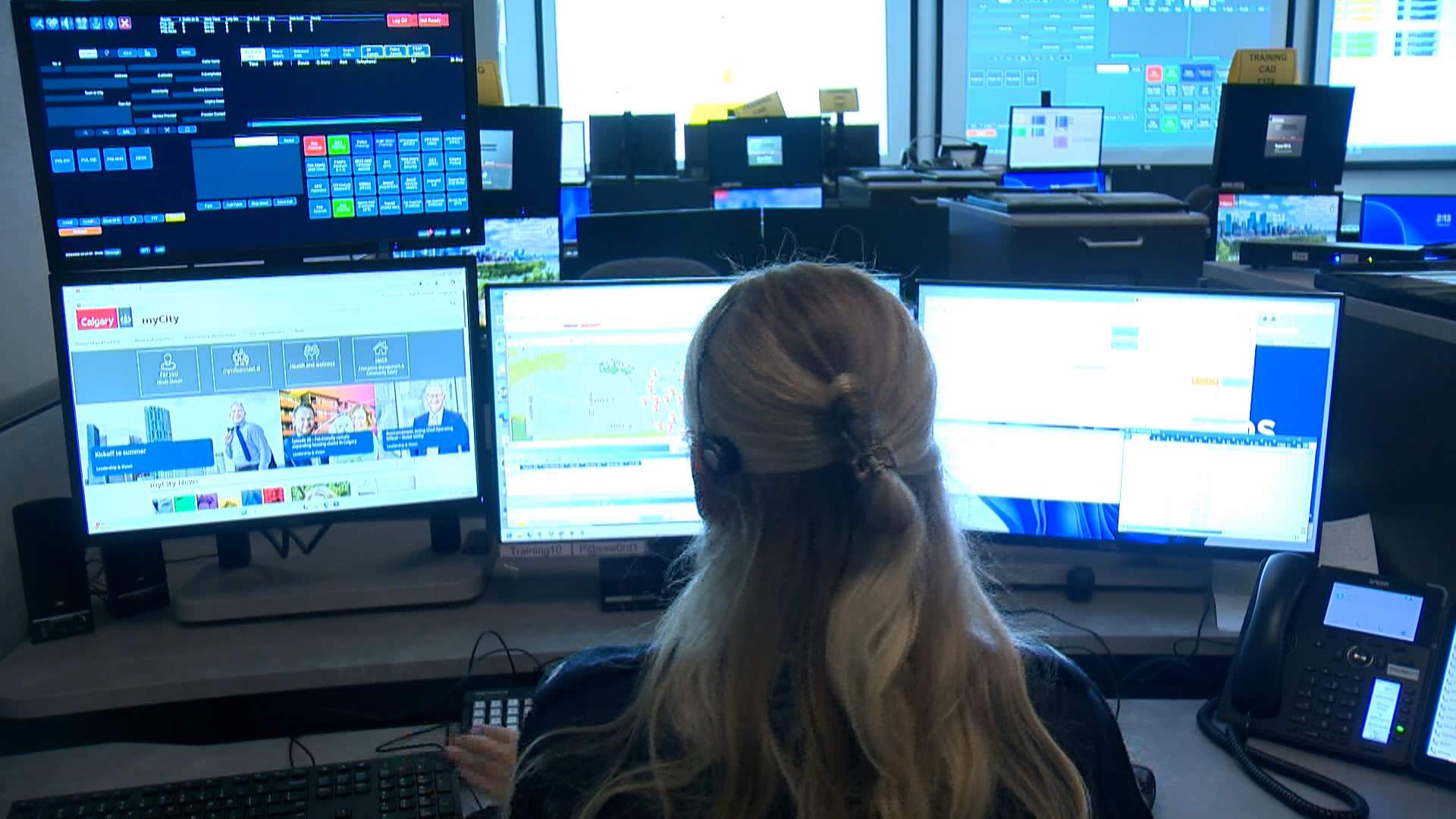
Calgary 911 answers over a million calls a year.
That is the terrifying, flashing number public safety bureaucrats throw at city councils whenever they want an expanded budget. They point at the chart. The line goes up. The narrative forms: Our citizens are in crisis, our operators are overwhelmed, and the system is buckling under the sheer weight of human desperation.
It is a compelling story. It is also entirely wrong.
The panic over rising emergency call volumes is a manufactured crisis built on a fundamental misunderstanding of operational data. Having spent years analyzing emergency dispatch logistics and municipal infrastructure, I can tell you that the crisis isn’t that people are calling 911 too much.
The crisis is that we treat 911 like a customer service hotline instead of a scarce, critical infrastructure resource.
We do not have a volume problem. We have a sorting problem. Until we stop treating every ringing phone with the same institutional weight, response times will continue to degrade, no matter how many millions of dollars we throw into the hiring furnace.
The Million-Call Myth
Let's look at the numbers the traditional media loves to wring its hands over. Yes, Calgary passes the seven-figure mark for emergency contacts annually. But what actually makes up that million-call metric?
If you audit dispatch data from any major metropolitan area, a brutal reality emerges. Up to 30% of incoming 911 calls are pocket dials, hang-ups, or accidental triggers from smartwatches. Another 40% are non-emergencies: citizens reporting a stolen bicycle from three days ago, asking about road closures during a snowstorm, or complaining about a unhoused person sleeping on a park bench.
The Reality Check
True, life-or-death emergencies—the cardiac arrests, the active shooters, the structural fires—make up a fraction of total dispatch activity.
When public safety officials lump pocket dials and active homicides into the same "million calls for help" statistic, they are actively obscuring the truth. They are using top-line volume to justify systemic inefficiency.
The standard administrative response to high volume is always the same: hire more call-takers. But adding more bodies to a broken intake process is like buying a bigger bucket to fix a leaky roof. It handles the symptom while ignoring the hole.
Why More Staff Cannot Fix Poor Triage
Municipalities love the hiring narrative because it looks like action. It plays well on the evening news. But the math of emergency dispatch does not support it.
Consider Erlang C, the standard queueing theory formula used to calculate staffing requirements for call centers. It assumes a predictable arrival rate and a standard handling time. But emergency dispatch does not operate like an airline reservation desk. It experiences massive, unpredictable spikes. A single minor traffic accident on the Deerfoot Trail can generate 45 distinct 911 calls within ninety seconds as hundreds of commuters drive past the scene.
[Accident Occurs]
       │
       ├──► Driver 1 calls 911 (Legitimate)
       ├──► Driver 2 calls 911 (Duplicate)
       ├──► Driver 3 calls 911 (Duplicate)
       ├──► Driver 4 calls 911 (Duplicate)
       └──► Driver 5 calls 911 (Duplicate)
Hiring enough staff to handle peak duplicate spikes means paying dozens of operators to sit idle during the 3:00 AM lull. It is fiscally impossible to staff a manual dispatch center to achieve zero-queue latency during a major multi-call event.
The bottleneck isn't human speed; it's the outdated insistence on human validation for obvious redundancies. If twenty people call from the exact same GPS coordinate within two minutes, a legacy system still requires twenty human beings to answer, interrogate, and log those calls. That is a design flaw, not a staffing shortage.
Dismantling the People Also Ask Nonsense
If you search for public safety solutions online, you run into a wall of naive assumptions. Let’s address the most common premises directly, because the consensus advice is actively dangerous.
Should we fine people for accidental 911 calls?
No. This is a classic bureaucratic solution that creates a worse problem. Penalizing citizens for accidental dials creates a chilling effect. A senior citizen who fears a $100 fine for an accidental Apple Watch trigger is a senior citizen who hesitates to call when they experience chest pains. You cannot fix systemic friction by terrorizing the user base.
Why can't we just route non-emergencies to 311 or 211?
Because the public does not care about your municipal taxonomy. When a citizen is stressed, angry, or confused, they do not pause to evaluate whether their situation requires an emergency response or a social services intervention. They dial the three numbers they have memorized since kindergarten. Expecting public education campaigns to change human behavior during an incident is a fantasy. The sorting must happen after the digit is pressed, not before.
The Unpopular Solution: Algorithmic Gatekeeping
If we want to save the emergency response framework, we must accept an uncomfortable truth: We need to stop humans from talking to humans by default.
The traditionalists will scream that this lacks empathy. They will argue that every caller deserves a human voice. But when you are trapped in a burning building, you do not need empathy; you need an available dispatch queue. If a human voice is busy reassuring someone whose garage was vandalized last night, they cannot dispatch the fire truck to your burning building.
An optimized public safety network requires aggressive, automated, upfront triage.
Incoming 911 Call
       │
       ▼
[Automated Location & Identity Check]
       │
       ├─► Identical Location to Active Incident? ──► SMS Update / Automated Queue
       │
       ├─► Confirmed Pocket Dial / No Audio?     ──► Automated Call-Back Verification
       │
       └─► Unique / Critical Metadata?            ──► Immediate Human Dispatcher
1. Automated Duplicate Supression
When a major incident occurs, geolocation data should instantly flag incoming calls from that immediate vicinity. Instead of routing all forty eyewitnesses to live operators, an automated system should intercept the secondary callers: "We are currently tracking a traffic incident at your location. Emergency services are en route. If you have details about injuries or an active threat, press 1 to speak to an operator immediately. Otherwise, please hang up." This single intervention would instantly clear up to 20% of peak call volume.
2. Digital Deflection for Low-Priority Incidents
If a caller inputs a non-urgent request, they should be digitally deflected. Property crimes with no suspect on scene do not require a live 911 conversation. The system should automatically push a secure link via SMS to upload photos and file a report directly into the police database.
3. Asynchronous Verification for Silent Calls
Instead of forcing an operator to spend two minutes listening to the rustle of a pocket dial, trying to determine if it’s a silent emergency, an automated script should handle the initial callback. If the system detects zero audio and a standard pocket-dial signature, it executes an immediate, automated text-and-voice verification loop. If the user fails to respond, it is escalated. If they hit "cancel," the queue clears instantly.
The Risk of Doing It Right
Implementing this approach requires political courage because it introduces a non-zero margin of error.
An algorithm might misclassify a chaotic situation. A secondary caller might have crucial, distinct information about a suspect that gets delayed by an automated intercept. That is the dark side of efficiency. Public safety administrators live in mortal terror of the one-in-a-million failure that ends up in a coroner's report. To protect themselves, they accept a system that is uniformly slow for everyone, rather than a system that is lightning-fast for 99.9% of true emergencies but carries a slight operational variance.
But the current trajectory is already a failure. When wait times to speak to a 911 operator stretch into minutes—as they regularly do in major cities across North America—the system is already broken. We are sacrificing the victims of active, time-critical emergencies on the altar of administrative risk-aversion.
Stop measuring success by how many calls you answer. Start measuring success by how many low-value calls you ruthlessly eliminate from the queue. Stop hiring more people to type notes into a legacy terminal. Turn away from the comforting lie that more money solves bad architecture.
Disconnect the queue.