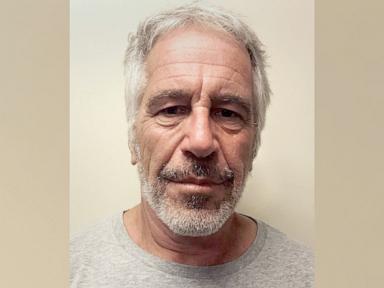
Congressional committees love a good public flogging. Cameras roll. Lawmakers lean into microphones with practiced moral outrage. Headlines instantly echo the theater: "House panel rebukes DOJ's handling of Epstein case." Everyone nods along, convinced that accountability is finally happening in Washington.
It is an illusion.
If you believe a sternly worded committee report or a televised dressing-down of Department of Justice officials fixes the institutional rot exposed by Jeffrey Epstein's 2007 non-prosecution agreement and his 2019 jailhouse death, you are falling for the oldest distraction in federal politics. The lazy consensus treats a House oversight rebuke as a victory for justice. In reality, congressional reprimands are political sedatives designed to simulate action while leaving the exact statutory loopholes that enabled the failure completely intact.
I have spent years watching legislative oversight committees run this exact playbook across federal agencies. They haul bureaucrats into a hearing room, demand answers about decade-old misconduct, issue a scathing bipartisan press release, and then quietly move on to the next news cycle without changing a single line of the United States Code. Outrage is free. Statutory reform requires actual work, political capital, and picking fights with powerful institutional lobbies.
The Theater of Moral Outrage vs. Actual Jurisdiction
To understand why these rebukes accomplish nothing, look at the mechanics of federal oversight. When a House panel "rebukes" the Department of Justice, what legal force does that action carry? Zero. None. It is a formal expression of disapproval, carrying the exact same binding legal weight as an angry letter to the editor.
Look at the real history of the Epstein prosecution. In 2007, federal prosecutors in the Southern District of Florida, led by then-U.S. Attorney Alexander Acosta, negotiated a secret non-prosecution agreement (NPA). That deal immunized Epstein and any potential co-conspirators from federal sex trafficking charges, allowing him to plead guilty to state-level solicitation charges and serve a cushy work-release sentence. Crucially, prosecutors actively concealed the agreement from the victims, violating the Crime Victims' Rights Act (CVRA) of 2004.
Fast forward more than a decade. The DOJ's own Office of Professional Responsibility (OPR) investigated the matter and concluded in 2020 that Acosta exercised "poor judgment" but did not commit professional misconduct under existing department rules. The Bureau of Prisons (BOP) presided over catastrophic custody failures at the Metropolitan Correctional Center in New York in August 2019, resulting in Epstein's death before he could face a federal jury.
When a House panel steps in years later to rebuke the DOJ over these failures, they are criticizing the symptoms while ignoring the disease. The DOJ did not go rogue in a vacuum; it operated within a framework of unchecked prosecutorial discretion and toothless victim-rights enforcement that Congress itself created and refuses to amend.
Why "Prosecutorial Discretion" Is the Real Villain
Most media coverage frames the Epstein saga as a unique aberration—a freak convergence of extreme wealth, political connections, and a few bad apples in Miami and Manhattan. That framing lets the system off the hook.
The truth is far more uncomfortable. The exact legal mechanisms used to shield Epstein are deployed every single day in federal courthouses across the country. They are just usually used against defendants, or by corporations, in ways that do not make the front page of national newspapers.
- Secret Non-Prosecution Agreements: Federal prosecutors hold near-absolute power to decline prosecution or enter into secret deferred and non-prosecution agreements without judicial review. Judges rarely have the authority to reject an NPA because charges are never formally filed in court.
- Toothless Victim Notification Laws: Even after the Eleventh Circuit Court of Appeals examined the Epstein case in In re Wild, the court ruled that the Crime Victims' Rights Act does not create a private right of action for victims to enforce their rights before federal charges are officially filed. Think about that. If a prosecutor cuts a secret deal before an indictment drops, the victims have no legal standing to stop it.
- The OPR Accountability Shield: The Department of Justice polices its own attorneys through the Office of Professional Responsibility. Historically, OPR applies such a narrow, hyper-technical definition of "misconduct" that almost any catastrophic ethical failure gets downgraded to "poor judgment," insulating government lawyers from disbarment or civil liability.
A congressional panel issuing a rebuke does not fix In re Wild. It does not subject non-prosecution agreements to mandatory federal judicial review. It does not strip OPR of its monopoly on disciplining federal prosecutors. Until Congress amends Title 18 of the U.S. Code to close those exact loopholes, another well-connected defendant can get the exact same sweetheart deal tomorrow morning, completely legally.
Dismantling the Wrong Questions
When news breaks about congressional panels grilling the Justice Department over Epstein, public search queries immediately spike around the wrong topics. People ask: "Who is going to be fired over the Epstein DOJ report?" or "Will the House rebuke force the DOJ to release the client list?"
Both questions rest on fundamentally flawed premises.
First, nobody is getting fired over a congressional rebuke of a 2007 plea deal. The primary architects of the Florida non-prosecution agreement left the Department of Justice years ago. You cannot fire private citizens from government jobs they no longer hold. Furthermore, civil service protections and DOJ internal regulations make firing career prosecutors over discretionary charging decisions virtually impossible absent proven criminal bribery. Demanding firings for retired officials is like demanding a refund from a restaurant that closed ten years ago.
Second, the obsession with a magical, comprehensive "client list" sitting in a DOJ vault misunderstands how federal sex trafficking investigations actually work. Federal prosecutors do not build cases around a neat spreadsheet titled "Clients." They build cases around financial records, flight logs, witness testimony, corroborating physical evidence, and Grand Jury subpoenas. Under Rule 6(e) of the Federal Rules of Criminal Procedure, grand jury materials are strictly secret by federal statute. A House panel cannot simply "rebuke" the DOJ into violating Rule 6(e) without passing specific legislation or obtaining a narrow judicial exception.
When lawmakers imply that a stern committee hearing will force the immediate disclosure of secret investigative files, they are selling false hope to an angry public.
The Bureau of Prisons Distraction
The other half of the DOJ's failure involves the Bureau of Prisons and the glaring breakdowns leading up to Epstein's death in 2019. Broken cameras. Guards asleep at their desks and falsifying logbooks. A high-profile inmate taken off suicide watch and left alone in a cell with excess bedsheets despite clear protocol prohibiting it.
House panels love hammering the DOJ on BOP failures because the incompetence is visually obvious and politically safe to attack. Nobody is going to defend guards sleeping on duty.
Yet even here, the congressional rebuke strategy misses the structural reality. The federal prison system has suffered from chronic understaffing, mandatory overtime ("augmentation," where teachers and secretaries are forced to work as correctional officers), and crumbling infrastructure for over a decade. When Congress passes budgets that starve federal detention facilities of basic maintenance funds while expanding federal criminal statutes, operational collapse is mathematically guaranteed.
Rebuking the Attorney General for a broken camera in a Manhattan jail cell when Congress approved the capital budgets for the Bureau of Prisons is peak Washington hypocrisy. You cannot chronically underfund an agency's basic physical security, ignore years of Inspector General warnings about staffing shortages, and then act shocked when high-security protocols fail during a crisis.
What Real Accountability Actually Looks Like
If the goal is actual systemic change rather than viral video clips for campaign fundraising emails, the blueprint is straightforward. It requires taking power away from the executive branch's black box and putting it into the sunlight of federal courtrooms.
- Amend the Crime Victims' Rights Act Immediately. Congress must pass targeted legislation overturning the practical effect of the In re Wild ruling. Victims of federal crimes must have statutory standing to challenge secret non-prosecution agreements prior to the filing of formal charges, and courts must have the explicit authority to void agreements negotiated in violation of victim notification mandates.
- Mandate Judicial Review for All Federal NPAs and DPAs. Any non-prosecution or deferred prosecution agreement entered into by a U.S. Attorney's Office involving violent crimes, sex offenses, or major financial fraud should require approval from a federal district judge, unsealed on the public docket unless specific, narrowly tailored witness-protection criteria are met.
- Strip OPR of Exclusive Disciplinary Jurisdiction. Allegations of prosecutorial misconduct involving constitutional or statutory violations should be referred to an independent inspector general with subpoena power and mandatory public reporting requirements, ending the practice of DOJ lawyers grading their own homework.
- Enforce Statutory Penalties for BOP Protocol Violations. Move beyond administrative wrist-slaps for correctional leadership when mandatory suicide-watch and camera-monitoring protocols fail in federal custody, tying agency executive bonuses directly to verified compliance audits.
The Uncomfortable Downside of Transparency
Every serious reform carries trade-offs, and pretending otherwise is dishonest. If Congress strips federal prosecutors of the ability to negotiate confidential non-prosecution agreements, the government will lose a powerful tool used to flip mid-level co-conspirators against larger criminal enterprises. Cooperation agreements often rely on secrecy during the early stages of an investigation so targets do not destroy evidence or intimidate witnesses.
Forcing early judicial review and mandatory victim notification before indictments are filed will slow down complex investigations. It will make prosecutors more risk-averse. Some guilty people will walk free because a cooperator refused to sign a deal that couldn't be kept entirely under wraps.
That is a price worth paying. A justice system that trades public transparency and victim rights for prosecutorial convenience inevitably produces secret deals for the powerful and maximum sentences for everyone else. The Epstein disaster proved what happens when unchecked discretion operates behind closed doors without judicial or public scrutiny.
Stop applauding when politicians yell at bureaucrats in committee rooms. Watch what they actually pass on the House floor. Until lawmakers rewrite the laws governing prosecutorial secrecy and victim standing, every congressional rebuke is just noise.