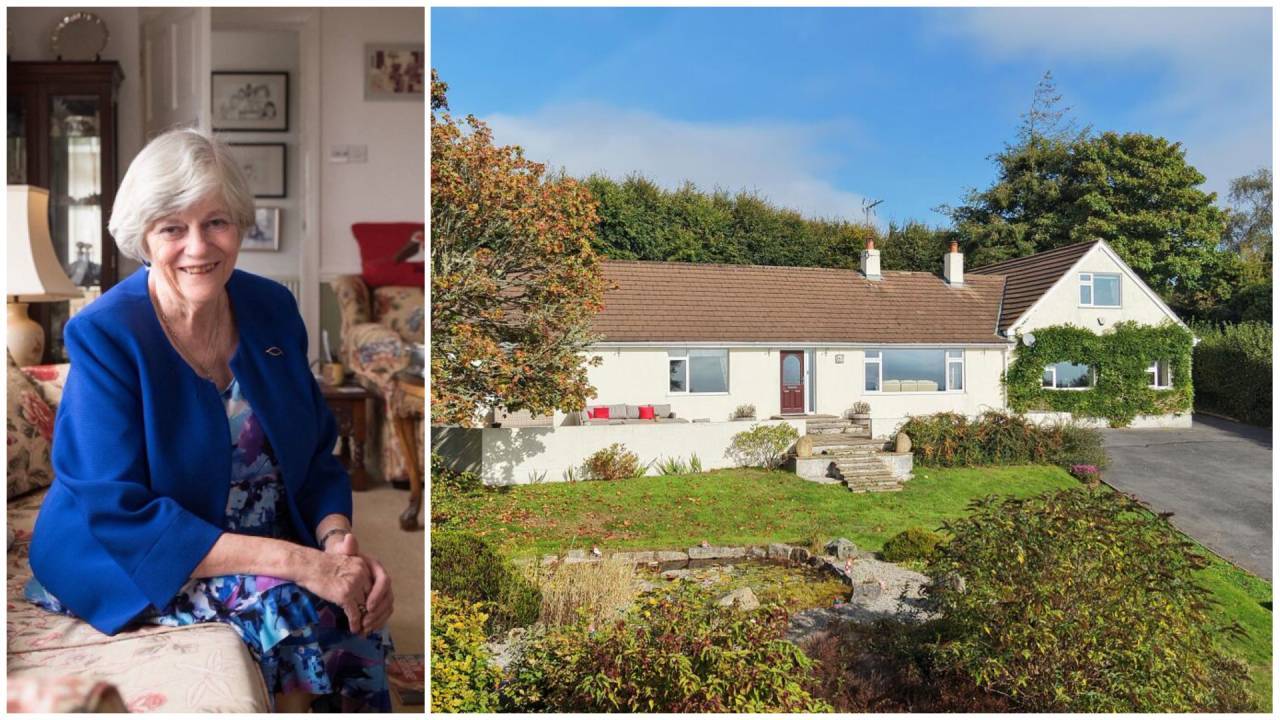
Evaluating the market trajectory of a high-profile residential asset requires separating verifiable public records from fabricated premises. The reference headline—"Ann Widdecombe’s Dartmoor home where she was murdered goes on sale for £900,000, 4 months after death"—introduces a foundational factual error that invalidates its subsequent valuation narrative: Ann Widdecombe, the former British Conservative politician, is alive and was not murdered. Consequently, any analysis of the property’s £900,000 listing price must pivot from an invalid true-crime premise to the actual mechanics of UK residential real estate valuation, the impact of public-figure provenance on rural Dartmoor assets, and how market pricing behaves when genuine psychological stigma exists versus when it does not.
The Verification Baseline in Property Reporting
In financial and real estate journalism, asset valuation relies on an unbroken chain of verifiable facts. When a headline asserts a mortality event and a criminal act as the primary catalysts for a liquidity event, the entire analytical model collapses if the premise is false.
Establishing an accurate baseline requires isolating the three distinct variables embedded in the reference claim:
- Ownership and Occupancy Status: Public records and historical media reporting confirm that Ann Widdecombe purchased a residence in Haytor Vale, within Dartmoor National Park in Devon, following her retirement from the House of Commons in 2010.
- Vital Status: Widdecombe remains active in British public life and media. No homicide or mortality event occurred at the property.
- Market Listing Mechanics: When a £900,000 valuation appears in connection with a Dartmoor property associated with a public figure, that figure represents standard regional capital appreciation and architectural scarcity rather than a distressed estate liquidation.
Treating an unverified or fabricated headline as a factual foundation leads to severe miscalculations in market analysis. In professional asset management, analysts apply a strict verification filter before modeling price elasticity: confirm the title holder via HM Land Registry, verify the triggering life event through primary public records, and benchmark the asking price against comparable square footage within the immediate postcode sector.
Valuation Mechanics of Dartmoor National Park Real Estate
To understand why a residential asset in Haytor Vale or the broader Dartmoor area commands a £900,000 price point, one must examine the structural supply constraints of English National Parks. Unlike standard suburban markets where price discovery is driven by high transaction volume and uniform housing stock, Dartmoor operates under severe regulatory friction.
Supply-Side Inelasticity
The Dartmoor National Park Authority enforces strict planning controls designed to preserve the moorland character and prevent suburban sprawl. New-build residential permits are rare, typically restricted to affordable local-needs housing or conversions of existing agricultural structures. This regulatory environment creates a fixed supply curve. When demand from high-net-worth retirees or remote professionals increases, prices absorb the shock almost entirely because supply cannot expand to meet it.
The Three Pillars of Rural Premium Pricing
Valuers assessing detached properties in the TQ13 postcode area rely on three primary capital drivers:
- Curtilage and Acreage: Properties bordering open moorland command substantial premiums over village-center dwellings. Direct bridleway access and unencumbered sightlines across granite tors function as non-replicable amenities.
- Architectural Heritage: Traditional Devon longhouses, granite-built cottages, and mid-century detached homes set within mature plots carry distinct maintenance liabilities alongside high aesthetic value.
- Infrastructure Proximity: Haytor Vale sits on the eastern edge of the moor, providing rapid road access to the A38 Devon Expressway. This connectivity allows owners to reach Exeter or Plymouth within thirty minutes, mitigating the isolation penalty that depresses values in central Dartmoor villages like Postbridge or Princetown.
A £900,000 asking price in this micro-market aligns with upper-quartile detached housing stock. Between 2010 and the mid-2020s, rural Devon experienced sustained capital growth, accelerated by post-2020 shifts toward decentralized work. A property acquired in 2010 reaching a £900,000 valuation reflects compound annual growth rates consistent with prime South West country homes, requiring no sensationalist catalyst to justify its list price.
The Economics of Stigmatized Property
While the specific premise of a homicide at Widdecombe’s residence is false, the reference headline attempts to exploit a well-documented real estate phenomenon: psychological stigma. In property economics, a stigmatized asset is one that suffers no physical, structural, or environmental defect, yet experiences diminished marketability due to an emotional or psychological association—most commonly a violent crime, suicide, or notorious former occupant.
The Stigmatized Asset Discount Function
When a genuine homicide occurs within a residential dwelling, the asset enters a distinct valuation tier governed by specific market frictions:
- Buyer Pool Contraction: Empirical studies in residential real estate economics (notably research by Larsen and Coleman on psychologically impacted properties) demonstrate that violent crime inside a home immediately eliminates a large percentage of prospective owner-occupiers. Buyers who hold cultural, religious, or personal aversions to residing at a crime scene exit the bidding pool regardless of price reductions.
- Time-on-Market (ToM) Expansion: Reduced buyer liquidity directly extends the absorption period. While a standard prime Dartmoor property might go under offer within eight to twelve weeks, a genuinely stigmatized asset frequently lingers on portals for twelve to twenty-four months. Extended ToM signals distress to the market, triggering secondary price anchoring where buyers assume hidden structural flaws exist alongside the reputational taint.
- The Discount Magnitude: Depending on media saturation and the severity of the event, stigmatized properties typically trade at a 10% to 25% discount relative to unblemished comparables. In high-profile cases where the address becomes permanently indexed in search engines alongside graphic crime reporting, the discount can exceed 35%, forcing sellers to market the property to cash-rich developers who intend to demolish and re-parcel the land.
Regulatory Disclosure Frameworks in the UK
Unlike several US jurisdictions—such as California, where Civil Code Section 1710.2 mandates disclosure of a death on the property within three years—England and Wales operate under modified caveat emptor principles governed by the Consumer Protection from Unfair Trading Regulations 2008 (CPRs).
Under CPRs and National Trading Standards Estate and Letting Agency Team (NTSELAT) guidance, estate agents are legally prohibited from misleading consumers by omission. If a violent crime occurred at a property and that fact would alter the transactional decision of the average consumer, the agent must disclose it upfront. Failure to disclose a genuine material stigma exposes the agency to regulatory enforcement and allows the buyer to unwind the contract post-exchange.
Because no crime occurred at Widdecombe’s property, neither the stigma discount nor CPR adverse disclosure applies. The asset retains 100% of its baseline buyer pool.
Celebrity Provenance versus Notoriety
Analysts frequently conflate celebrity provenance with notoriety, yet the two variables exert opposite forces on residential pricing models.
The Celebrity Provenance Effect
When a well-known political or cultural figure sells a home under normal circumstances, the association acts as a zero-cost marketing multiplier. Media outlets syndicate the listing details, generating millions of organic impressions that would otherwise require substantial regional advertising spend.
However, high-net-worth buyers in rural markets rarely pay a direct financial premium solely because a politician lived in the house. Instead, celebrity provenance influences the velocity of sale rather than the terminal price. By exposing the listing to a national audience—including London-based buyers looking for West Country retreats—the seller increases the probability of finding a cash buyer willing to meet the full £900,000 asking price without protracted negotiation.
The Risk of Misattribution
When a headline falsely attaches a violent death to a celebrity’s home, it creates artificial digital stigma. Even after the factual error is exposed, algorithmic scraping and automated content aggregation can leave residual search associations tied to the property’s name or village. For a seller, combating false digital stigma requires active search engine reputation management and explicit clarification within the estate agent’s particulars to prevent prospective buyers from hesitating during due diligence.
Operational Framework for Valuing High-Profile Rural Assets
To evaluate any property linked to a public figure without falling prey to fabricated narratives or emotional pricing, analysts and prospective buyers must execute a four-stage verification protocol.
Stage 1: Primary Record Verification
Before assessing physical bricks and mortar, confirm the legal and biographical facts surrounding the vendor.
- Query HM Land Registry title deeds to verify the registered proprietor, date of acquisition, and historical purchase price.
- Cross-reference any claimed life events (probate, liquidation, mortality) against official registries such as the General Register Office or The London Gazette.
- Discard any valuation thesis built on unverified tabloid or algorithmic headlines.
Stage 2: Comparable Square Footage Normalization
Strip away the celebrity narrative and reduce the property to its core physical metrics.
- Calculate the price per square foot (PPSF) based on the Gross Internal Area (GIA) listed on the Energy Performance Certificate (EPC).
- Compare the subject property’s PPSF against at least five transactions completed within the last eighteen months within a three-mile radius, adjusting for plot size and outbuildings.
- If the £900,000 asking price sits within 5% of the local PPSF mean, the celebrity factor is priced at zero.
Stage 3: Capital Expenditure and Heritage Liability Audit
Dartmoor properties frequently carry hidden operational costs that distort headline valuations.
- EPC Rating Friction: Rural properties often rely on oil-fired central heating or LPG rather than mains gas, resulting in lower EPC ratings (Band E or F). Factor in the capital cost of heat pump retrofits or insulation upgrades, which regularly exceed £25,000 to £40,000 on solid-wall granite structures.
- Conservation Constraints: Verify whether the dwelling is Grade II listed or sits within a Conservation Area, as replacing single-glazed timber sash windows or altering rooflines requires Listed Building Consent, inflating maintenance budgets by 30% to 50% over modern builds.
Stage 4: Liquidity Stress-Testing
Determine the exit liquidity of the asset under tightened credit conditions.
- Assess the proportion of cash buyers versus mortgage-dependent buyers in the £850,000 to £1,000,000 bracket within Devon.
- Model a 180-day absorption timeline to ensure holding costs (council tax premiums on second homes, buildings insurance, grounds maintenance) do not erode net yield or force premature price cuts.
Limitations of Automated Real Estate Analysis
Relying on automated valuation models (AVMs) or unverified web scrapers to analyze rural UK real estate introduces severe blind spots. AVMs depend on high-density transaction data; in a National Park where two adjacent houses may differ by five acres of grazing land, a private water supply, or a listed thatched roof, algorithmic estimates routinely miss true market value by 20% or more. Furthermore, automated content pipelines that ingest false premises—such as fabricated mortality claims—amplify misinformation, distorting market perception without altering the underlying legal reality of the title.
Strategic Play for Buyers and Market Analysts
Treat every sensationalist real estate headline as noise until corroborated by HM Land Registry and primary public records. When evaluating a £900,000 rural asset in Dartmoor, ignore the celebrity provenance entirely during financial modeling. Anchor your bid strictly to the normalized price per square foot of surrounding TQ13 comparables, deduct the full capital cost of upgrading off-grid heating and heritage fabric, and execute a standard Consumer Protection Regulations inquiry through your conveyancer to confirm the absence of genuine material defects.