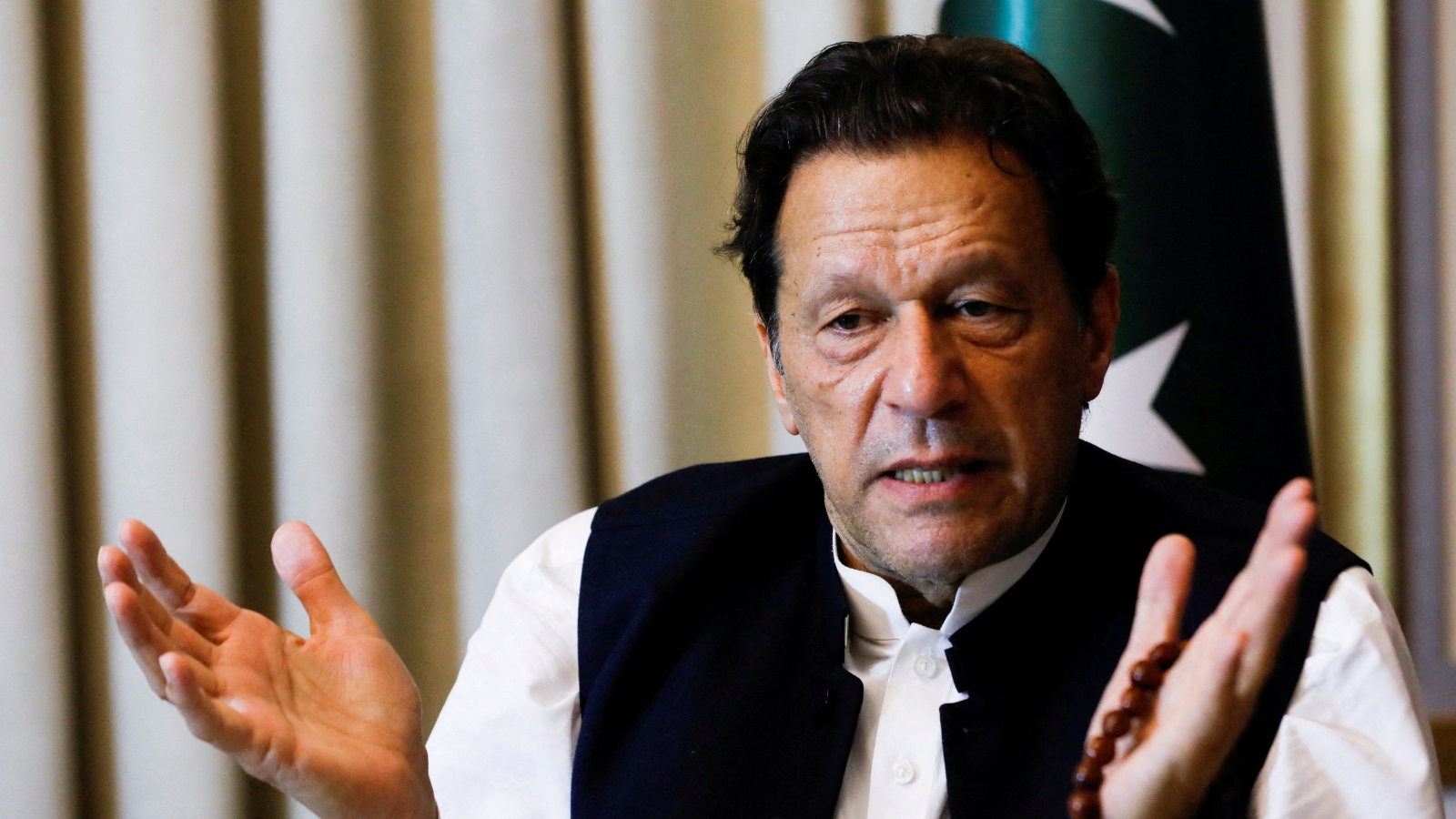
The institutional trajectory of high-stakes political detention relies on predictable mechanisms of isolation, procedural friction, and state-controlled diagnostics. When former Pakistani Prime Minister Imran Khan was moved from Adiala Jail to a medical facility under a Supreme Court directive, the subsequent deviation to a state-run institution instead of the mandated private hospital exposed the mechanics of state compliance under pressure. This operational analysis deconstructs the institutional variables, legal friction, and political cost functions governing the handling of high-profile state detainees.
The Divergence Protocol and Institutional Friction
The mechanics of state detention operate through controlled environments where every variable—from transit routes to diagnostic panels—is subject to administrative override. The Supreme Court had directed that Khan be transferred to Shifa International Hospital in Islamabad to be evaluated by an independent medical panel that included his personal physician. Instead, authorities executed an alternate routing protocol, delivering him to the state-run Pakistan Institute of Medical Sciences (PIMS). If you enjoyed this piece, you should check out: this related article.
This maneuver highlights three distinct administrative control vectors:
- Jurisdictional Substitution: Bypassing private medical facilities neutralizes independent oversight, replacing external medical boards with state-appointed practitioners whose findings align with institutional imperatives.
- Logistical Obfuscation: Shifting transit timelines and utilizing state-controlled venues minimizes public visibility, reducing the window for legal intervention or crowd mobilization by political supporters.
- Procedural Contestation: Filing retroactive review petitions while returning incomplete paper books creates a legal gridlock that allows executive authorities to execute operational changes before judicial checks can be enforced.
Information Minister Attaullah Tarar cited security risks posed by Pakistan Tehreek-e-Insaf (PTI) workers along the designated route as the catalyst for the venue modification. This justification reframes a judicial non-compliance issue as an operational security necessity, demonstrating how state apparatuses leverage public safety frameworks to neutralize court-mandated transparency. For another angle on this event, see the recent coverage from BBC News.
The Diagnostic Cost Function
In high-consequence detentions, medical assessments function as administrative instruments rather than purely clinical procedures. The discrepancy between the legal mandate and the execution environment centers on the metrics of health deterioration versus official declarations of fitness.
- The Symptom Baseline: Legal teams and family members have consistently highlighted specific physiological degradation points, notably right central retinal vein occlusion affecting vision, alongside severe psychological strain categorized under high-level anxiety frameworks.
- The Official Counter-Metric: State medical boards deployed at PIMS evaluated Khan and declared him medically fit for return to detention within hours, asserting that no immediate clinical intervention was warranted.
This dichotomy establishes a friction point between private diagnostic verification and state-sanctioned clearance. By restricting access to independent physicians—such as Dr. Faisal Sultan—the state preserves a monopoly on medical truth within the detention ecosystem. The presence of a physical eye patch and the expedited pre-dawn return to Adiala Jail underscore a tactical preference for rapid containment over extended diagnostic scrutiny.
The Escalation Matrix and Legal Recourse
The institutional friction generated by these hospital transfers triggers predictable retaliatory responses from the political opposition, setting off a cycle of legal escalation.
[Supreme Court Mandate]
       │
       ▼ (Administrative Override)
[PIMS State Evaluation] ──► [Declared Medically Fit]
       │
       ▼ (Pre-Dawn Return)
[Adiala Jail Containment] ──► [PTI Contempt Petition Filed]
The Pakistan Tehreek-e-Insaf leadership responded by framing the PIMS diversion and the exclusion of personal physicians as a direct violation of judicial authority. The strategic deployment of contempt petitions functions as the primary constitutional counterweight available to an opposition party locked out of administrative decision-making. However, the efficacy of judicial contempt proceedings remains bound by the broader balance of power between the judiciary and executive security apparatuses.
The public revelation by family members—specifically Uzma Khan—regarding prison conditions, isolation parameters, and physical indicators of distress serves to sustain external pressure. By maintaining a steady stream of verified accounts from brief visitations, the political network counters the information vacuum imposed by prolonged solitary detention.
Strategic Forecast
The recurrence of medical transfer disputes points toward a permanent state of institutional friction. Executive authorities will continue to balance the domestic and international costs of high-profile detainee mortality against the political risk of allowing unchecked medical transparency or independent oversight. Future judicial interventions will likely be met with preemptive administrative hurdles, ensuring that state control over the detainee's physical environment remains absolute even when formal legal compliance is nominally pursued.
To understand the broader political implications and the specific framing used by political actors during these developments, watch this detailed news report on Imran Khan hospital visit and allegations.
http://googleusercontent.com/youtube_content/1