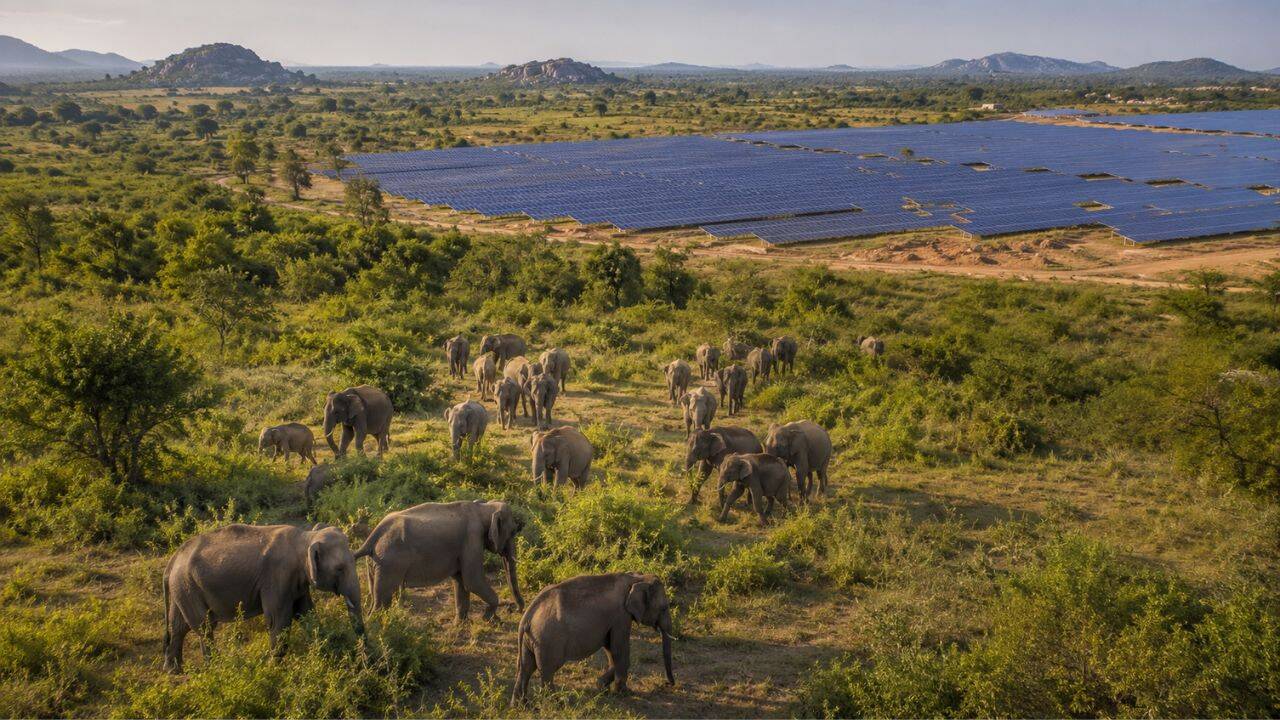
Greens love solar panels until the green energy transition clears a forest and panics an endangered elephant herd. Right now, in Sri Lanka’s southern Hambantota district, a massive 150-megawatt solar push is colliding head-on with a brutal reality. More than 400 wild elephants call this dry scrubland home, and the bulldozers are already rolling.
You're told that every square foot of solar infrastructure saves the planet. But on the ground, reality is far messier. When developers clear hundreds of hectares of scrub forests that elephants rely on for food, the animals don't simply vanish. They push into farming villages, sparking a deadly cycle of human-elephant conflict that already claims hundreds of lives a year.
How 17 Separate Projects Bypass the Big Picture
How do you clear hundreds of hectares of wildlife habitat without tripping alarms in the main environmental watchdog offices? You divide and conquer.
Instead of presenting one colossal project that demands a rigorous, nationwide environmental impact assessment, planners carved the initiative into 17 smaller units handled by different private companies. Under local regulations, smaller setups can slip through with an initial environmental examination rather than a full-scale review.
Environmental groups like the Centre for Environmental Justice point out the obvious trick. An elephant herd doesn't check property deeds. A fence here, a cleared patch of scrub there, and an entire ancient migration route gets sliced to pieces.
Activists from the Movement for Land and Agricultural Reform (MONLAR) estimate that anywhere from 202 to over 405 hectares of vital elephant habitat are vanishing under this piecemeal clearance strategy. Heavy machinery moves in, vegetation goes up in smoke, and the buffer zones protecting local farming communities disappear.
The Human Cost of Displaced Wildlife
Sri Lanka already holds one of the worst records globally for human-elephant conflict. Between 2015 and 2025, the Hambantota district alone recorded dozens of human deaths alongside double that number in elephant fatalities.
Farming families in areas like Mayurapura and Gonnooruwa live on edge. When scrub forests are bulldozed for green energy, displaced elephants lose their natural forage. They wander into cultivated plots looking for food, crops get destroyed, and villagers panic.
People take matters into their own hands out of desperation. Shootings, poisonings, and crude traps kill elephants, while retaliatory charges devastate families. Building solar farms on critical animal corridors doesn't solve the climate crisis. It trades a global carbon problem for a bloody local emergency.
Green Against Green
It's easy to point fingers at private developers, but the state's energy ambitions are driving the rush. Sri Lanka wants to achieve heavy carbon-neutral targets by 2050. Solar power currently trails far behind traditional hydropower on the national grid, so officials are desperate to scale up photovoltaic capacity.
Hambantota offers cheap land, abundant sunshine, and low rainfall. On paper, it looks like an ideal spot for clean energy.
Yet conservation scientists argue that ignoring local geography backfires. Scrub forests might look like barren, degraded wasteland to bureaucrats in capital offices, but to an Asian elephant, those dry bushes are a lifeline. Stripping away traditional feeding grounds forces animals deeper into human settlements.
Protecting the planet shouldn't require destroying the exact ecosystems we claim to care about. If renewable energy projects trample local biodiversity and endanger rural communities, they aren't sustainable. Planners need to halt piecemeal land clearances, enforce strict cumulative impact studies, and stop trading wildlife habitats for quick green credentials.