The sky above Washington does not belong to the people on the ground. It belongs to a geometry of invisible corridors, of narrow ribbons drawn in the air where commercial airliners, military transports, and presidential helicopters must weave past one another without touching.
Most days, the system holds. Air traffic controllers stare at amber screens, their eyes tracking small green blips that represent hundreds of lives moving at five hundred feet per second. They speak in a rapid, practiced shorthand. They shift headings by two degrees. They clear a path.
Then came the afternoon when the geometry fractured.
The Weight of a Rotor Blade
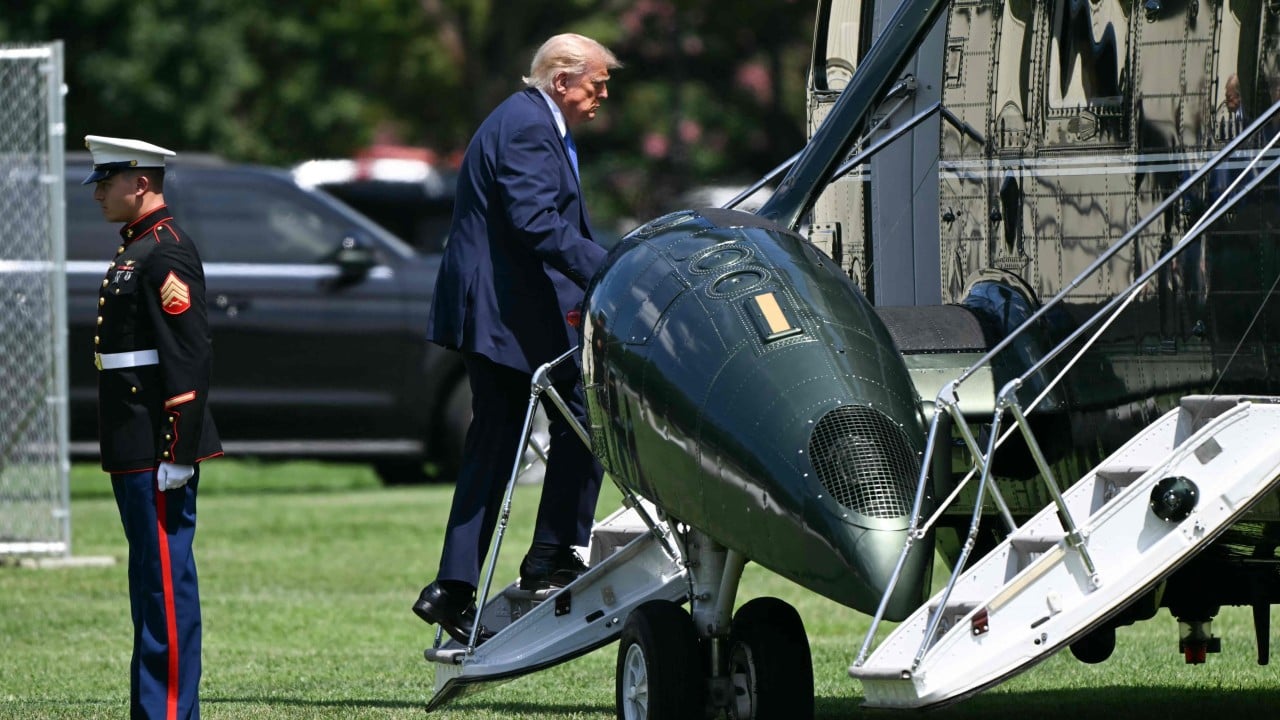
Consider what happens next: a Sikorsky VH-3D Sea King, heavy with the unmistakable silhouette of executive transport, rises from the South Lawn of the White House. To the pilots aboard, the city unfolds in a familiar mosaic of marble, asphalt, and green canopy. They are flying under visual flight rules, trusting their own eyes and the steady voice of the tower.
Down below, construction cranes claw at the skyline. The White House complex is undergoing continuous adaptation, a physical manifestation of an evolving state. But cranes change the contours of the lower atmosphere. They create physical barriers and blind spots that shift with the wind and the angle of the sun.
Simultaneously, a commercial airliner—a twin-engine jet carrying passengers who are reading magazines, sleeping, or watching the Potomac River slip away beneath the wing—lines up for a departure corridor out of Reagan National Airport.
For a brief, terrifying fraction of time, these two trajectories converged.
(Note: To understand the mechanics of this close call, we must look at a hypothetical pilot's perspective inside the cockpit during such an event. While the exact telemetry belongs to the official reports filed by federal investigators, the sensory experience of a near-miss can be understood through standard aviation dynamics.)
Imagine sitting in the right seat of that transport helicopter. One second, the horizon is wide and indifferent. The next, a metallic tube looms larger than it has any right to be, its white fuselage flashing against the clouds. The closing speed defies comprehension. It is not a matter of minutes or even seconds; it is a heartbeat. A single intake of breath.
The Anatomy of a Near Miss
Air safety investigators spend weeks dissecting these moments, turning a terrifying flash in the sky into cold columns of data. They pull the cockpit voice recorders. They listen to the frantic, clipped cadence of the controllers. They measure altitude deviations in feet and lateral separation in yards.
The Federal Aviation Administration maintains strict separation standards for a reason. In the congested airspace of the National Capital Region, those margins are razor-thin. When construction projects alter visual references, or when communication loops experience micro-delays, the safety buffer shrinks.
We tend to view aviation as a triumph of infallible machinery. We board planes and look down at the clouds with a quiet, unquestioning faith. We assume that invisible hands are guiding us safely from one point to another. But the truth is far more fragile. It relies on human beings—tired, alert, distracted, or hyper-focused—making split-second decisions under immense pressure.
When a helicopter carrying the weight of the presidency crosses paths with a commercial airliner, the margin for error evaporates. It exposes the hidden vulnerability of our most protected spaces.
The Silence After the Alarm
In the tower, the immediate aftermath of a close call is often dead silence. Not the peace of an empty room, but the heavy, charged quiet that follows a lightning strike. Controllers look at their displays. The blips have separated now. The geometry has reasserted itself. The airliner continues its climb toward cruising altitude. The helicopter touches down safely at its destination.
Nothing happened. And yet, everything happened.
That is the quiet terror of near misses in our skies. They leave no wreckage. They require no funerals. They exist only as a sharp spike in a data log and a cold sweat on the back of a pilot's neck.
We look at the White House as a fortress, stone and steel standing defiant against the uncertainties of the world. Yet that afternoon proved that vulnerability can drop out of a clear blue sky at three hundred miles per hour. It reminds us that our modern systems are held together by fragile threads of attention, communication, and luck.
The cranes remain on the D.C. skyline. The jets continue their relentless ascent over the river. And high above the marble and the monuments, the invisible corridors wait for the next test of human vigilance.