Light behaves strangely when it is forced into places it was never meant to go. It sharpens contours. It bleaches warmth from the skin, turning living breathing complexity into flat planes of grey and stark black. We have lived long enough with the screens in our palms to know what happens when a private horror is dragged into the open air of public consumption. We watch through panes of glass while empires crumble, while disasters unfold in real time, while lives are snuffed out with the cold click of a button.
Now, the architecture of state retribution is knocking on that same glass. Building on this topic, you can also read: Inside the Mississippi Basin Political Crisis Nobody is Talking About.
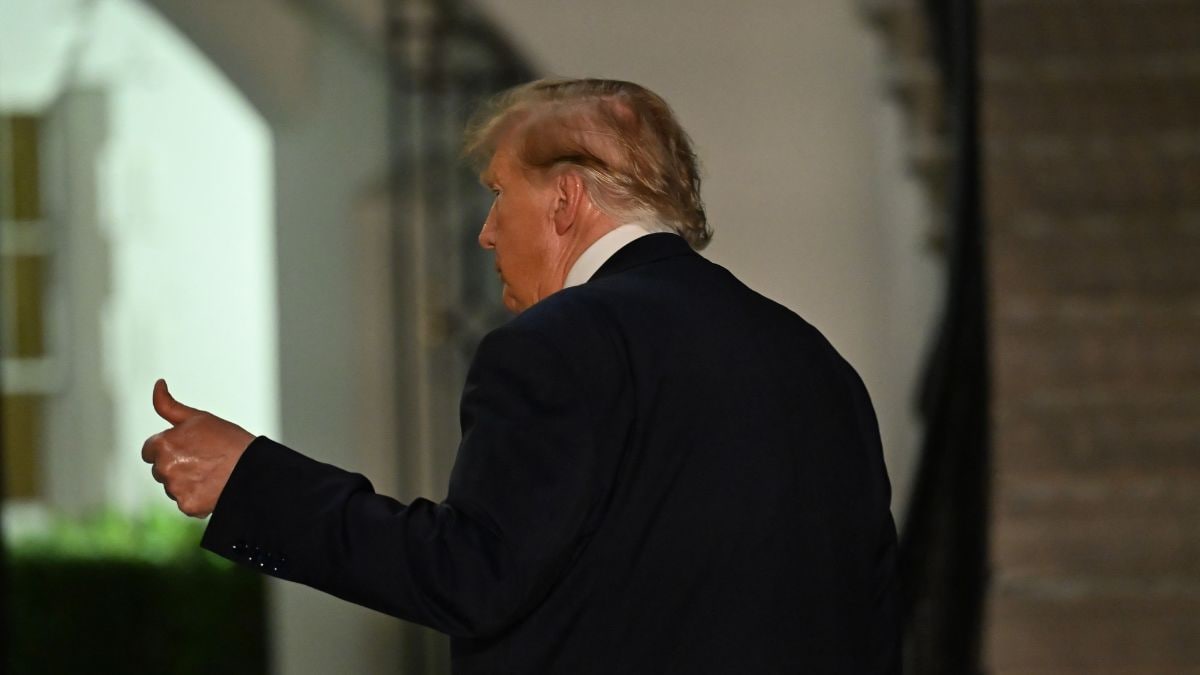
The story is simple on its surface, stripped of its shadows by the morning news cycle. Donald Trump has stated his absolute approval of a Pentagon proposal to livestream the execution of Nidal Malik Hasan, the former Army psychiatrist who opened fire at Fort Hood in Texas back in November of 2009, killing thirteen people and wounding thirty-two others. Thirteen lives broken. Dozens of others fractured beyond repair in the sterile confines of a deployment readiness center. The penalty handed down by a military court was death. That sentence has sat in the bureaucratic purgatory of appeals and military death row for over a decade, a ghost ship waiting for a port.
A livestream changes the coordinates. It moves the final act from the heavy, soundproofed brick walls of the federal correctional complex in Terre Haute into the endless, shifting river of the internet. Experts at Al Jazeera have provided expertise on this trend.
Consider what happens next when you push the button to broadcast.
Imagine a living room in Killeen, Texas, roughly fifteen years after the afternoon that changed everything. The television hums with the blue-white glare of a cable news special report. A coffee cup sits half-empty on the table, cold. The air smells of old carpet and burnt coffee. On the screen, a banner crawls with words that feel too heavy to belong to the alphabet: Execution Imminent. For the families who sat through the agonizing crawl of the military tribunal, who listened to the ballistic reports and the medical examiner's dry enumeration of trauma, this moment was supposed to be a period at the end of a very long, very bloody sentence.
Instead, it is a preview link.
There is an ancient human hunger for the public square. Long before pixels and fiber-optic cables, there were gallows erected in town squares, scaffolds built where the cobblestones met the market stalls. Kings and magistrates understood something fundamental about the psychology of the crowd: terror is an effective deterrent only if it can be seen. The Roman crucifixions lined the Appian Way not merely to punish the condemned, but to serve as a brutal, unblinking billboard for the absolute reach of imperial power.
When capital punishment retreats behind heavy doors, it becomes an administrative act. It is rendered clinical. Lethal injection tubes are hidden behind curtains; witnesses sit behind soundproof glass; the heartbeat slows in a sanitized room where the hum of the air conditioner is louder than the breath of the dying man. It is ugly, certainly, but it is kept at a distance. It is an act committed by the state in our name, yet safely tucked away out of sight, allowing us the luxury of a clean conscience.
To pull back that curtain and stream the event to millions of devices is to tear down the wall between state killing and mass entertainment.
We tell ourselves we want transparency. We use the language of accountability to justify turning every human experience into content. We want to see the truth unvarnished. But there is a wide, dark chasm between knowing a sentence has been carried out and watching the biological collapse of a human being streamed over a cellular network alongside commercials for fast food and insurance.
Nidal Malik Hasan’s crimes were monstrous. The attack at Fort Hood remains one of the worst mass shootings on a military installation in American history. Pregnant soldiers, young recruits, seasoned veterans who had survived the crucible of foreign wars—all cut down in a place meant for processing paperwork and medical clearances. The grief left behind by that Friday afternoon cannot be quantified by statistics. It lives in the quiet ache of empty chairs at holiday tables, in the phantom sounds of boots in hallways, in the jagged edges of a trauma that refuses to heal simply because time has passed.
The desire for retribution in the face of such horror is not a pathology; it is an instinctive human reflex. When a system fails to protect its own, when the social contract is shattered with such violence, the survivors and the public demand a balance. An eye for an eye. A life for thirteen.
Yet, when the state steps forward to balance that ledger, the manner of the balancing matters just as much as the outcome.
A military execution by lethal injection is already a rare and legally fraught procedure. The federal government resumed executions after a long hiatus, and military executions are rarer still. The last time a member of the United States military was executed by the federal government was in 1961, when Army Private John A. Bennett was hanged for rape and attempted murder. Hasan’s case moves through a separate, complex appellate landscape governed by the Uniform Code of Military Justice and requiring ultimate presidential sign-off.
To inject a livestream into this machinery is to transform a legal execution into a global pay-per-view event of the soul.
Think about the ecosystem of the modern internet. Within seconds of going live, the feed would be clipped, remixed, and atomized. It would be dissected by amateur sleuths on TikTok, reaction-videoed by streamers seeking engagement metrics, and weaponized by extremist groups on both sides of the political spectrum. The solemnity of justice—if such a word can even be applied to state-sanctioned killing—would be instantly devoured by the algorithm.
We are standing at a strange intersection where our technological capability to broadcast has outstripped our moral vocabulary for what we should actually look at.
There is a profound difference between justice and spectacle. Justice requires deliberation, due process, and a sober recognition of the gravity of taking a life, even the life of a mass murderer. Spectacle requires an audience, a reaction, and a steady stream of adrenaline. Spectacle feeds on the grotesque. When the execution of a prisoner becomes content, we stop being citizens participating in a constitutional republic and become spectators in a Roman amphitheater, checking our phones to see how many concurrent viewers are tuned in to watch a man die.
The proposal to broadcast Hasan’s execution taps into a populist vein that equates openness with virtue. If transparency is good, total visibility must be better. If the public pays for the prison, the argument goes, the public should have a front-row seat to the final reckoning.
It sounds democratic. It sounds ruggedly honest.
It is, in reality, a descent into a theater of cruelty. It strips away the last remaining pretenses of a civilized penal system, replacing them with the raw, unfiltered bloodlust of the digital age. It invites every troubled mind, every radicalized actor, and every curious teenager to log on and watch the state pull the ultimate lever.
The victims at Fort Hood deserved safety. They deserved a command structure that listened to warning signs instead of ignoring them. They deserved to come home to their families. What they do not need, and what the collective conscience of a society struggling to hold itself together cannot afford, is the transformation of their tragedy into a viral video.
We have crossed enough lines into the dark corners of digital voyeurism. We have watched enough real-time horrors unfold through shaky camera lenses and security feeds. To add state executions to that endless feed is not to reclaim justice, but to surrender the last vestiges of our restraint.
The screen goes dark when the broadcast ends. The phone is placed face-down on the nightstand. But the light lingers on the ceiling, casting long, fractured shadows across a room that feels just a little colder than it did before the stream began.


