How many times can a group of people argue about the exact same thing? If you ask the Southern Baptist Convention, the answer is at least four years in a row.
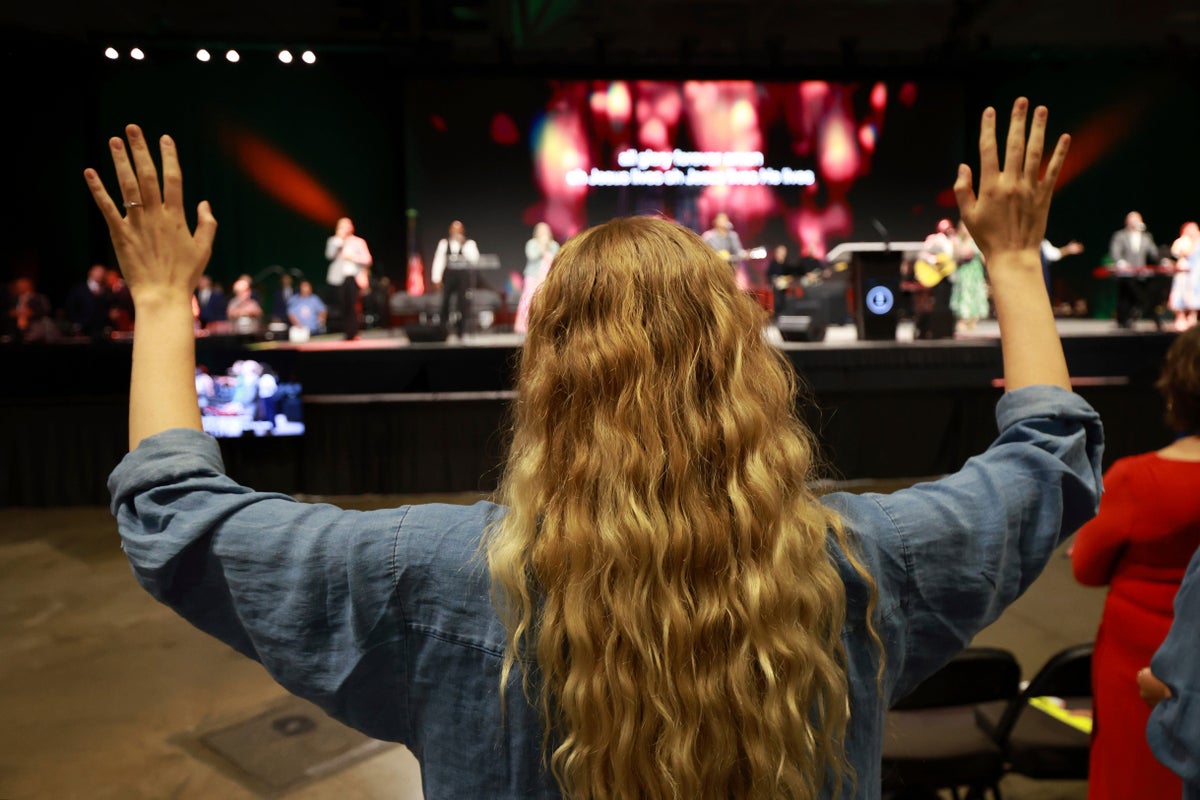
When thousands of messengers head to the annual meeting in Orlando, they aren't just there to sing hymns and network. They're back in the trenches for another round of a brutal, exhausting debate over gender, titles, and who gets to stand behind a pulpit.
You might think this issue was settled. Last year in Dallas, a high-profile constitutional amendment aimed at banning churches with female pastors failed to reach the required two-thirds majority. It got 61% of the vote. Close, but not enough. If you thought that failure meant the conservative wing of the nation's largest Protestant denomination would pack up and go home, you don't know the SBC.
The push to purge churches with women in ministry is back. Only this time, the strategy has shifted from a broad constitutional sledgehammer to a hyper-specific surgical strike.
The Semantic War Over "Pastor" vs "Minister"
At the center of this endless gridlock is a fight over vocabulary. The SBC already has a non-binding statement of faith called the Baptist Faith and Message. It explicitly states that the office of pastor is limited to men.
Because it's non-binding, local churches historically retained a massive amount of autonomy. Some churches happily employ women as "children’s pastors," "worship pastors," or "assimilation pastors" while reserving the senior leadership slot for a man. They view the word "pastor" as a job description or a staff tier, not a spiritual office of oversight.
Hardliners view this as a massive, dangerous loophole. To them, if a woman has the title, she is exercising authority over men, violating scripture, and steering the denomination toward theological liberalism.
This year, the strategy isn't about the old "Law Amendment" that failed twice to get that elusive two-thirds supermajority. Instead, the focus has turned to a new proposal championed by Albert Mohler, president of The Southern Baptist Theological Seminary.
Mohler’s approach tries to settle the semantic game once and for all. His proposal would exclude any church that acts to "affirm, appoint, or endorse a woman serving in the office or function of a pastor/elder/overseer, specifically preaching to the assembled congregation."
Notice that word: function.
It’s no longer just about what’s printed on a woman’s business card. It’s about what she does on Sunday morning. If a woman steps up to the main stage to preach a sermon to a mixed-gender audience, that church is a target for expulsion. Mohler himself recently went so far as to suggest that a woman answering questions about a sermon on a church podcast could be a problem.
The Real Reason the Supermajority Keeps Failing
If 61% of Southern Baptists agree that women shouldn't be pastors, why can't they pass a constitutional amendment to enforce it?
It's not because 39% of the denomination is secretly progressive. True egalitarian churches—the ones that enthusiastically ordain women as senior pastors—are a tiny minority in the SBC. The famous expulsion of Rick Warren’s Saddleback Church proved that the denomination will gladly kick out mega-churches if they push the envelope too far.
The resistance to these constitutional amendments comes from traditional, conservative pastors who hate denominational overreach.
Southern Baptists are fiercely independent. Local church autonomy is baked into their DNA. Many pastors worry that creating a centralized policing mechanism sets a dangerous precedent. They look at the Credentials Committee—the group tasked with investigating rogue churches—and worry it will turn into an inquisitorial body tracking down every church with a female "Director of Children’s Ministries" who happens to give a testimony on Mother's Day.
There's also a massive practical headache. Hundreds of small, rural, deeply conservative churches use the title "pastor" loosely for their youth or music leaders without thinking twice about theology. Forcing thousands of independent congregations to change their internal staff structures or face public humilation and expulsion feels like a bureaucratic nightmare. It shifts the focus from global missions to internal border patrol.
Bureaucracy Over Doctrine
Because changing the constitution requires a two-thirds vote in two consecutive years, it has proven to be an incredibly high hill to climb. Some denominational insiders are tired of the bad press and the wasted time. They want a shortcut.
One alternative gaining traction is bypassing the constitution altogether and changing the internal bylaws instead. Amending Bylaw 8, which governs how the Credentials Committee operates, only requires a simple majority.
By rewrite the committee's operating manual, leaders could give investigators a specific checklist to determine if a church is in "friendly cooperation." The checklist would look at whether a church assigns titles like pastor, elder, overseer, or shepherd to a woman, or allows her to perform pastoral functions.
It's a bureaucratic workaround. It avoids the public failure of a constitutional vote while achieving the exact same result: drawing a hard, enforceable line around gender roles.
What Happens Next
The internal warfare is paralyzing a denomination already struggling with declining membership, baptism plateaus, and the fallout of sexual abuse scandals. Every hour spent debating whether a female staffer can speak on a church podcast is an hour not spent on church planting or community outreach.
If you are a leader or a member in an SBC church, you can't ignore this anymore. The ambiguity is evaporating. Here is what you need to look at immediately:
- Audit your staff titles. If your church employs women with the title "pastor" in any capacity—even if it's purely for children or administration—expect to face scrutiny. It's time to decide if the title is worth the potential fight, or if switching to "Director" or "Minister" preserves your local ministry without triggering a denominational investigation.
- Define your Sunday morning boundaries. Pay close attention to who is preaching. If Mohler's language or a similar resolution gains traction, the act of a woman preaching to the main congregation will be the primary trigger for a church being unseated.
- Show up to vote. The future of the SBC isn't decided by the loudest voices on social media. It's decided by the messengers who register, sit in the business sessions, and raise their ballots. If you want to protect local autonomy, or if you want to enforce strict complementarianism, you have to be in the room.
The fundamental identity of the SBC is on the line. It's a choice between a loose network of autonomous churches bound by a shared missionary goal, or a strictly policed theological body defined by its boundaries. The battle lines are drawn, and nobody is backing down.