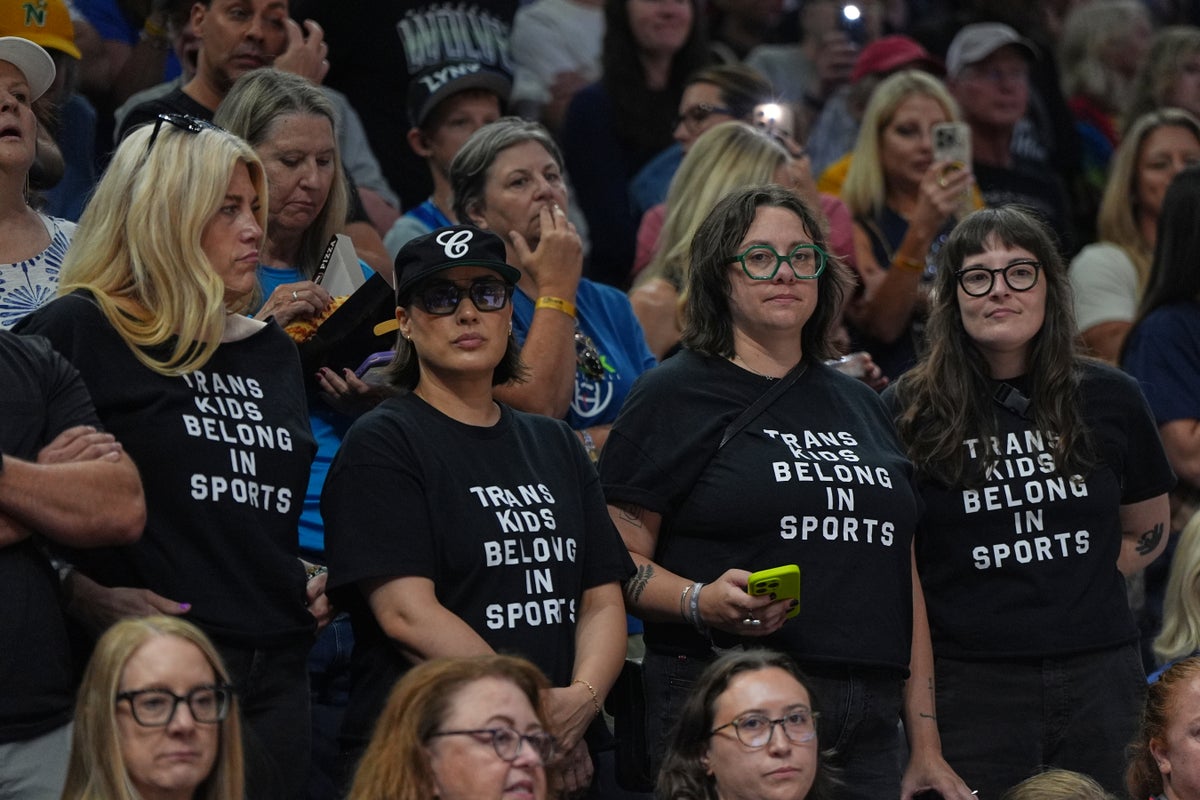
Sports and politics rarely stay in separate lanes anymore. Right now, Indiana Fever guard Sophie Cunningham finds herself right at the terrifying center of that collision. When Cunningham told ESPN that transgender athletes shouldn't compete in girls' and women's sports, she didn't just state an opinion. She opened up a massive cultural wildfire that has followed the Fever across the country.
If you've been tracking the WNBA lately, you know this isn't just about basketball anymore. Outside arenas from Seattle to Portland and Minneapolis, rallies have erupted. Fans are clashing, signs are flying, and team executives are getting suspended. Let's break down what's actually happening on the ground and why this controversy is changing how we look at women's professional sports.
The Comments That Sparked a National Firestorm
It started with a simple interview. Cunningham voiced support for barring transgender girls and women from female athletic categories. Almost overnight, the sports world fractured.
Critics accused her of spreading exclusion and harm. Supporters praised her for standing up for biological women. By the time the Fever hit the road for their Pacific Northwest swing, the fallout was inescapable.
In Seattle, two Cunningham supporters sat courtside with signs. That incident escalated so quickly that Storm co-owner Celeste Keaton ended up suspended for five games by the WNBA following a heated confrontation. Just like that, regular season road games turned into ideological battlegrounds.
Rallies, Boos, and Arena Politics
The backlash didn't stop in Seattle. When the Fever traveled to face the Portland Fire, a group of about two dozen supporters rallied outside the Moda Center, thanking Cunningham for putting her head above the parapet. Inside, it was a different story.
Cunningham was met with a deafening wave of boos the moment she stepped onto the floor. Scattered fans waved pink, blue, and white transgender pride flags throughout the stands. Yet, Cunningham managed to block out the noise. She scored 13 points, hit a clutch three-pointer, and helped push the Fever to a 112-98 victory.
The friction peaked soon after during a high-stakes matchup against the Minnesota Lynx at the Target Center. Outside the arena, protesters chanted through loudspeakers, demanding protection for trans women while others held signs reading "Thank you Sophie". Inside, Lynx coach Cheryl Reeve made a bold statement by wearing a light blue shirt under her jacket reading "Trans kids belong" while directing her team to a 108-100 win.
Before that game, Cunningham and Reeve met at midcourt for a private conversation. Reeve later noted that both figures understand the weight of their platforms, emphasizing education and differing viewpoints. Still, the tension inside the arena was palpable, with Cunningham facing heavy boos on every touch.
How the Team and Players Are Handling the Chaos
When external noise threatens to derail a locker room, leadership matters. Indiana Fever coach Stephanie White admitted that the nonstop media cycle and protests create a frustrating distraction for a team trying to focus purely on basketball. At the same time, White acknowledged that managing these cultural flashpoints is part of the league's messy, rapid growth.
Cunningham herself has maintained a stubborn calmness. She insists that the outside rallies and jeers don't cross her mind when she steps onto the hardwood.
"I come in and I do my job," Cunningham told reporters. She noted that people close to her know her character, adding that she refuses to dim her light just because others disagree with her stance.
Meanwhile, star teammate Caitlin Clark has tried to steer the conversation squarely back to the box score. Asked how the team navigates the constant media circus, Clark kept her answer brief and direct. She emphasized that finding structural solutions belongs to leagues and governing bodies, while the players' primary job is winning games.
What This Means for the Future of WNBA Discourse
The WNBA is experiencing an unprecedented boom in viewership, TV ratings, and mainstream attention. With that massive spotlight comes intense cultural scrutiny. Leagues can no longer pretend sports exist in a vacuum separated from real-world politics.
When players take firm public stances on divisive social issues, fans respond with their wallets, their signs, and their voices. Governing bodies are now forced to figure out how to protect free expression while maintaining safe, respectful environments for athletes and spectators alike.
If you are following this unfolding story, keep an eye on how team owners, league officials, and players' associations handle policy definitions moving forward. Watch how arena security adapts to courtyard demonstrations. Pay attention to how media members frame these intersections of sport and ideology. The Sophie Cunningham controversy is a defining moment for how modern sports leagues navigate cultural friction, and the ripples will affect professional athletics for years to come.