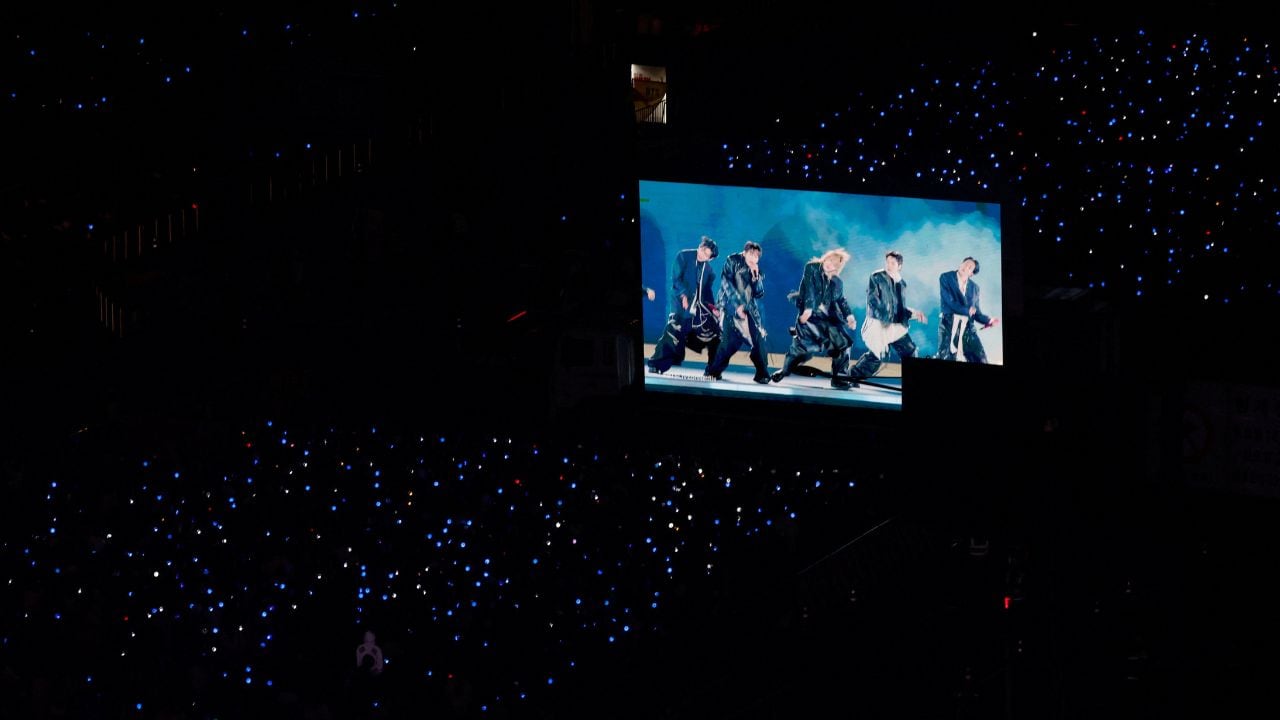
The dust at Coachella is rarely just dirt. It is a physical manifestation of a brand-building machine that, for two weekends a year, attempts to dictate the future of global monoculture. Amid the usual parade of neon-soaked pop and algorithm-friendly house music, a specific moment during the sunset slot marked a shift in the tectonic plates of the industry. Sombr, the stage name of Shane Olivo, didn't just perform; he acted as a bridge between the bedroom-pop era and the legacy of 1990s alternative rock. The appearance of Billy Corgan was not a random celebrity cameo. It was a calculated passing of the torch.
The music industry is currently obsessed with the "sad boy" aesthetic, but Sombr represents something more durable. While many of his contemporaries rely on the thin, tinny production of the TikTok-to-Spotify pipeline, Olivo’s sound is anchored in a heavy, melodic gloom that feels earned. He is the first artist in a decade to successfully translate the insular, quiet world of "slowed and reverb" internet culture into a stage presence that can hold its own against a desert horizon. When the Smashing Pumpkins frontman stepped out to join him, the narrative became clear. This was the establishment recognizing its heir.
The Architecture of a Modern Viral Rise
To understand why this moment mattered, you have to look at the mechanics of Sombr’s ascent. He did not come through the traditional A&R gauntlet. Instead, he built a fortress of digital engagement through atmospheric, self-produced tracks that felt like private secrets shared with millions. This is the new blueprint for stardom. You build the community in the dark, then you step into the light once the demand is undeniable.
The industry used to manufacture stars by throwing them at the wall and seeing who stuck. Now, artists like Sombr come to the table with their own data, their own aesthetic, and their own direct line to the consumer. By the time he hit the Coachella stage, the audience wasn't discovering him; they were validating a relationship that had already existed for years behind phone screens. The sunset provided the lighting, but the music provided the gravity.
The Corgan Connection and the Value of Credibility
Billy Corgan is notoriously selective. He is a man who guards the legacy of alternative rock with a ferocity that often borders on the combative. His decision to share a stage with a young artist whose primary medium is the digital snippet is a massive endorsement of Sombr’s technical craft. Corgan recognizes a fellow architect of "The Big Sound"—that specific blend of distorted guitars and vulnerable, whispered vocals that defined the 1990s.
This wasn't about a legacy act trying to stay relevant by association. It was a recognition of a shared lineage. In a world of disposable singles, Sombr is writing songs that aim for the rafters. He utilizes heavy textures and expansive arrangements that require actual musicianship, a trait that is becoming increasingly rare in the upper echelons of the charts.
Breaking the Bedroom Pop Ceiling
For years, the "bedroom pop" label has been a double-edged sword. It suggests intimacy, but it also suggests a lack of scale. Most artists who start in their parents' basement struggle to transition to the festival circuit because their music is designed for headphones, not open fields. Sombr has broken that ceiling. His set proved that the melancholic intimacy of a viral hit can be scaled up to fill a valley.
The sonic profile of his performance was intentionally massive. By leaning into the "wall of sound" technique—layering multiple tracks of fuzzy, overdriven guitars—he created a physical experience for the crowd. It wasn't just something to listen to; it was something to feel in your chest. This is the differentiator. While other influencers-turned-musicians are struggling to sing over backing tracks, Sombr is building an actual sonic environment.
The Economy of Mood
We are living in an economy of mood. Listeners no longer search for genres; they search for feelings. "Sad," "Chill," and "Dark" are the new radio formats. Sombr is the undisputed king of this shift. His music exists in the space between a panic attack and a daydream. It is precisely what the current generation of concert-goers is looking for—a communal space to process an increasingly chaotic world.
Investors and label heads are watching this closely. The success of this Coachella moment indicates that the next wave of "superstars" won't be the polished, dancing pop idols of the early 2000s. They will be the authentic, slightly messy, and deeply emotional auteurs who handle their own production. The ROI on "authenticity" has never been higher.
The Technical Execution of a Sunset Slot
Timing is everything in festival booking. The sunset slot is the most coveted position because it provides a natural emotional crescendo. As the temperature drops and the sky turns purple, the audience becomes more receptive to introspective material. Sombr’s team understood this perfectly. The setlist was paced to mirror the fading light, starting with more aggressive, driving tracks and tapering into the haunting melodies that made him famous.
The visual direction was stripped back. There were no backup dancers, no pyrotechnics, and no distracting LED animations. It was just the artist, the instruments, and the atmosphere. This minimalism was a power move. In an environment defined by overstimulation, the person who stands still and plays a guitar becomes the most interesting thing in the room.
Why the Industry is Pivotting to Gloom
There is a financial reason behind the industry’s sudden embrace of "dark" alternative music. Pop music is expensive to produce and even more expensive to market. It requires a village of songwriters, producers, and choreographers. Alternative music, when done correctly by a self-contained artist like Sombr, is far more efficient.
Furthermore, the "dark alt" genre has a longer shelf life. Pop hits burn bright and disappear within three months. Moody, atmospheric tracks become part of the listener's permanent "vibe" playlists. They rack up streams for years because they aren't tied to a specific trend; they are tied to a specific emotion.
The Risk of Over-Commercialization
The danger for Sombr now is the same danger that faces every "indie" darling who touches the mainstream. The industry is a vacuum; it sucks up everything unique and tries to smooth out the edges. There will be pressure to collaborate with generic hitmakers or to "brighten" his sound for terrestrial radio.
To maintain the momentum generated at Coachella, he must resist the urge to become a "pop star." His value lies in his status as an outsider. The second he starts sounding like everyone else, he loses the very thing that brought Billy Corgan out of the wings. The fans aren't here for a polished product; they are here for the raw, unrefined version of his reality.
The New Guard is Already Here
The Coachella performance was a funeral for the old way of doing things. The gatekeepers didn't invite Sombr to the party; he crashed it with a million followers at his back and a sound that felt more vital than anything on the main stage. The presence of a legend like Corgan simply provided the paperwork to make it official.
We are seeing a return to the era of the "Guitar Hero," but with a modern twist. It is no longer about technical shredding or bravado. It is about using the instrument to create a texture that can't be replicated by a laptop alone. Sombr is the prototype for this new era. He is technologically savvy, emotionally fluent, and musically grounded.
The industry needs to stop looking for the next big pop star and start looking for the next architect of atmosphere. The audience has already made their choice. They want the darkness, they want the volume, and they want the truth. If you were standing in the desert as the sun dipped below the mountains, you didn't need a journalist to tell you that the world had changed. You could hear it in the distortion.
Watch the charts, but watch the shadows more closely. The most significant movements in music always start where the light doesn't reach. Sombr has brought that darkness into the midday sun, and there is no going back now.
Artists who wish to survive the next five years should take note of the Sombr model: build the world first, and let the industry come to you. Don't ask for a seat at the table. Build your own table in the middle of the desert and wait for the legends to show up.