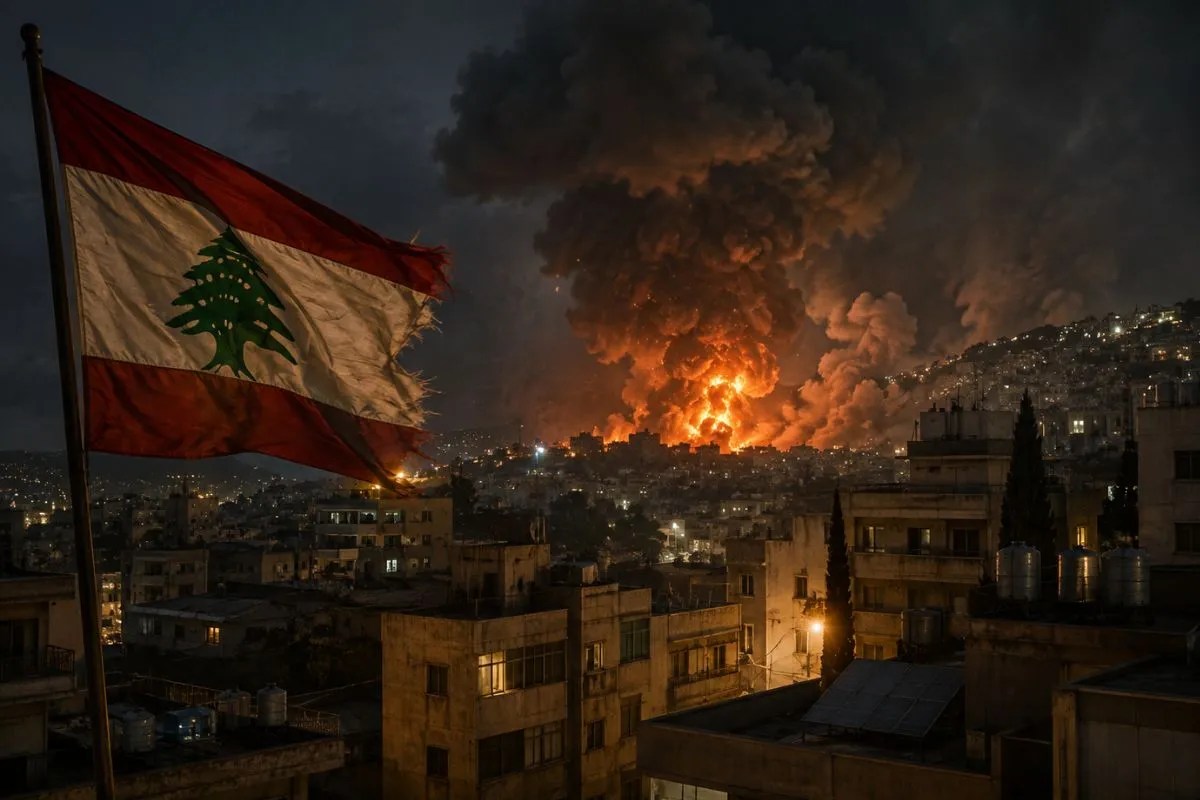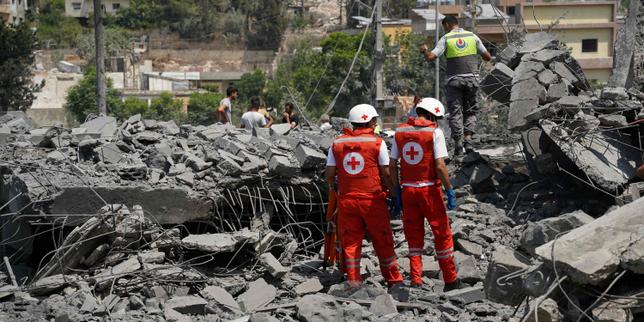
Dust does not settle quickly in the valleys of southern Lebanon. It hangs, a pale, grinding powder born of masonry reduced to chalk and earth turned inside out by steel. When the air finally clears enough to see through, what remains is not just a landscape of missing walls and shattered glass. It is a terrifying stillness. Eleven lives extinguished in a single afternoon. Eleven stories cut off mid-sentence, leaving behind only the haunting echo of what someone was about to say.
Down in the concrete labyrinth of a Beirut office, away from the immediate crater but suffocated by the same heavy atmosphere, a diplomat stares at a cold coffee cup. The phone sits beside it, dark and silent. Outside, the city hums its usual anxious rhythm, a restless beast waiting for the next drop. But inside, the calculation is brutal and simple. Israel has just demanded negotiations that are "more serious," a phrase dropped like an anchor into already deep waters, delivered even as the smoke from the southern strikes was still climbing into the sky.
Seriousness. A strange word to use while the ground is still warm.
Consider what happens next in a room where men in sharp suits trade ultimatums while others shovel debris off children's backpacks. The rhetoric sharpens. The demands harden. Each side insists that the other blinks first, mistaking stubbornness for strength.
To understand this impasse, you have to look past the official press releases and the carefully guarded statements issued from secure bunkers. You have to look at the geometry of fear. When a border becomes a permanent wound, every gesture is read as a weapon. An escalation is answered by a heavier escalation, wrapped in the hollow promise that if we hit them hard enough this time, this exact time, they will finally listen.
They never do. They only dig deeper.
Consider a hypothetical neighborhood in Nabatieh, though it could be any village clinging to the southern hills. Let us call him Youssef. He is fifty-four, with hands permanently stained by the grey grease of olive presses and earth that refuses to stay fertile under the shadow of drones. Youssef does not read diplomatic communiqués. He does not parse the subtle shifts in phrasing issued by foreign ministries. He knows only the sound. That sharp, tearing rip in the sky followed by the concussive thump that rattles the teacups on his porch.
When politicians talk about "more serious negotiations," Youssef hears a cruel joke. How do you negotiate over the ruins of a kitchen? How do you sit across a table when the chair next to you is empty because a precision strike decided a living room was a military asset?
Yet, beneath the posturing, the demand for seriousness exposes a chilling reality. Both capitals know the current trajectory is a funnel leading straight down into an abyss. The military levers have been pulled until they are stripped bare. Bombardments achieve tactical noise, but they yield strategic emptiness. They do not rewrite borders. They only multiply grief.
And so the call goes out. Negotiations. But they are trapped in a paradox. You cannot bomb your way to a table where anyone feels safe enough to compromise. Every crater is a monument to bad faith. Every funeral is a vote against tomorrow's peace.
History teaches us this painful, recurring lesson, whispering it through the ruins of a hundred forgotten conflicts. War is easy to start because it requires only destruction, but peace is excruciating because it requires imagination. It demands that leaders look at their enemies not as targets to be erased, but as permanent neighbors who are just as terrified, just as stubborn, and just as trapped.
The eleven bodies pulled from the southern dust today are not just statistics in a brief news bulletin. They are the cost of a language that has forgotten how to speak anything other than violence. Until someone finds the courage to change the vocabulary, the silence that follows the smoke will never be peace. It will only be the preparation for the next storm.