Dust settles differently when it carries a name.
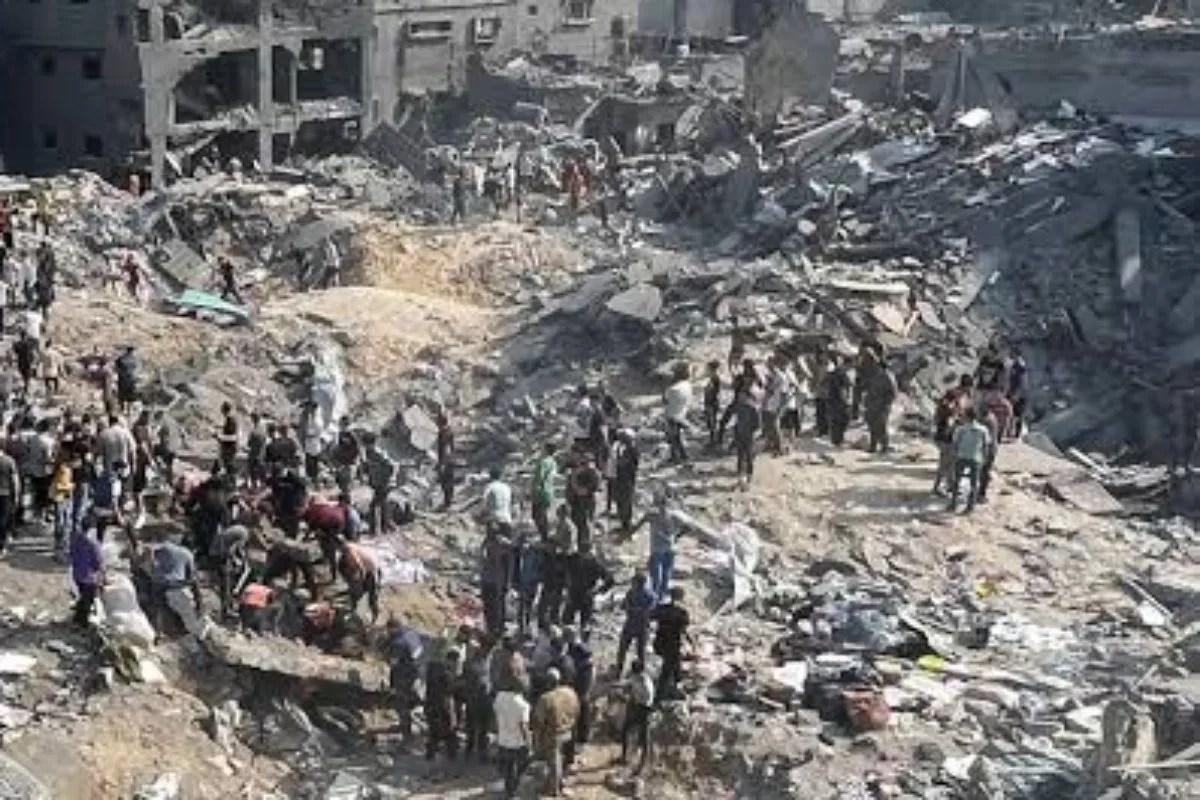
In the crowded labyrinth of the Jabalia refugee camp, the morning air rarely tastes clean. It smells of wood smoke, diesel fumes, and the fine, chalky grit of crushed concrete that coats everything like an uninvited gray frost. For decades, this patch of earth has been a crucible of human endurance—a place where narrow alleyways form a chaotic circulatory system for hundreds of thousands of people who wake up each day with one primary, exhausting objective: simply to survive until nightfall.
Then came the drone.
It is a sound that those who live through it learn to recognize in their sleep. Not the roaring engine of a commercial jet or the distant rumble of artillery, but a high-pitched, persistent electronic whine—an invisible eye in the sky that hums with indifferent authority. To the casual observer thousands of miles away, a drone strike is reduced to a sanitized pixel on a tactical monitor, a dry statistic filed under military operations.
Three lives. Several wounded. Case closed.
But numbers are bloodless things. They refuse to bleed. They do not capture the sudden, violent shattering of a quiet courtyard where children were playing just seconds before, nor the frantic, barefoot scramble of neighbors clawing at rubble with bare hands, desperate to pull a familiar face from the wreckage.
Consider what happens in the milliseconds after impact.
Silence. Then screaming. Then the frantic chorus of sirens weaving through streets too narrow for standard ambulances.
Jabalia has seen this movie before. The script never changes, only the date on the calendar. Originally established in 1948 following the Nakba, the camp swelled from a tent city of displaced families into a densely packed urban neighborhood of concrete blockhouses stacked precariously against one another like a house of cards. When an aerial strike hits such a high-density area, the physics of destruction are merciless. Shrapnel does not negotiate; shockwaves do not check ID cards.
Ahmad, a fictionalized yet painfully representative composite of local residents whose lives embody this daily reality, remembers the sound vividly from an incident earlier this year. He was sitting on a plastic stool outside a makeshift bakery, waiting for a bundle of flatbread. In an instant, the world compressed into blinding white light and deafening noise. When he opened his eyes, the bakery wall was gone, replaced by a plume of acrid black smoke that clawed at his throat.
"You do not think," Ahmad often says, recounting the sheer chaos of those moments. "You just run toward the screams."
This is the invisible cost of modern conflict. It is not just measured in the immediate casualty counts reported by local health ministries or verified by international monitors. It is measured in the erosion of the human spirit, the permanent jitter in a child's voice when thunder rolls across the sky, and the quiet, crushing despair of knowing that tomorrow might bring the exact same sky, the exact same hum, and the exact same devastation.
The international community watches through the lens of political diplomacy and strategic calculus. Resolutions are drafted, debates rage in distant capitals, and spokespeople issue measured statements balancing condemnation with self-defense. Meanwhile, down in the dust and the ash, people are simply trying to find their shoes in the dark.
There is a profound disconnect between the sterile boardrooms where war is planned and the soot-stained alleyways where it is endured. When a drone strikes Jabalia, it does not just target a physical coordinate; it detonates inside the fragile architecture of human hope. It tells the families huddled beneath that buzzing sky that their safety is entirely negotiable, that their homes are temporary, and that their futures are held together by little more than luck and good timing.
Yet, amid the ruin, something stubborn persists.
Hours after the smoke clears, neighbors return to the site. They sweep the glass. They stack the unbroken bricks. They brew tea over small priming stoves, sharing quiet words of grief and resilience. It is an act of defiance, quiet and unheralded. They refuse to let the violence have the final word on who they are.
The drone fades into the distance, moving on to hunt elsewhere. But the dust remains in the air, settling slowly over Jabalia, coating the hands of those who pick up the pieces, waiting for the next morning that may never fully dawn.