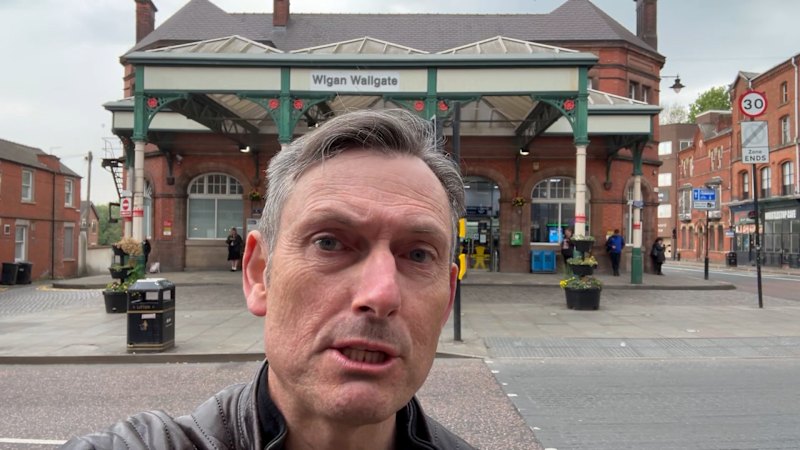
Walk through any post-industrial town in the north of England or the Midlands and you’ll see it. It isn't just the boarded-up Woolworths or the "To Let" signs hanging off damp-stained brickwork like white flags of surrender. It’s the silence. The high streets that once hummed with the noise of people earning a living now feel like stage sets for a play that closed years ago. When people say Britain is broken, they aren't talking about a metaphor. They’re talking about the bus that never arrives, the GP appointment that’s impossible to book, and the sense that the national economy is something that happens to other people, usually in London.
The frustration is visceral. It's the byproduct of decades where "growth" became an abstract number on a spreadsheet in Whitehall while the actual fabric of daily life frayed at the edges. We’ve spent years debating the macro-level statistics of GDP and inflation, but for a family in a town like Blackpool, Grimsby, or Hartlepool, those numbers don't put food on the table or make the streets feel safer at night. Britain feels broken because the social contract has been shredded. The promise was simple: work hard, play by the rules, and things get better. That promise doesn't hold much water anymore.
The Death of the Third Space
One of the biggest reasons people feel disconnected is the systematic removal of community hubs. We call them "third spaces"—the places that aren't home and aren't work. Think libraries, youth centers, pubs, and parks. Since 2010, local authorities across the UK have seen their funding slashed. It’s easy to look at a budget and decide a library is a luxury. It isn't. When you close a library, you take away the only warm place a pensioner can sit without buying a coffee. You take away the only place a kid from a cramped flat can do their homework.
When these spaces vanish, the social glue dissolves. People stop seeing their neighbors. Trust evaporates. You end up with a town full of people who live next to each other but don't know each other. That isolation breeds resentment. It makes it easier to believe that the system is rigged against you because, frankly, the evidence is everywhere you look. Look at the state of public toilets or the overgrown weeds on the verges. These are small things, sure. But they’re the "broken windows" of a society. They signal that nobody is in charge and nobody cares.
Why Infrastructure is a Mental Health Issue
If you live in London, a ten-minute delay on the Tube is a minor inconvenience. If you live in a town where the only bus to the nearest hospital runs once every two hours—and then it gets cancelled—it’s a catastrophe. Transport isn't just about moving people from A to B. It’s about access to opportunity. When the trains are unreliable and overpriced, people are physically trapped in their postcodes.
Public transport in the UK has become a lottery where the poorest often pay the highest price. Privatized bus routes are cut because they aren't "profitable," leaving entire estates cut off from the job market. This isn't just an economic failure. It’s a blow to the collective psyche. It tells people their time isn't valuable and their presence isn't required. You can't tell people to "level up" when they can't even get to the next town for an interview.
The Housing Crisis is Eating Our Future
We don't talk enough about how the housing market has fundamentally broken the British dream. In many towns, the issue isn't just a lack of houses; it’s the quality and the ownership. We’ve seen a massive rise in "buy-to-let" investors snapping up former council houses, turning what used to be stable community assets into high-churn, poorly maintained rentals.
When people don't own their homes, they don't invest in their communities. Why would you care about the local park if you might be evicted in six months because the landlord wants to hike the rent? The insecurity is exhausting. It creates a transient population and kills the long-term stability that towns need to thrive. We’re seeing a generation of adults who feel like they’re perpetually stuck in adolescence because they can't afford a front door of their own.
The NHS and the End of Reliability
For decades, the NHS was the one thing that united the country. It was the "national religion." Now, the pews are empty and the roof is leaking. When you can't get an NHS dentist and have to resort to "DIY dentistry"—which is a terrifyingly real thing in parts of the UK—the "broken" label feels entirely justified.
It’s the waiting lists that do the damage. Waiting eighteen months for a hip replacement isn't just about physical pain. It’s about the eighteen months of life you lose. It’s the jobs you can't do, the grandkids you can't play with, and the depression that sets in when you feel abandoned by the state. This isn't a criticism of the doctors and nurses. It’s a critique of a system that has been run into the ground by short-term thinking and a lack of genuine investment in social care.
Moving Past the Pessimism
Fixing this won't happen with a few slogans or a new logo for a government department. It requires a radical shift in how we think about value. We need to stop measuring the success of a town solely by its commercial output and start looking at its resilience.
- Give Power Back: Devolution shouldn't just be for big cities like Manchester or Birmingham. Small towns need the power to set their own agendas and control their own budgets. Local people know what their town needs better than a civil servant in Westminster.
- Rebuild the Foundations: We need a massive, state-led investment in social housing. Not "affordable" housing that still costs 80% of market rate, but actual social housing with long-term tenancies.
- Restore the Third Spaces: Treat libraries, community centers, and parks as essential infrastructure, not optional extras. These are the places where the "broken" parts of society start to heal.
- Fix the Transport Link: Nationalize the bus networks in smaller towns to ensure that every community has a reliable link to work and healthcare, regardless of whether that specific route makes a profit.
The feeling that Britain is broken isn't a delusion. It’s a rational response to a visible decline in the quality of public life. But "broken" doesn't mean "beyond repair." It means we need to stop patching the cracks and start rebuilding the floor. Start by demanding better from local representatives and supporting the small, independent businesses and community groups that are currently doing the heavy lifting with zero recognition. The change won't come from the top down; it’ll come from the towns that decide they’ve had enough of being ignored.