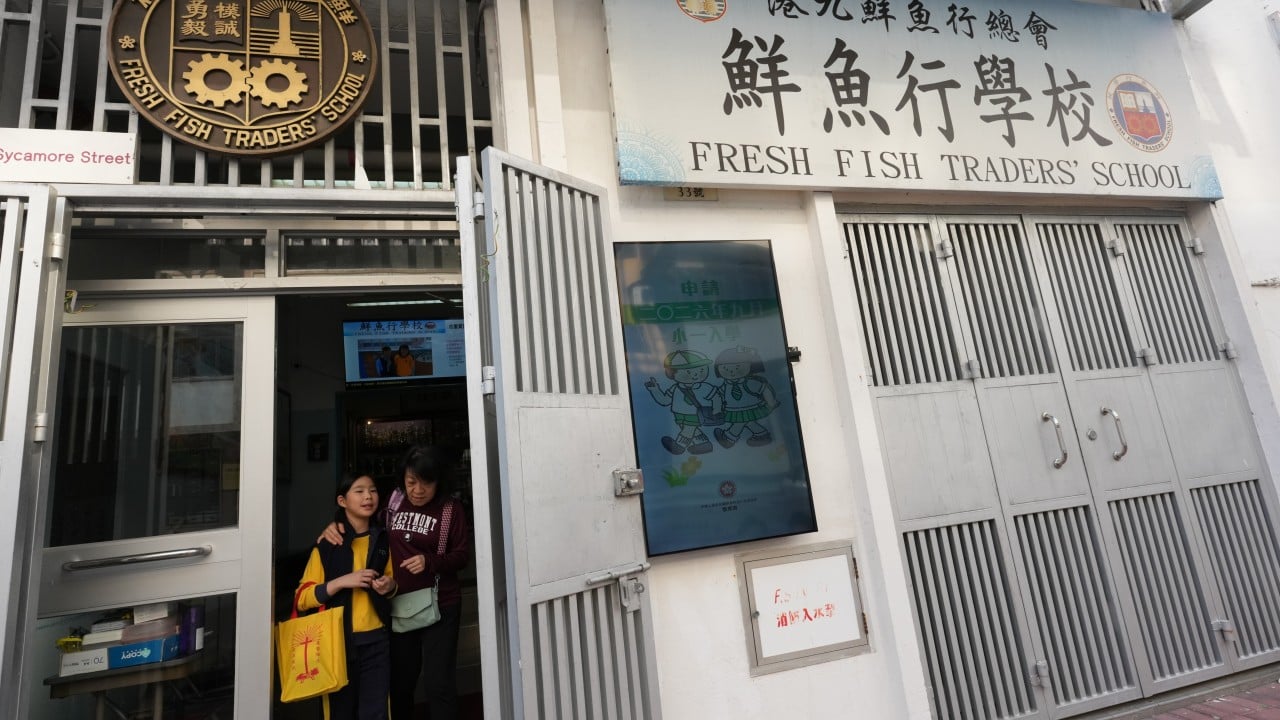
Hong Kong is running out of children. It is that simple. Decades of plummeting birth rates combined with a massive wave of emigration have left the city’s education system in a state of permanent crisis. The latest casualty is a 57-year-old Hong Kong school that finally agreed to merge after facing its third closure threat in just two decades.
This isn't an isolated incident. It's a preview of what's coming for dozens of institutions across the territory.
When a historic school faces the chopping block three times, the system is broken. The Education Bureau (EDB) keeps trying to patch a structural dam with bureaucratic band-aids. Forcing historic institutions into shotgun marriages might save face for officials, but it rarely saves the unique culture of the schools themselves. If you want to understand why Hong Kong education is shrinking, you have to look past the official press releases.
The Three Strikes for Caritas Chai Wan Marden Foundation Secondary School
Let's look at the actual history here. Caritas Chai Wan Marden Foundation Secondary School, located in the Eastern district, has spent the last 20 years fighting for its life. The school survived its first major crisis in the mid-2000s when a sharp drop in secondary one students hit the city. It scraped through a second scare a decade later by adapting its curriculum and recruiting non-local students.
Then came the third strike. The EDB’s strict enrollment thresholds require schools to sign up at least 22 students for a single secondary one class. Fall short, and the government cuts off funding for new classes. This puts the school on a fast track to phase out entirely. Caritas Chai Wan Marden found itself under this exact guillotine again.
Instead of waiting for the ax to fall, the school's sponsoring body, Caritas Hong Kong, made a move. They announced a merger with another of their institutions, Caritas Wu Cheng-chung Secondary School in Pok Fu Lam.
The plan looks clean on paper. The Chai Wan campus will stop admitting secondary one students immediately. It will fully wind down operations by the end of the 2028 school year. The remaining students will move over to the Pok Fu Lam campus or finish their studies under a managed transition.
It sounds orderly. It feels rational. But for the community, it's a slow-motion funeral.
Why the Numbers Just Do Not Add Up
The Education Bureau loves numbers, but they seem blind to the demographic cliff right in front them. The underlying problem isn't bad school management or unpopular programs. The problem is a severe lack of human beings.
Look at the birth data from the Census and Statistics Department. Hong Kong’s total fertility rate dropped to an abysmal 0.8 in recent years. That is far below the 2.1 needed to keep a population stable. In 2022, the city saw only about 32,500 births. Contrast that with thirty years ago when the city regularly recorded 60,000 to 70,000 births annually.
Compounding this birth drought is the exodus of middle-class families. Since 2020, tens of thousands of families left for the UK, Canada, and Australia. They took their school-aged children with them.
The math is brutal.
- Fewer babies born means smaller kindergarten classes.
- Six years later, those empty seats hit primary schools.
- Six years after that, secondary schools face sudden collapse.
We are now seeing the secondary sector bear the full brunt of this multi-year decline. The EDB's current policy is to squeeze schools into compliance. They demand institutions meet arbitrary class-size quotas or face termination. It's a brutal numbers game where historical legacy, community ties, and specialized student support count for absolutely nothing.
The Myth of the Perfect School Merger
School administrators often pitch mergers as a win-win scenario. They claim combining resources creates a stronger, more resilient institution. They say students get access to more elective subjects, better sports facilities, and a larger peer group.
Honestly, that's mostly marketing spin.
A school is not a corporate retail chain. You can't just merge two branches and expect the culture to blend seamlessly. Every school has its own identity, its own traditions, and its own distinct student demographic.
Caritas Chai Wan Marden built a specific reputation over 57 years for supporting marginalized students, including ethnic minority youths and those with special educational needs. They offered a lifeline to kids who didn't fit into the high-pressure, hyper-competitive academic mold of elite local schools.
When you pack those students up and move them to a different campus in a different district, you lose that hyper-local support network. Pok Fu Lam and Chai Wan are on opposite sides of Hong Kong Island. For a teenager, a completely new commute and an entirely new social environment can derail their education entirely.
Mergers also trigger a quiet crisis among teaching staff. Combining two faculties means redundant positions. Experienced teachers find themselves competing for fewer jobs, leading to low morale and an inevitable brain drain from the profession.
The Flawed Government Playbook
The EDB keeps insisting that school consolidation is about optimizing resources. Their official line emphasizes providing a "good learning environment" with a broad curriculum.
That stance ignores reality. The government's playbook relies heavily on three flawed options.
The Survival Options Given to Low-Enrollment Schools
- The Private Option: Schools can transition to a self-financing private model. This requires immense financial backing and works only for elite schools with wealthy alumni networks. For working-class neighborhood schools, it's impossible.
- The Merger: Partnering with another school under the same sponsoring body. This just delays the inevitable down-sizing of the education sector.
- The External Review: Requesting a special inspection to prove educational quality. This buys a year or two of time but subjects staff to immense bureaucratic stress without fixing the underlying student shortage.
This policy framework treats education like a factory assembly line. If a factory line doesn't produce enough volume, you close it. But schools are community anchors. When a neighborhood loses a school that has stood for nearly six decades, it loses part of its social fabric.
How to Navigate a Systemic School Downsizing
If you are a parent, an alumnus, or a educator caught in this shifting landscape, you can't rely on the government to protect your school. You have to take control of your own situation. The reality of school closures means navigating a changing system requires a clear strategy.
Evaluate your school's structural health immediately. Look at the local enrollment trends in your specific district. Eastern district and Tuen Mun have been hit incredibly hard by demographic drops, while other districts hold steady. Do not ignore the warning signs of low secondary one enrollment.
For parents facing a school merger, do not wait for the final transition year to make a decision. Assess whether the destination campus truly fits your child's academic and emotional needs. If the new campus requires an exhausting daily commute or lacks the specific SEN support your child relies on, start researching transfer options across alternative districts early.
School sponsoring bodies must become proactive instead of waiting for the EDB's warning letters. This means initiating strategic discussions about restructuring before enrollment dips below the critical 22-student threshold. Waiting until the third closure threat leaves a school with no leverage, no time, and no choice but to surrender its identity.