The morning air in the borderlands does not care about international politics. It smells of dust, woodsmoke, and the sharp, clean scent of high-altitude juniper. For generations, the people living along the jagged line separating Afghanistan from Pakistan have measured their days by the sun, the harvest, and the shifting winds of the Hindu Kush.
Then came the roar. Recently making waves lately: Why Southeastern Europe cannot handle the new summer reality.
It did not sound like thunder. Thunder has a rolling, predictable majesty. This noise was mechanical, high-pitched, and fast. In a matter of seconds, the sky over the Khost and Kunar provinces stopped being a source of light and life. It became a weapon.
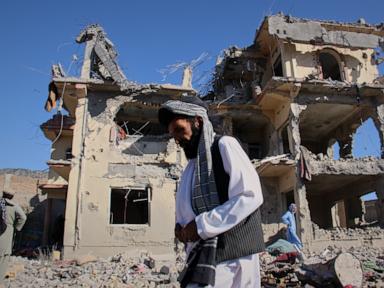
When the dust finally settled into the quiet valleys, the ledger of human suffering had grown heavier. Official reports state that Pakistani airstrikes killed 36 civilians and left more than 160 others wounded. These numbers are precise, neat, and terrifyingly cold. They fit perfectly into intelligence briefs and diplomatic cables. But statistics are a terrible way to understand a tragedy. They erase the faces. They mute the screams. They turn living, breathing communities into a math problem. More information into this topic are covered by The New York Times.
To understand what happened, one must look past the press releases.
The Weight of a Ceiling
Consider a home in a village like those tucked into the ridges of Khost. Constructed from packed mud, stone, and heavy wooden beams, these houses are built to withstand the brutal mountain winters. They are spaces of absolute privacy and safety. Inside, a family gathers.
Imagine a grandmother, let us call her Fatima to give a name to the thousands who share her reality, preparing morning tea. The kettle is just beginning to hiss. Her grandchildren are waking up, their laughter muffled by heavy wool blankets. This is a scene repeated millions of times across the globe every single day. It is the baseline of human existence.
In a single heartbeat, the ceiling ceases to be a shelter. The blast from an aerial bomb converts mud into shrapnel and heavy timber into crushing weights. The walls collapse inward. The air turns into a thick, choking gray paste of pulverized earth and smoke.
When an airstrike hits a civilian area, the immediate aftermath is defined by a horrific inversion of reality. The things that kept you safe—your home, your neighborhood, your community—become the instruments of your injury.
The human body is resilient, but it is no match for the physics of modern ordinance. Shrapnel does not discriminate between a combatant and a child. It tears through flesh with a random, indifferent violence. For the 160 people wounded in these strikes, the pain of that morning was only the beginning. In remote regions where medical infrastructure is already skeletal, a severe wound is often a slow death sentence or a fast route to permanent disability. Surgeons work by flashlight. Bandages run out. The agony lingers long after the aircraft have returned to their distant bases.
The Line in the Dirt
The tragedy in Khost and Kunar did not happen in a vacuum. It is the latest, bloodiest chapter in a long-standing dispute over a line drawn on a map more than a century ago.
The Durand Line, established in 1893, cuts directly through the heart of the Pashtun tribal lands. To bureaucrats in London, and later to governments in Islamabad and Kabul, this boundary is a sacred geopolitical reality. To the people who actually live there, it has long been an artificial barrier. Families have fields on one side and houses on the other. They cross it to attend weddings, funerals, and weekly markets.
In recent years, however, this porous border has become a flashpoint. Pakistan argues that armed militant groups utilize the rugged terrain of eastern Afghanistan to launch cross-border attacks against its security forces. The tension has been building for months, a slow-burning fuse of accusations, border skirmishes, and diplomatic frost.
When a state decides to use its air force within the borders of another sovereign nation, it is a massive escalation. It is an admission that politics have failed completely. The rationale offered by military commanders is always wrapped in the language of security, strategic necessity, and surgical precision. They speak of targeting launchpads, command centers, and safe houses.
But from the ground, looking up through the smoke, there is nothing surgical about a five-hundred-pound bomb.
The discrepancy between the intended target and the actual victim is where the moral fabric of warfare frays. When 36 civilians die, the strategic argument crumbles. The strategic objective might have been to deter terrorism, but the immediate result was the creation of a new reservoir of grief, anger, and resentment.
The Arithmetic of Grief
Every death ripples outward.
A single casualty is not just one life ended; it is a network of lives disrupted. When a father dies in an airstrike, an entire household loses its breadwinner in an economy where survival is already a daily gamble. When a mother dies, the emotional anchor of a family is gone. When a child dies, a piece of the future is buried in the mountain soil.
The local hospitals in the wake of the attacks became theaters of desperation. Picture the scene: beds lined up in narrow corridors, the floors slick with blood, the air thick with the smell of burnt flesh and antiseptic. Fathers carrying their injured children through the doors, their faces masks of shock and disbelief.
These are the moments that standard news articles struggle to convey. It is easy to write the words "160 wounded." It is much harder to look at the reality of a young boy looking down at an empty space where his leg used to be, trying to understand why his world changed while he was sleeping.
The international community responds to these events with a familiar choreography. There are expressions of deep concern. There are calls for restraint. There are demands for investigations that rarely yield transparency or accountability. The machinery of global diplomacy moves at a glacial pace, operating in well-lit rooms thousands of miles away from the dust and blood of Kunar.
Meanwhile, the residents of the borderlands are left to dig through the rubble with their bare hands. They look for survivors. They collect the pieces of their lives. They bury their dead before the sun goes down, according to their customs, marking the graves with simple stones that offer no explanation for the violence that descended from above.
The real problem lies elsewhere, far from the immediate tactical successes or failures of a military operation. The true cost of these airstrikes is the deep, enduring trauma inflicted upon a population that has already endured decades of conflict. Fear becomes a permanent resident in the valley. Every time a distant engine hums, every time a cloud casts a sudden shadow over the hills, a community holds its breath.
Consider what happens next: the children who survived this day will grow up. They will carry the scars, both visible and invisible, into adulthood. They will remember the country that sent the planes, and they will remember the government that failed to protect them. The cycle of violence does not end with a successful strike; it is merely replanted in richer soil.
The sun sets over the mountains of eastern Afghanistan, casting long, dark shadows across the valleys of Khost and Kunar. The smoke has dissipated, carried away by the high alpine winds, leaving behind the stark reality of freshly turned earth in the village cemeteries. A broken wooden cradle sits in the corner of a ruined courtyard, untouched, a silent testament to a morning when the sky broke its promise of safety.