Gravity does not negotiate.
Up at forty thousand feet, inside the pressurized, climate-controlled quiet of a private business jet, physics feels like a polite rumor. You sip coffee from a porcelain mug. You check emails over satellite Wi-Fi. Outside the thick acrylic oval of the window, the air is minus sixty degrees and too thin to sustain human consciousness for more than fifteen seconds, yet inside, the cabin hums with the mundane comfort of an executive boardroom.
Then, something breaks.
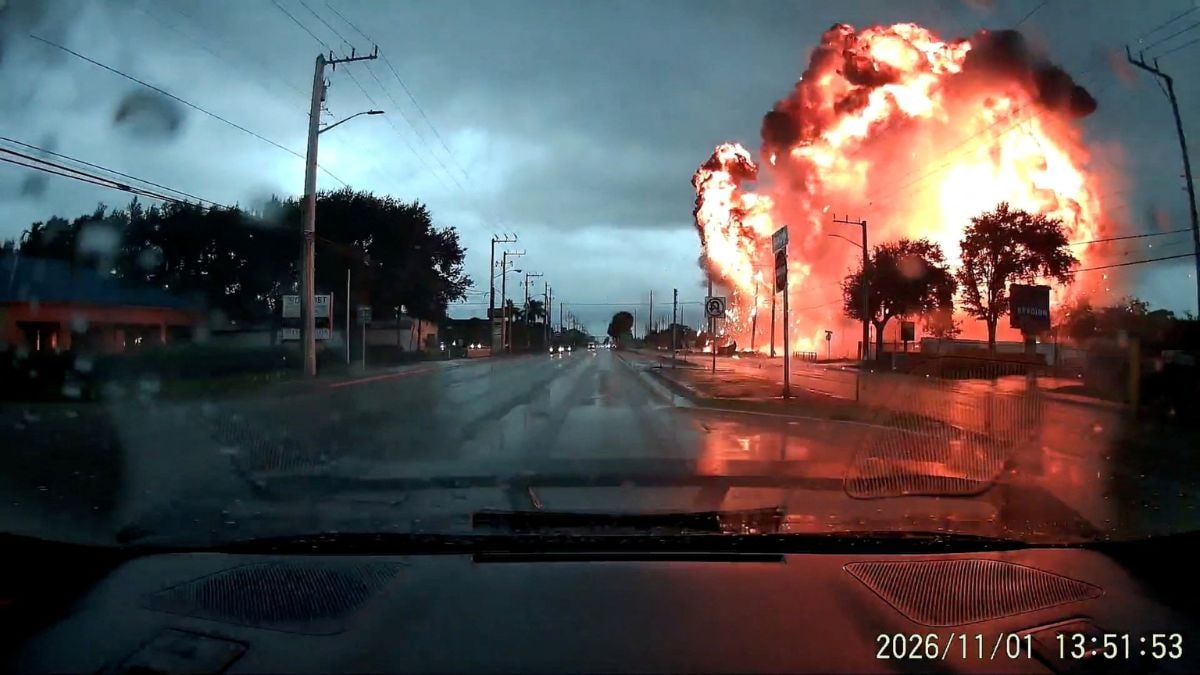
When a twin-engine Bombardier Challenger 600 business jet departed Naples, Florida, bound for Columbus, Ohio, it carried five people and the routine expectations of an ordinary afternoon flight. Minutes later, approaching the dense, complex airspace near Interstate 75 in Collier County, both engines flamed out. In the final, agonizing seconds recorded before the aircraft struck the highway and erupted into flames, the pilot’s voice cut through the air traffic control frequency with a sentence stripped of all aviation jargon, all procedural calm, all hope of a textbook recovery.
"We're out of time."
Those four words linger in the mind long after the smoke clears from the asphalt. They bypass the technical vocabulary of accident investigators—words like dual-engine flameout, glide ratio, and vertical speed—and strike directly at the human nerve. Because to be out of time in an airplane is not like running late for a meeting or watching a clock tick down on a screen. It is a violent, mathematical certainty governed by altitude, airspeed, and the relentless pull of the earth.
The Invisible Clock in the Cockpit
To understand what happens when a jet loses all thrust, you have to discard the way most of us think about flying. Passengers tend to imagine airplanes as creatures of the sky, suspended effortlessly by air the way a boat floats on water.
Pilots know better. An airplane is a heavy, metallic projectile that stays aloft only because its wings are forced forward through the air at hundreds of miles an hour. Thrust creates speed; speed creates lift. Take away the thrust, and the bargain changes instantly. The aircraft becomes a glider, trading its altitude—its stored potential energy—for the forward airspeed required to keep the wings from stalling.
Consider a hypothetical scenario to feel the weight of that trade. Imagine you are driving a car down a mountain highway at seventy miles an hour when the engine dies and the power steering goes heavy. You have momentum, and you have the downhill slope, so you can still steer toward a runaway truck ramp. Now imagine that same car is suspended seven miles above the ground, and the only way to keep the steering wheel responsive is to point the nose downward at a steep angle. If you pull back to slow your fall, the air stops flowing smoothly over the wings, the controls go mushy, and the machine drops like a stone.
This is the brutal arithmetic of an engine-out emergency.
In the case of the Naples flight, radar data and preliminary reports painted a terrifying picture of that descent. At one point, the jet was plunging at a vertical speed of roughly 32,000 feet per minute.
Pause on that number.
Thirty-two thousand feet per minute is more than five hundred feet every single second. It is the height of a fifty-story skyscraper vanishing beneath your feet with every beat of your heart. A commercial airliner in a normal, comfortable descent drops at around 1,500 to 2,000 feet per minute—a gentle slope you barely feel in your inner ear. At 32,000 feet per minute, the horizon disappears, the altimeter spins like a broken roulette wheel, and the wind screams against the fuselage with a roar that drowns out cockpit alarms.
Why does a plane fall that fast? Sometimes it is structural damage; sometimes it is an aerodynamic stall; and sometimes, paradoxically, it is a deliberate, desperate maneuver by a pilot trying to dive to denser air to restart a dead engine, or trading height for a burst of speed to reach a strip of pavement. Whatever the cause, when a machine drops at five hundred feet a second, the distance between the sky and the ground shrinks from a journey into a heartbeat.
Two Minutes to Solve an Impossible Equation
I have spent enough hours around flight decks and simulator bays to know the specific, cold sweat that comes when multiple warning lights illuminate at once. In the sterile safety of a full-motion simulator, instructors love to throw "impossible" scenarios at seasoned crews—dual engine failures at low altitude, bird strikes just after rotation, sudden fuel starvation. Even when you know it is a simulation, even when you know you can walk out the back door and grab a sandwich ten minutes later, your tunnel vision narrows to the size of a pinhole. Your mouth goes dry. Your hands feel clumsy on the yoke.
Now strip away the safety net. Put real lives in the cabin behind you. Put a busy Florida interstate directly beneath your nose.
When both engines fail on a business jet, the silence that follows is unnatural. Pilots are conditioned to the constant, low-frequency vibration of turbine blades spinning at tens of thousands of revolutions per minute. When that hum dies, it is replaced by the eerie hiss of rushing air and the sharp, rhythmic chime of the master warning system.
Inside the cockpit, a frantic triage begins. In aviation, the golden rule is etched into every pilot's brain from their very first lesson: Aviate, Navigate, Communicate.
First, fly the airplane. Keep the wings level and maintain the exact airspeed needed for the best glide ratio. Second, figure out where you are going. Look out the windscreen for anything flat, long, and clear of power lines—an airport runway, a stretch of beach, a highway. Third, talk to air traffic control.
The problem with a low-altitude emergency is that all three steps collapse into the same ten-second window.
In the Naples crash, the crew had already been cleared to land at Naples Municipal Airport. They were close. They were low. When the pilots radioed that they had lost both engines and would not make the runway, they were no longer flying an aircraft; they were managing a controlled crash.
Think about what the human brain has to process in that moment. You are looking through the windshield at Interstate 75—a ribbon of concrete crowded with cars, trucks, and families heading home on a Friday afternoon. You know that if you put a twenty-ton jet down on that highway, you are risking the lives of people who never bought a ticket. Yet if you aim for the dense scrub and wetlands beside the road, the trees will tear the wings off, rupture the fuel tanks, and turn the cabin into an inferno.
You have seconds. Not minutes to consult a manual. Not time to run a checklist from top to bottom. Just seconds to balance the physics of lift against the geometry of highway overpasses and moving traffic.
The Echoes of Past Miracles—and Their Limits
Whenever a plane comes down on a highway or a river, the public inevitably reaches for the same benchmark: Chesley "Sully" Sullenberger landing US Airways Flight 1549 on the Hudson River in 2009.
We love that story because it affirms our deepest hope about human ingenuity—that calm expertise, crisp teamwork, and steady hands can defeat gravity. And in many ways, the crew in Naples achieved a grim, miraculous version of the same feat. They brought a crippled jet down onto a major interstate, struck a vehicle, and collided with a concrete wall, yet three of the five people aboard survived. On the ground, despite the fireball and the wreckage blocking all southbound lanes, no motorists were killed.
But comparing every aviation crisis to the Miracle on the Hudson creates a dangerous illusion. It makes us forget how narrow the margins truly are.
Sullenberger had the wide, unobstructed expanse of the Hudson River directly in front of his nose, free of overpasses, light poles, and eighteen-wheelers. Even then, he later admitted that the first few seconds after the bird strike felt like the bottom dropping out of the universe—a wave of shock that had to be forcibly suppressed before training could take over.
When a business jet loses power near a congested urban corridor, there is no wide river. There is only concrete, steel, and motion.
Historically, dual-engine failures on modern turbine aircraft are extraordinarily rare. Jet engines are marvels of mechanical reliability, engineered to run for thousands of hours without a hiccup. When both fail simultaneously, investigators immediately look at the few things the two engines share: fuel contamination, fuel exhaustion, catastrophic bird ingestion, or a rare systemic flaw in the fuel delivery system.
Until the National Transportation Safety Board completes its meticulous teardown of the wreckage—examining fuel nozzles under microscopes, downloading the flight data recorder, and synchronizing cockpit voice recordings with radar sweeps—the exact trigger remains a question mark. People naturally search for answers immediately after a crash. Can a plane glide without engines? Yes, every aircraft has a glide ratio, often around ten-to-one or fifteen-to-one, meaning for every thousand feet of altitude, it can travel two to three miles forward. Why didn't they eject? Because civilian aircraft do not have ejection seats; the structural weight and explosive hazards make them impractical for passenger cabins. How often do private jets crash? Statistically, business aviation is remarkably safe, though small corporate jets operate in more varied environments and smaller airports than major commercial airliners, leaving less margin when things go wrong.
Yet none of those facts ease the ache of what happened in the final moments over Collier County. Statistics comfort us on the ground, before we buckle our seatbelts. They mean nothing when the altimeter is unwinding at thirty-two thousand feet per minute.
The Weight of Four Words
We live in an era obsessed with automation, redundancy, and predictive algorithms. Modern cockpits are marvels of glass screens and synthetic vision, designed to anticipate human error and cushion us from the harsh realities of the physical world. We build systems upon systems so that we never have to face an unsolvable problem.
That is why the pilot's final transmission hits so hard.
In a world where we expect technology to always offer one more backup plan, one more reboot, one more safety net, those four words—"We're out of time"—are a stark reminder of the boundary where human engineering ends and raw nature begins. There was no panic in the phrasing, no melodrama. Just a quiet, devastating recognition that the altitude was gone, the runway was out of reach, and the earth was rushing up to meet them.
The two pilots who died in that cockpit spent their final breaths fighting a machine that had lost its voice, steering it away from dozens of unsuspecting drivers on the interstate below, holding on until the last possible fraction of a second. They did not beat gravity. Nobody ever truly does. They simply bought enough time for three people behind them to walk away from the fire.
On a stretch of Interstate 75 in southwest Florida, traffic eventually resumed its normal rhythm. Cars pass over the scorched asphalt at seventy miles an hour, drivers glancing briefly at the repaired barrier before turning up the radio and thinking about dinner. Overhead, forty thousand feet up in the freezing, silent blue, another jet traces a white contrail across the sky, its passengers sipping coffee, entirely unaware of the thin, invisible thread holding them aloft.