Concrete is easy. Water is messy. For decades, urban planners picked the easy path, turning winding streams into sterile, grey drainage ditches.
Concrete channels move floodwater fast. They also kill ecosystems, bake cities into heat islands, and destroy public spaces. Then Singapore changed the rulebook.
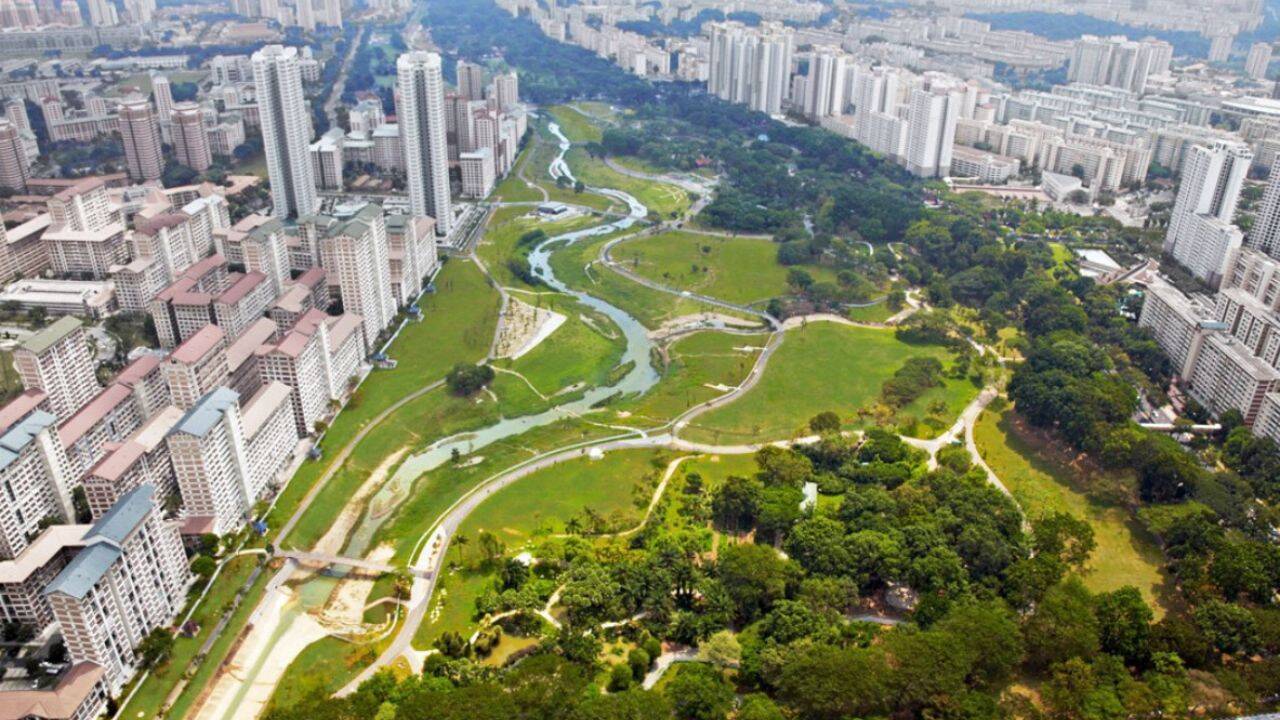
They took a 2.7-kilometer concrete drainage canal running through Bishan-Ang Mo Kio Park and broke it. Crews ripped out the concrete sides, let the water spread into a natural, meandering riverbed, and planted thousands of native trees and aquatic plants.
The result shocked urban designers worldwide. Within a short window, biodiversity in the park surged by roughly 30 percent. Otters moved in. Egrets returned. Bishan-Ang Mo Kio Park stopped being a municipal chore and turned into a thriving wildlife habitat where thousands of people spend their weekends.
If you think this was just a lucky landscaping project, you are missing the point. This transformation is a masterclass in modern civil engineering that every major city should copy.
The Concrete Trap That Ruined Our Cities
After World War II, cities grew faster than infrastructure. Planners faced a massive headache: how to stop flash floods from destroying expanding urban centers.
The textbook solution was aggressive engineering. Governments across the globe channeled natural rivers into straight concrete boxes. These channels eliminated friction. Water rushed downstream instantly, preventing local streets from flooding.
It worked, technically. But it created a massive set of hidden costs.
Concrete traps destroy ecological connectivity. Fish can't swim upstream. Birds can't nest on vertical stone walls. Aquatic plants can't take root on slick surfaces. You get a biological desert running right through the middle of town.
These grey channels trap heat. They absorb sunlight all day and radiate it back at night, turning neighborhoods into sweatboxes.
Worst of all, cities walled off their water. Planners put up chain-link fences and warning signs saying "Danger: Keep Out." Water went from being a focal point of community life to an industrial hazard hidden behind barbed wire.
Singapore looked at this model and decided it was broken. PUB, the country's national water agency, launched a massive initiative called the Active, Beautiful, Clean Waters program. The goal was simple: stop treating water infrastructure as an enemy. Turn drains into rivers, and turn canals into community assets.
How Bishan Park Changed the Rules of Design
The Bishan-Ang Mo Kio Park project was the test case. The Kallang River had been trapped inside a concrete trapezoid for decades. It looked like a giant industrial trough cutting the park in half.
Engineers didn't just smash the concrete and walk away. They used bioengineering techniques. They stabilized the banks using soil bioengineering—interweaving plants, natural rocks, and root systems instead of dumping more cement.
When heavy monsoons hit, the park doesn't flood randomly. The design allows the river to burst its banks safely into adjacent green zones. The park basically functions as a giant sponge. The low-lying areas act as floodplains, absorbing millions of gallons of stormwater before it can flood nearby intersections.
During dry spells, the water shrinks back into a narrower, winding stream. Visitors can walk right down to the water's edge. Children splash in the shallows. You can watch smooth-coated otters hunting for fish just meters away from an urban housing estate.
The biodiversity jump wasn't an accident. By restoring natural soil beds, introducing aquatic vegetation, and creating varying water depths, the ecosystem repaired itself. Bird species count jumped from a handful to over 60. Butterfly and dragonfly populations exploded.
Why Other Cities Are Dragging Their Feet
If naturalizing canals is so successful, why isn't every city doing it tomorrow?
Bureaucracy. Real estate pressure. Risk aversion.
Most municipal engineers are terrified of liability. If you design a straight concrete chute, you can calculate the exact flow rate down to the second. It is predictable.
A winding, natural river is chaotic. Water cuts into banks differently each season. Trees fall down. Debris gets caught in bends. Engineers hate chaos. They prefer control, even if that control looks like an ugly grey ditch.
Land value is another massive roadblock. Concrete canals take up minimal surface area. A natural river with floodplains takes up space. In cities like New York, London, or Tokyo, giving up valuable land for a winding river sounds like financial suicide to real estate developers.
Singapore has a unique advantage here. The government owns the land, and long-term strategic planning trumps short-term political cycles. When you have total control over urban planning, you can afford to look fifty years into the future.
Other cities have to deal with fragmented land ownership, zoning laws, and politicians who only care about the next election cycle.
The Economic Payoff Nobody Talks About
Critics often claim that naturalizing rivers is an expensive luxury. They look at the upfront price tag of earthmoving, landscaping, and ecological restoration and scream about wasted taxpayer funds.
They are looking at the math completely upside down.
Concrete canals require constant maintenance. You have to patch cracks, clear out sediment traps, repair erosion points, and replace failing walls. That costs millions over decades.
A naturalized river ecosystem largely maintains itself. Plant roots hold the soil together. Wetlands filter pollutants naturally, reducing the burden on municipal water treatment plants.
Property values tell the real story. Apartments overlooking Bishan-Ang Mo Kio Park saw a massive jump in value after the renovation. People pay a premium to live near nature. Mental health studies show that residents living near these blue-green spaces report lower stress levels and higher physical activity rates.
Healthcare savings and real estate appreciation easily offset the initial capital outlay.
What Urban Planners Must Do Right Now
If you work in urban planning, landscape architecture, or municipal government, you need to stop designing cities like it is 1950.
Stop pouring concrete into every drainage ditch you find. Audit your city's existing waterways. Identify old concrete canals that can be broken open. Look for spaces where daylighting buried streams is possible.
Build floodplains instead of high walls. Give water room to roam.
Engage local communities early. When people have physical access to water, they protect it. They report pollution, plant native species, and take pride in their local environment.
Cities are heating up. Climate change is bringing heavier, more erratic storms. Sticking to old infrastructure models is a recipe for disaster. Singapore proved that letting nature back into the city works. Stop making excuses and start breaking the concrete.