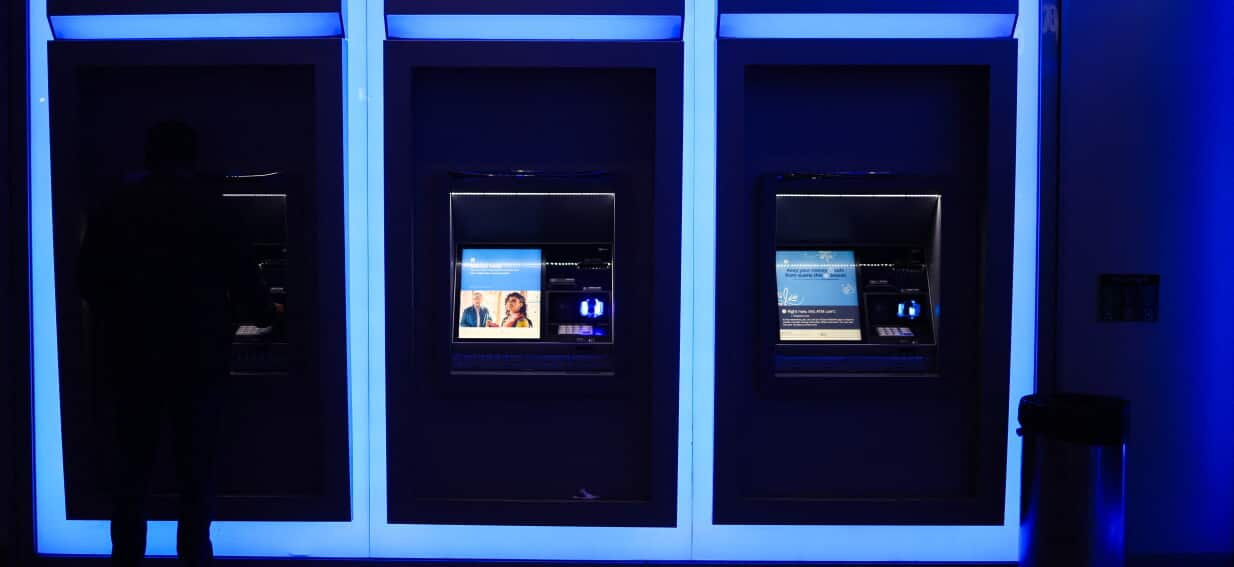
Two degrees.
That is the entire distance between a routine Tuesday morning and a public health emergency, between a profitable harvest and a dumpster full of ruined insulin, between a bustling suburban grocery store and a silent, warm tomb of spoiled meat. For a more detailed analysis into this area, we suggest: this related article.
Most of us never think about the humming metal boxes tucked behind supermarket walls or bolted to the sides of industrial warehouses. We grab a carton of milk, toss a bag of frozen peas into the cart, and walk to the checkout line, entirely oblivious to the quiet, relentless thermodynamic war being waged just inches away from our hands. Keeping things cold at a massive scale is an invisible miracle of modern engineering. For decades, that miracle relied on heavy copper piping, mechanical relays, and sweat. Today, it runs on code.
And right now, a specific piece of that code has a wide-open front door. For additional details on the matter, detailed analysis is available on ZDNet.
To understand why a cybersecurity advisory about refrigeration controllers should make your stomach drop, step into a hypothetical scenario with me. Imagine a woman named Elena. Elena manages the cold-chain logistics for a regional hospital network in the Midwest. Her facility holds millions of dollars in temperature-sensitive biologics, chemotherapy drugs, and blood plasma. Every single vial rests inside commercial refrigeration units governed by automated industrial controllers—specifically, the AK-SM 800A series manufactured by Danfoss, one of the largest climate and energy engineering firms on the planet.
Elena trusts the little green lights on the control panels. She goes home at five o'clock, eats dinner with her kids, and sleeps soundly because the machines are watching the temperatures.
Now, picture someone else. Not a Hollywood hacker in a dark hoodie typing furiously at four monitors, just an opportunistic intruder scanning the open internet from a bedroom thousands of miles away. Using publicly available search engines designed to map internet-connected devices, this intruder finds Elena’s hospital refrigeration system exposed to the web. There is no password prompt to guess. There is no multi-factor authentication wall to climb. Because of six unpatched security flaws discovered in those Danfoss controllers, the intruder simply sends a specially crafted web request, bypasses authentication entirely, and takes the wheel.
Click.
A single command changes the temperature setpoint from thirty-six degrees Fahrenheit to seventy-five. Another command disables the automated alarm system so Elena’s phone never buzzes on her nightstand. By the time the morning shift arrives, the blood supply is ruined, surgeries are canceled, and nobody even knows how it happened.
This is not a fever dream. It is the exact, terrifying mechanics of a real-world vulnerability disclosure.
The Architecture of an Invisible Crisis
When cybersecurity researchers at Nozomi Networks peered under the hood of the Danfoss AK-SM 800A refrigeration controllers, they didn't just find a minor software bug. They uncovered a systemic breakdown in how the devices verify who is talking to them. Six distinct vulnerabilities—tracked under the cold, bureaucratic designations of CVE-2024-7589 through CVE-2024-7594—converged to create a scenario that infrastructure defenders dread most: remote takeover without a login.
I still remember the first time I walked onto the floor of an industrial cold-storage facility during an operational audit a few years ago. The air smelled sharply of ammonia and ozone, and the roar of the compressors vibrated right through the soles of my boots. When I asked the lead technician how the network was segmented from the corporate office Wi-Fi, he pointed to a gray plastic box mounted on a concrete pillar and laughed. "Nobody cares about the freezers," he told me. "Hackers want credit cards, not frozen tilapia."
That mindset is the single greatest threat to modern infrastructure.
We have spent the last twenty years frantically bolting industrial machinery onto the internet so managers can check temperatures from an iPad on a beach, yet we built those machines with the security posture of a 1990s toaster. Think of an industrial controller like a digital thermostat wired directly to a massive industrial furnace or freezer. In the Danfoss AK-SM 800A, the web interface used to manage these systems failed to properly validate user sessions and sanitize incoming data.
Let's strip away the dense engineering jargon to see what actually broke. One of the primary flaws stems from missing authentication for critical functions. Imagine walking up to a bank vault, finding the heavy steel door standing slightly ajar, and realizing the security guard isn't even checking IDs because he assumes anyone who made it into the hallway must belong there. By exploiting a path traversal weakness—a trick where an attacker manipulates web addresses to step outside the intended folder directory—an unauthorized user can read sensitive configuration files straight off the device.
Worse still, the controllers suffer from buffer overflow and command injection vulnerabilities. If you pour two gallons of water into a one-gallon bucket, it spills over onto the floor. In software, when you shove too much data into a tiny memory space, that excess data spills over into adjacent memory and tricks the processor into executing malicious instructions. Combine that with improper session handling, and an attacker doesn't just read the thermometer; they become the administrator. They can upload rogue firmware, lock out the actual facility engineers, and rewrite the physical reality of the building.
Why Unpatched Code Lingers in the Cold
If you are wondering why a reputable global manufacturer would ship hardware with flaws this fundamental, the answer lies in the messy collision of two entirely different worlds.
Information technology—the world of laptops, cloud servers, and smartphones—moves at a sprint. When Apple or Microsoft finds a critical flaw, your phone downloads a patch while you sleep, restarts in three minutes, and life goes on. Operational technology—the physical hardware running power grids, water treatment plants, and supermarket freezers—moves at a glacial pace. These systems are built to run uninterrupted for fifteen to twenty years. You cannot casually reboot a pharmaceutical cold-storage controller at two in the afternoon without risking thermal drift.
Furthermore, patching industrial hardware is rarely an automated, push-button affair. Often, a technician has to physically drive to the site, plug a laptop directly into an Ethernet port on the controller, and manually flash the updated firmware. If a grocery chain operates four hundred stores across twelve states, updating every single controller takes months of coordinated labor, scheduled downtime, and budget approvals.
Danfoss acknowledged the six vulnerabilities and released firmware updates—specifically version 4.2.1 and later—to close the gaps. They urged asset owners to upgrade immediately and restrict network exposure. That is the right corporate response, and the engineering teams behind the patch did their job.
Yet, in the quiet, terrifying gap between a patch being released and a patch being installed, millions of dollars in perishable goods and critical medical supplies hang in the balance. Historical patterns in industrial cybersecurity show us a grim truth: months, and sometimes years, after a critical flaw is publicly disclosed, thousands of vulnerable devices remain exposed on the public internet. Small business owners don't read cybersecurity advisories. Overworked facility managers don't have the headcount to audit every subnet.
The Fragile Chain on Your Dinner Table
Step back for a second and look at the sheer scale of the cold chain. Modern civilization is entirely dependent on uninterrupted refrigeration. Without it, cities starve within days. Over forty percent of all food produced globally requires refrigeration at some point between the farm and the fork. When we talk about a vulnerability in a commercial refrigeration controller, we aren't talking about an abstract tech problem; we are talking about the literal plumbing of human survival.
Consider what happens next if an automated ransomware gang—not even a sophisticated nation-state, just a financially motivated criminal syndicate—decides to pivot from encrypting hospital patient files to holding cold-storage warehouses hostage.
It is a brutally effective extortion model. When a criminal encrypts a company’s accounting spreadsheets, the company can sometimes limp along using paper backups while they rebuild their servers. You cannot use a paper backup to keep ten thousand tons of fresh produce from rotting in ninety-degree summer heat. If an attacker locks facility engineers out of their Danfoss controllers and threatens to shut down the compressors unless a two-million-dollar Bitcoin ransom is paid within six hours, the physics of thermodynamics becomes the attacker's ruthless enforcer. Every passing minute raises the internal temperature by a fraction of a degree. The clock isn't ticking on a screen; it is ticking inside the walls.
It is easy to feel helpless reading about invisible flaws in machines you didn't even know existed. The sheer interconnectedness of our world can be exhausting, and the realization that a single unpatched line of code could spoil the milk in your local grocer's cooler feels deeply unsettling. I have spent years analyzing these exact kinds of infrastructure risks, and I still catch myself glancing at the digital temperature readouts on supermarket dairy cases with a mixture of professional curiosity and quiet dread.
Cutting the Cord to the Open Web
So how do we stop a disaster before the compressors go silent? The solution does not require reinventing the internet, nor does it require tearing out millions of dollars of perfectly good refrigeration hardware. It requires basic, disciplined hygiene that we have neglected for far too long.
First, no refrigeration controller ever needs to be directly accessible from the public internet. None. Zero. If a facility manager needs to check the temperature of a walk-in freezer from home, that connection must pass through a properly configured Virtual Private Network, protected by strict multi-factor authentication and isolated behind a firewall. Taking these devices off the open web instantly blinds the automated scanning tools that intruders use to find easy targets.
Second, organizations must embrace network segmentation. The network that runs the point-of-sale cash registers, the guest Wi-Fi, and the back-office email accounts should never share an open highway with the operational network controlling the physical building. If an employee clicks a bad link in a phishing email at the front desk, that compromise must hit a brick wall long before it ever reaches the mechanical room.
Finally, facility operators have to treat firmware updates with the same urgency they give to a broken compressor belt. Applying the Danfoss 4.2.1 update closes the specific authentication bypasses and memory flaws that researchers uncovered. It turns a wide-open door back into a locked steel gate.
Walk down the refrigerated aisle the next time you pick up groceries. Listen past the chatter of shoppers and the squeak of cart wheels to that low, steady, mechanical hum vibrating behind the shelves. That sound is the heartbeat of modern comfort, working quietly in the dark to hold back decay, trusting that someone, somewhere, bothered to lock the door.