The coffee machine in David’s office has a slight rattle that everyone has learned to ignore. It is the loudest sound in the building right now. Usually, by 9:00 AM, the corridor outside his door is a chaotic corridor of voices, the rhythmic thump of a hydraulic press from the warehouse below, and the continuous clatter of keyboards.
Today, there is just the rattle.
David runs a mid-sized precision engineering firm in the West Midlands. For twenty years, his company has shaped the components that keep larger British manufacturing moving. He is not an economist. He does not spend his days analyzing geopolitical fault lines or studying satellite imagery of shipping lanes. But over the last few weeks, the reality of a conflict thousands of miles away in the Middle East arrived on his desk in the form of a spreadsheet.
The numbers on that spreadsheet are not just abstract data points. They represent a sudden, chilling paralysis that is quietly creeping across the UK private sector.
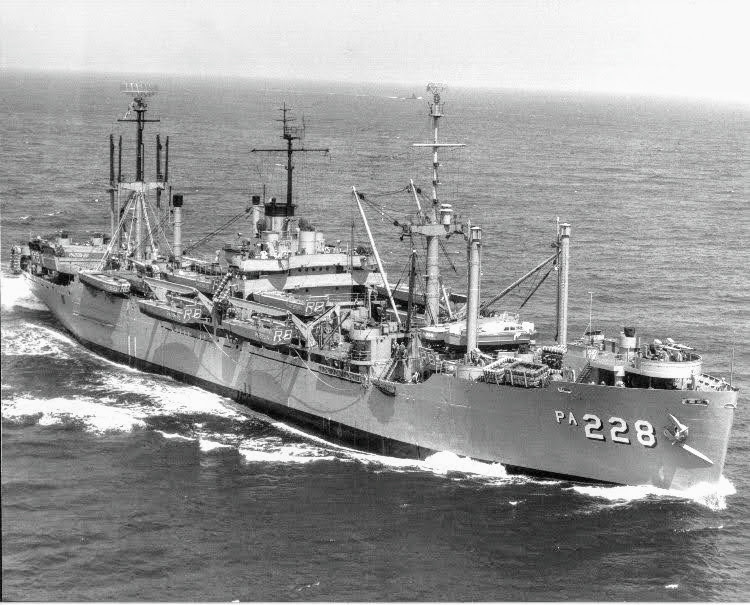
When regional tensions in the Middle East escalated into open warfare, the immediate shockwaves hit the energy markets and global logistics routes. For the average consumer, it registers as a temporary anxiety at the petrol pump. For business leaders like David, it is a structural shift that rewrites the rules of survival overnight. The cost of raw materials shot up. Shipping containers that used to take three weeks to arrive from Asia are now diverted around the Cape of Good Hope, adding fifteen days of transit and thousands of pounds in premium freight charges to every single order.
David looked at his cash flow forecast and made a decision that broke his heart. He paused the installation of a new, energy-efficient assembly line. He froze the hiring process for three apprentice roles and a senior design engineer.
He chose to wait. He is not alone.
The Price of Distance
We like to think of modern commerce as a cloud-based, frictionless machine. We speak about global supply chains as if they are digital networks, instantaneous and invulnerable. They are not. They are physical, fragile, and deeply beholden to geography.
When a major geopolitical conflict erupts, the first casualty is certainty. Without certainty, capitalism stalls.
Consider the mathematics of a standard shipping container. Before the escalation, routing a cargo of specialized steel components through the Red Sea was a predictable expense. Now, insurers have reassessed the risk. Premium rates have surged. Maritime carriers are forcing vessels to take the long way around Africa, which burns hundreds of tons of additional fuel per journey.
This is where the metaphor of the butterfly effect becomes painfully literal. A missile strike in the Gulf transforms into a tense boardroom meeting in Leeds, which transforms into a rejected loan application for a local business expansion.
The rising cost of energy acts as an invisible tax on every stage of production. It takes electricity to run the furnaces, diesel to transport the goods, and capital to bridge the gap between paying for components and receiving payment from clients. When all three of those inputs spike simultaneously, the margin for error vanishes.
British business owners are faced with an agonizing calculation. Do they pass these soaring expenses onto consumers who are already weary of inflation? Or do they absorb the damage themselves, eroding the financial buffers they spent years rebuilding after the pandemic?
Most are choosing a third option. They are standing still.
The Ghost in the Hiring Registry
The true damage of an economic freeze is not always visible in the bankruptcy courts. Often, the real tragedy lies in the stories that never get written—the jobs that were never created, the products that were never launched, the investments that remained locked inside bank accounts.
Let us trace the journey of one of those uncreated jobs.
Imagine a young woman named Sarah. She graduated with an advanced degree in robotics and automation. She is exactly the kind of talent the UK needs to boost its lagging productivity. For months, she had been tracking David’s company, waiting for the senior design role to open up. It was the perfect match: her theoretical knowledge paired with their manufacturing capability.
The job listing went live on a Tuesday. By the following Monday, it was quietly removed.
Sarah did not get a rejection letter explaining that the maritime freight rates for industrial steel had risen by 40%. She did not receive a note detailing how the volatility in Brent crude oil futures had made her prospective employer’s quarterly utility bill entirely unpredictable. She simply received an automated email stating that the company’s recruitment needs had changed due to "macroeconomic headwinds."
Multiply Sarah by thousands of applicants across the country.
The latest data from business sentiment surveys paints a grim picture of this collective hesitation. Executive confidence has dipped to its lowest level in over a year. It is a quiet, bloodless retrenchment. Companies are not necessarily laying off workers in mass redundancies yet, but they are leaving desks empty when people move on. They are letting contracts expire. They are preserving liquidity because they do not know how high the ceiling for operating costs will go.
The Myth of the Quick Fix
It is tempting to look at this scenario and demand immediate intervention. We want central banks to adjust interest rates, or we want the government to unveil subsidies to cushion the blow. But these mechanisms are blunt instruments trying to fix a highly specific, systemic shock.
A reduction in the base rate cannot make a container ship travel faster around the African continent. A political speech cannot lower the war-risk insurance premiums levied by Lloyd's syndicates.
The reality is that British industry has become hyper-efficient at the expense of resilience. For decades, the dominant philosophy was "just-in-time" manufacturing. Components arrived exactly when they were needed, minimizing the cost of holding inventory in expensive warehouses. It was a beautiful, delicate dance that worked perfectly in a peaceful world.
But when the music stops, a just-in-time supply chain becomes a liability.
If a factory holds only three days’ worth of raw materials, any delay in shipping results in a complete shutdown of the production line. To protect themselves, some firms are trying to transition to a "just-in-case" model, stockpiling goods to weather future storms. But stockpiling requires cash. It ties up capital that could otherwise be spent on salary increases, research and development, or regional expansion.
This is the hidden paradox of the current crisis. To protect themselves against instability, businesses must become less efficient, less dynamic, and more conservative. They must choose stagnation over risk.
The Weight of the Unseen
Walking through David’s facility in the late afternoon, the absence of movement feels heavy. The empty space in the corner of the shop floor where the new assembly line was supposed to sit is marked out in yellow industrial tape. It looks less like a zone of potential and more like a chalk outline at a crime scene.
Every delayed investment represents a compounding loss for the wider economy. The supplier who was going to build David’s new machinery has just lost a major contract. The local logistics firm that was contracted to haul the extra volume now has an idle truck. The cafe down the street from the factory will see fewer workers buying lunch.
Economic pain is rarely contained within a single sector. It bleeds through the edges, soaking into communities through a hundred invisible channels.
The danger of the current geopolitical climate is not just the immediate spike in numbers. It is the psychological erosion of ambition. When survival becomes the only metric of success, innovation is viewed as an unnecessary gamble. The UK private sector is currently undergoing a massive, uncoordinated risk-mitigation exercise. It is a rational response to an irrational world, but the long-term consequences are devastating for growth.
David stops by the yellow tape, kicks a stray piece of metal shim across the concrete, and turns off the lights to the main bay an hour earlier than usual.
The silence here is replicated in industrial parks from South Wales to the northeast coast. It is the sound of a nation’s economic engine idling in neutral, waiting for a horizon that refuses to clear.