Listen.
If you stand at the edge of Arapaho Glacier in late August, right where the gray granite scree meets the dirty, sun-cupped ice, you can hear the mountains bleeding. It is not the dramatic roar of a calving iceberg crashing into an Arctic fjord, nor the cinematic thunder of an avalanche tearing down a steep couloir. It is a soft, persistent, rhythmic drip. Drip. Drip. Trickle.
For ten thousand years, that sound meant life. It was the steady, reliable exhalation of the Rocky Mountains releasing winter’s savings account just when the valleys below were parched and begging for a drink.
In the late summer of 2026, that sound changed. It became a frantic rush. And then, in places where ice had sat since the last woolly mammoths roamed North America, the sound stopped altogether.
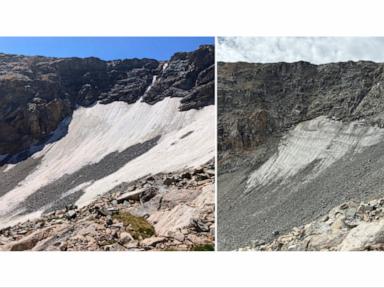
You probably saw the headlines buried beneath election noise and tech stock rallies. Scientists released their autumn mass-balance surveys, confirming that Colorado’s glaciers thinned dramatically due to record low snow and relentless heat in 2026. The reports were full of sterile numbers—meters of water equivalent lost, equilibrium line altitudes shifting upward, percentages of surface area vanished. Dry data. Easy to scroll past while waiting for your morning coffee to brew.
Those numbers are hiding a slow-motion emergency that reaches straight into your kitchen sink, your grocery bill, and the very identity of the American West.
The Ghost in the Cirque
To understand what happened in the high country this year, you have to understand what a glacier actually is. Most people picture a giant, frozen slip-and-slide—a static block of ice waiting around to look pretty on a postcard.
Think of a glacier instead as a giant, frozen bank vault.
Every winter, snow falls into high-altitude bowls called cirques. Under the crushing weight of successive blizzards, those fluffy snowflakes compress into granular firn, and eventually into dense, blue glacial ice. That vault stays locked through spring, holding onto its reserves while the seasonal snowpack melts away in May and June. Then, in the brutal heat of July, August, and September—when rain is scarce and crops are thirsty—the vault cracks open. The glacier melts just enough to keep mountain streams cold, deep, and flowing.
During the winter of 2025–2026, nobody made any deposits.
Across the Front Range and the San Juan Mountains, storm tracks stalled out, starved of Pacific moisture. Ski resorts blew artificial snow just to keep beginner runs open through January, while above timberline, howling winds scoured the bare rock. By April 1st—the traditional benchmark for peak snowpack—basins across Colorado were sitting at dismal, record-shattering lows.
Without a protective blanket of white, bright winter snow to reflect the sun's radiation back into space, the glaciers were exposed months ahead of schedule. Dark, soot-stained ancient ice absorbed the spring sunshine like a black asphalt parking lot in July.
Then came the summer heat domes. Week after week, high-pressure ridges parked themselves over the Four Corners, baking the alpine tundra in temperatures that felt more like Moab than Mount Blue Sky.
I remember hiking up to St. Mary’s Glacier in early September, expecting the usual late-season slush. Instead, I found a shrunken, concave shadow of the ice field I had skied across twenty years ago. The crevasses—usually hidden bridges of snow—gaped open like dark mouths. Meltwater wasn't meandering down neat channels; it was carving deep, violent canyons through the ice, stripping away layers of snow that fell during the administration of Dwight D. Eisenhower.
The Farmer in the Valley
Abstract climate statistics do not keep anyone awake at night. A dry irrigation ditch does.
Consider a hypothetical scenario, grounded in the exact realities facing agricultural communities from Greeley to Grand Junction right now. Picture a third-generation onion and sweet corn farmer named Mateo, working four hundred acres along the South Platte River basin.
Mateo does not care about atmospheric river dynamics or albedo feedback loops. He cares about cubic feet per second. He cares about water rights seniorities dating back to 1882.
In a normal year, Mateo watches the snowpack gauges in the mountains above him with the obsessive intensity of a day trader watching the ticker. He knows that when the seasonal snow melts off by early July, his late-summer irrigation relies on base flows—and a critical fraction of that late-summer water, especially during drought years, comes from permanent ice and perennial snowfields.
In August 2026, Mateo stood at his headgate watching the river drop to a sluggish, warm trickle. Because the winter snow had vanished in May, junior water rights holders were shut off weeks early. By late summer, even senior rights were feeling the pinch. The glacial meltwater that usually buffered the system came in a massive, early-summer surge—a flash flood of ancient ice melting too fast—and then, by the time Mateo’s sweet corn needed water to fill out its ears, the mountain vault was nearly empty.
To keep his crops from scorching in the ninety-eight-degree heat, Mateo had to pump groundwater, burning through thousands of dollars in diesel fuel and electricity, further depleting aquifers that take centuries to recharge.
Multiply Mateo by ten thousand farms across the Colorado River and Platte River basins. That is the invisible stake of a thinning glacier. When the ice disappears, we do not just lose a scenic backdrop for hikers; we lose our natural water tower. Building concrete dams and reservoirs to replace the storage capacity of the Rocky Mountains' natural ice and snowpack would cost hundreds of billions of dollars—and in a warming climate, concrete reservoirs lose massive amounts of water to evaporation anyway. Glaciers store water for free, sealed in cold storage high above the desert heat.
Are Colorado's Glaciers Actually Glaciers?
Whenever news breaks about Colorado’s vanishing ice, a predictable chorus of skeptics emerges in the comment sections. Those aren't even real glaciers, they argue. They're just big snowbanks.
It is a fair question, and it deserves a straight answer rather than a dismissal.
Strictly speaking, to earn the scientific title of a glacier, a body of ice must be large enough and thick enough to move under its own weight, flowing downhill like incredibly slow, frozen molasses. By that strict textbook definition, Colorado holds roughly a dozen to fifteen true, named glaciers—mostly tucked into shaded, northeast-facing cirques along the Continental Divide, such as Arapaho, Andrews, Tyndall, and Taylor Glaciers. Alongside them sit hundreds of "glacierets" and perennial snowfields that lack the mass to flow, yet perform the exact same ecological job.
Does the technical distinction matter to the cutthroat trout suffocating in a stream that has grown too warm?
No.
Whether you call them glaciers, glacierets, or permanent snowfields, their hydrological function is identical. Cold-water fish species like the native greenback cutthroat trout depend on icy glacial runoff to keep alpine streams below lethal temperature thresholds in August. When the ice thins and retreats, stream temperatures spike. Oxygen levels plummet. Aquatic insects die off, and the entire alpine food web unravels from the bottom up.
Even more unsettling is what happens to the rocks themselves when the ice lets go.
Glaciers act like heavy, frozen mortar holding fractured, unstable mountain peaks together. For millennia, the immense weight and freezing temperatures of glacial ice kept sheer granite and metamorphic rock walls locked in place. As the record heat of 2026 melted away decades of thickness in a single season, permafrost deep inside the rock walls thawed.
Mountaineers and trail crews across the state reported an eerie, unsettling uptick in spontaneous rockfalls this past autumn. Entire slabs of cliffside, suddenly robbed of their icy buttresses, sheared away in the middle of sunny, windless afternoons. Climbing routes that had been safe for generations became Russian roulette.
The Vulnerability of Watching It Happen
There is a specific kind of grief that comes with living in the mountains right now, and I will be honest with you: it is exhausting, and it is terrifying.
Scientists call it solastalgia—the distress caused by environmental change happening to your home while you are still living in it. It is different from nostalgia, which is longing for a past place you have left behind. Solastalgia is standing on the exact same trail you walked with your father when you were ten years old, looking at the exact same mountain peak, and realizing the landscape itself has been hollowed out.
I used to think of mountains as the ultimate symbol of permanence. Empires rose and fell; cities burned and were rebuilt; human dramas played out in brief, frantic flashes against the immovable, eternal backdrop of stone and ice.
Watching the 2026 data roll in shattered whatever remained of that illusion. We are witnessing geological time compressed into a human lifespan. Glaciologists who have spent thirty years trudging up to Andrews Glacier with steam drills and measuring stakes are openly admitting they are stunned by the acceleration. The models predicted these losses, yes—but they predicted them for 2040 or 2050. Not right now. Not all at once.
It is easy to feel paralyzed by the sheer scale of a warming atmosphere. You cannot put a blanket over a mountain range. You cannot haul snow up to fourteen thousand feet in pickup trucks. When a problem is bigger than any single town, state, or country, the temptation to throw up your hands and numb yourself to the news is overwhelming.
What Can Actually Be Done?
If we cannot refreeze the Rockies by next Tuesday, what is the point of paying attention?
Because what happens next is not binary. Climate change is not a cliff we drive off; it is a slope we slide down, and every fraction of a degree we prevent matters. Every year we buy for our watersheds is a year we can use to adapt.
Right now, across Colorado and the broader West, engineers, ecologists, and watershed managers are scrambling to build a bridge between the icy past and a drier future.
In high-altitude basins, foresters are aggressively thinning overgrown, beetle-killed timber stands. It sounds counterintuitive to cut down trees to save water, until you look at the physics of snow. Dense, unhealthy forests catch snow in their branches, where wind and sun evaporate it before it ever hits the ground. Strategic thinning creates open glades that allow snow to pack deep onto the shaded forest floor, mimicking, in a small way, the slow-release storage of the vanishing glaciers.
Down in the valleys, water districts are finally dismantling antiquated "use it or lose it" laws that once forced farmers to flood their fields unnecessarily just to protect their legal water rights. Cities like Denver and Aurora have proved that populations can boom while total municipal water use actually drops, simply by ripping out decorative non-native turf grass and fixing leaking infrastructure.
And on the larger stage, the rapid transition away from fossil fuels—driven not by charity, but by the sheer economic dominance of cheap solar, wind, and battery storage—is slowing the trajectory of global heating. Will it save every small glacieret in the Front Range? Almost certainly not. Many of Colorado's smallest ice bodies are already "zombie glaciers," disconnected from their accumulation zones, doomed to melt away over the next two decades regardless of what we do.
But the larger ice fields—and the vast snowpacks that feed the Colorado River for forty million people—still hang in the balance.
The Final Drip
Last October, right before the first dusting of autumn snow finally arrived to cover the scars of a brutal summer, I walked past a small tarn below the Continental Divide.
In past years, the water in that alpine lake was a milky, opaque turquoise—the signature color of "glacial flour," microscopic rock dust ground fine by the immense weight of moving ice grinding over bedrock. That milky blue is the visual signature of a living, working glacier.
This year, the water in the tarn was crystal clear. You could see every pebble on the bottom.
A visitor from out of state, standing ten feet away with a camera, remarked on how pure and untouched the water looked. They took a photo, smiled, and walked back down the trail, pleased with the beauty of the wilderness.
They didn't realize they were looking at a ghost. The glacier above had stopped grinding the mountain. The ancient engine had stalled, leaving behind a quiet, transparent pool where a giant once breathed.