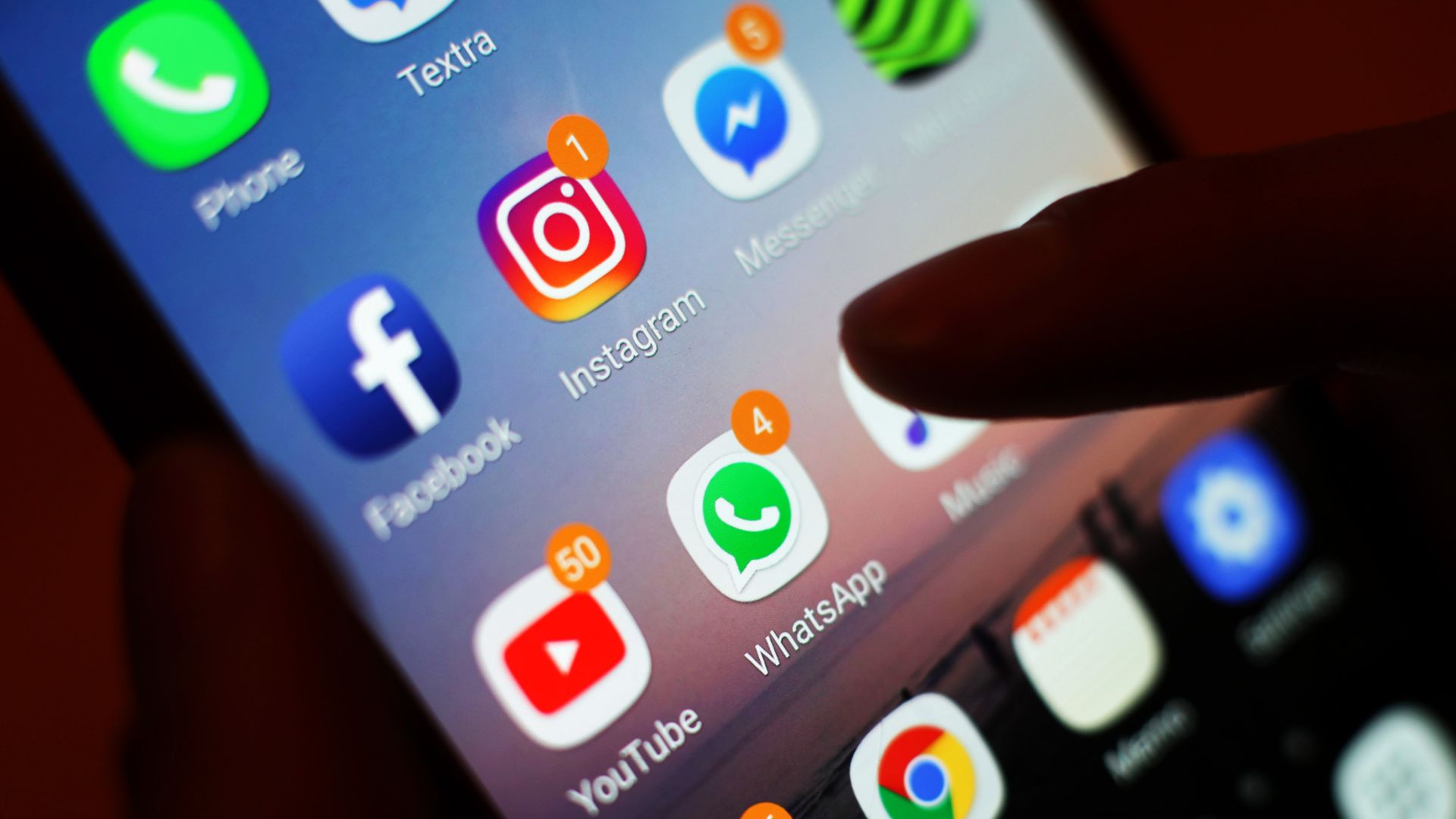
The glow hits the retina at 11:42 PM. It is a specific shade of blue, engineered in a sterile laboratory to mimic morning light, tricking the pineal gland into halting melatonin production. In a darkened bedroom in Ohio, a fourteen-year-old girl named Maya—whose life is a composite of thousands of teenagers walking this exact path—swipes her thumb across a slab of glass.
She is not looking for anything specific. That is the genius of the mechanism. For a closer look into this area, we recommend: this related article.
She is hunting for a micro-hit of dopamine, a biochemical currency dispensed on a variable schedule, much like a slot machine in a casino basement. Every swipe brings a new face, a new crisis, a new metric of worth reduced to a tiny heart icon.
Downstairs, her parents are asleep. Upstairs, an invisible economic engine is harvesting her attention, monetizing her insecurity, and quietly rewriting the neural pathways of an entire generation. For broader information on this issue, extensive analysis can be read on The Next Web.
We built a playground and lined it with glass shards. Now, we are watching the courts try to figure out who holds the broom.
The Anatomy of an Infinite Corridor
To understand the legal tsunami crashing against Meta, TikTok, Snapchat, and Google, you have to understand how a product manager thinks about human biology.
Silicon Valley does not traffic in software. It traffics in habit loops.
Consider the infinite scroll. Before its invention, reading a magazine or browsing a website required a physical or mental pause. You reached the bottom of a page. You turned it. That micro-second of friction gave the conscious mind a chance to intervene, to ask a vital question: What am I doing right now?
The infinite scroll eradicated that pause. It is a digital conveyor belt that never stops moving.
When schools of lawsuits began flooding state and federal courts—consolidated into massive multidistrict litigation involving hundreds of school districts, state attorneys general, and grieving families—the defense playbook relied on a familiar corporate shield. They argued that these platforms are merely neutral bulletin boards. They pointed to Section 230 of the Communications Decency Act, a 1996 law designed to protect early internet startups from liability for what users posted.
(Note: While Section 230 remains a formidable barrier for content moderation lawsuits, the current wave of litigation pivots cleverly away from speech. Instead, these lawsuits target product design: features like infinite scrolls, push notifications, read receipts, and algorithmic amplification loops that hook young brains.)
The plaintiffs are not suing because someone said something mean. They are suing because the machine was deliberately built to be addictive to minors, knowing full well that the developing prefrontal cortex lacks the impulse control to resist it.
Inside the Internal Memos
Corporate history is written in hindsight, but it is leaked in PDFs.
Over the past few years, internal whistleblower documents have peeled back the corporate curtain to reveal a stark internal reality. These companies knew.
Internal research conducted by Meta, portions of which were brought to light by former product manager-turned-whistleblower Frances Haugen, explicitly acknowledged that Instagram made body image issues worse for one out of every three teenage girls. Researchers found that teens felt compelled to spend more time on the app even when they didn't want to, trapped in a loop of compulsive usage that eroded their mental health, sleep quality, and academic focus.
Imagine walking into an automotive plant where engineers discover that the brakes fail on every tenth car, and instead of recalling the vehicles, management runs focus groups to see how fast people are willing to drive off a cliff.
The documents revealed a chilling calculation. Engagement equals ad revenue. Ad revenue equals shareholder value. If a teenager puts down her phone, the monetization stops. Therefore, the architecture must ensure she never puts it down.
When those internal memos became exhibits in courtrooms across the country, the legal landscape shifted. This was no longer about abstract corporate responsibility. This was about a design choice as deliberate as adding nicotine to a cigarette.
The Cost on the Kitchen Floor
Statistics are cold things. They are human beings with the tears dried off.
When we read that youth anxiety and depression rates spiked by over forty percent starting around 2012—the exact moment smartphones reached ubiquitous teen saturation—we nod at the graph and turn the page. But the reality lives in the kitchen floor at 3:00 AM.
It lives in the sudden silence of a teenager who used to play the guitar, who now sits motionless in a dim room, her face illuminated by an algorithmic feed telling her that her thighs are too thick, her skin is too textured, her life is too ordinary.
Take the hypothetical case of a young boy named Leo. He is twelve, quiet, and fascinated by architecture. One afternoon, he watches a short video about a bridge collapse on his phone.
Because the recommendation algorithm operates on a simple mandate—maximize watch time—it notices that Leo paused on a distressing image for three extra seconds. Fear and outrage are high-arousal emotions. They spike engagement.
Within twenty minutes, Leo’s feed has abandoned architecture entirely. It is now a relentless stream of catastrophic disaster footage, violent altercations, and existential doom. The algorithm didn't hate Leo. It didn't wish him harm. It simply optimized for engagement, feeding an impressionable mind a steady diet of psychological terror because terror keeps the thumb from swiping away.
Multiply Leo by fifty million. You begin to see the scale of the crisis.
This is the core of the lawsuits filed by school districts from Seattle to New York. They are spending millions of dollars on counselors, crisis intervention teams, and anti-bullying programs, all because classrooms are filled with students whose attention spans have been fractured by pocket-sized slot machines.
The Defense and the Reckoning
The tech giants are not silent. Their legal teams are formidable, armed with billions of dollars in defense capital.
Their primary argument rests on personal autonomy and parental oversight. They contend that parents should monitor their children's screen time, that blocking features already exist, and that holding platforms liable for user behavior opens a dangerous legal Pandora's box where any product can be sued for making people want to use it too much.
Furthermore, they argue that correlation does not equal causation. The modern world is stressful, they point out. Climate anxiety, academic pressures, and post-pandemic isolation are heavy burdens. Blaming social media, they argue, is a convenient scapegoat for complex societal malaise.
There is a kernel of truth in their defense. Parents do bear responsibility. Modern life is undeniably difficult.
Yet this defense ignores the asymmetry of the battlefield. On one side stands a parent trying to enforce bedtime rules against a child. On the other side stands an army of behavioral psychologists, data scientists, and artificial intelligence models whose sole professional objective is to bypass parental authority and keep that child’s eyes glued to the screen.
Asking a twelve-year-old to outsmart a supercomputer designed by Stanford PhDs is not a fair fight. It is an ambush.
What Comes After the Verdict
The courtroom battles will take years. Appeals will crawl upward toward the Supreme Court. Settlements may run into the billions, reshaping corporate balance sheets but doing little, on their own, to heal the fractured attention spans of a generation.
Money cannot buy back a lost night of sleep. Settlements cannot retroactively restore the neural connections that withered away while a teenager stared at a glass screen instead of looking another human being in the eye.
The true resolution to this crisis will not come from a judge’s gavel alone. It will come from a cultural awakening.
We are beginning to see the early tremors of this shift. High school hallways where phones are banned from bell to bell are reporting immediate surges in student interaction and academic focus. Parents are forming coalitions, holding off on giving smartphones to their children until high school, creating micro-cultures of resistance against the digital tide.
The quiet architecture of addiction is powerful, but human resilience is older and deeper.
The screen goes dark. Maya sets the phone on her nightstand, her eyes burning from the blue light, her mind racing with images of lives she will never live. For a long moment, the room is entirely silent. Outside her window, the first faint streak of pale gray cuts across the eastern sky, indifferent to the algorithms humming quietly in server farms thousands of miles away, waiting for the sun to rise and the thumb to move again.