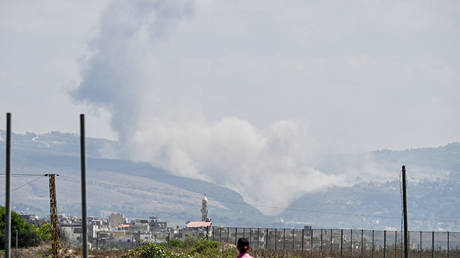
The rain in the high Himalayas does not fall; it arrives like an invading army. It smells of wet slate, bruised pine needles, and the ancient, metallic tang of silt churned up from riverbeds that have not known peace for ten thousand years. When the wall of water broke across the Tibet-Nepal border, it carried no warning. Just a deep, subterranean groan that vibrated through the soles of hiking boots before the first wave crested the banks.
Official reports talk about numbers with a chilling administrative neatness. They speak of foreign nationals, missing persons, flash floods, and border checkpoints swallowed by grey froth. But numbers are weightless. They float on paper like dry leaves. To understand what happened when the glacier-fed torrents burst their seams, you have to look closer at the human geography of the frontier—at the teahouses built on precarious shelves of rock, the prayer flags snapping furiously in the rising mist, and the quiet, agonizing wait of families continents away who are staring at a blinking cursor on a phone screen. In other developments, read about: The Himalayan Cryosphere Collapse Quantifying Glacial Lake Outburst Risks Across Downstream Basins.
Consider what happens to a morning routine when the world gives way.
In these border regions, dawn usually arrives with the steady scrape of a copper kettle and the dull glow of yak-butter lamps. Trekkers lace up damp boots, checking compasses and adjusting backpack straps that never quite sit right on tired shoulders. Among them were forty-nine Indian citizens, alongside more than two hundred other foreign travelers who had come chasing the sublime solitude of high-altitude passes. They were pilgrims, backpackers, engineers, and dreamers who traded the predictable hum of city life for the oxygen-thin silence of the roof of the world. NBC News has also covered this critical topic in great detail.
Then came the roar.
Glacial lake outburst floods do not negotiate. They are born in the high, silent altitudes where global warming quietly rewrites the architecture of the ice. A pocket of meltwater, held back by a fragile moraine dam, simply gives up. Millions of cubic meters of water rush downward, gathering boulders, mud, and snapped timber into a slurry that moves faster than a galloping horse.
In minutes, suspension bridges that had linked isolated communities for generations vanished. Roads turned into vertical waterfalls.
The immediate aftermath is a peculiar kind of quiet. Rescue helicopters churn the thick, bruised air overhead, their rotors beating a frantic rhythm against the canyon walls, but down in the debris zones, sound is swallowed by the mud. Search and rescue teams from Nepal and neighboring jurisdictions move like ghosts through the grey wasteland, turning over slabs of concrete and tangled wire. Every rescued survivor is a miracle; every empty stretch of riverbank is a question mark that stretches into eternity.
Diplomatic wires hum day and night between New Delhi and Kathmandu. Lists are compiled, checked, and updated with agonizing slowness. Families in distant states across India watch television news broadcasts with a heavy, sickening dread, recognizing the names of valleys they had only recently learned to pronounce when their loved ones called to say they had reached base camp.
This is the hidden cost of our romance with the wild. We travel to the edges of the map to find ourselves, forgetting that the earth is constantly in motion, indifferent to our itineraries, our passports, and our plans. The mountains do not harbor malice; they simply obey the physics of gravity and time.
Yet, as the search operations grind forward against relentless rain and blocked routes, another reality takes shape. It is the resilience of border communities who have lost their livelihoods overnight yet rush out with ropes and hot tea to pull strangers from the froth. It is the fierce, stubborn hope of parents who refuse to pack away a child’s room until the phone rings.
The floodwaters will eventually recede, leaving behind scarred riverbanks and a reshaped frontier. But the silence left in the wake of the mountain remains, echoing long after the last rescue chopper has flown home.