Taiz is choking. Again. After the collapse of Yemen's fragile ceasefire in July 2026 and a renewed Houthi push that cut off main entrances into the city, aid workers say the southwestern highland hub is sliding toward a crisis nobody can manage.
When supply roads close around a mountain city, everything breaks at once. Water trucks stop running or cost a fortune. Fuel dries up. Hospital generators sputter, and families with cash in hand still walk away from empty market stalls. Don't forget to check out our previous post on this related article.
Why the Taiz Siege Hits Harder Than a Typical Frontline
Lots of war coverage treats a siege like a paused battle—just troops waiting outside a wall. In Taiz, that's a dangerous misunderstanding. If you want more about the history here, TIME offers an excellent breakdown.
Geography does half the strangling. Perched high in Yemen's rugged highlands near Jabal Sabir, Taiz relies on winding mountain roads to bring in food, fuel, and medical gear. When fighting intensifies and key corridors are blocked, there isn't a neat ring-road detour waiting just five miles over.
Add displacement on top of that. Around 600,000 people in the area depend on humanitarian aid, including roughly 200,000 women and children. Many families have already fled multiple times before, burning through savings, clothes, and whatever small reserves they had left.
A blockade doesn't need to starve every single person overnight to break a city; it only needs to choke fuel, water, and medical transfers until routine injuries turn fatal.
What makes this round feel especially grim is how it connects to a much wider flare-up. Following the breakdown of the 2022 truce in July 2026—sparked by strikes on Sana'a's airport and renewed Saudi air operations—the fighting in Yemen has tangled into broader regional escalation involving the United States, Israel, and Iran. When bigger geopolitical fires rage, local sieges often get less diplomatic oxygen, even as casualty counts climb into the thousands since August.
What Breaks First Inside a Besieged City
People outside a warzone usually picture food shortages first. On the ground in Taiz, water and fuel often bite just as fast, and together they knock out almost everything else.
Water and Fuel Vanish Together
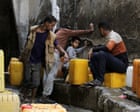
Most households in Taiz depend on water delivered by truck rather than steady piped flow. Cut off the roads and starve the city of diesel, and water production drops roughly in half.
Even when a trickle of fuel slips through on an informal or hidden market, prices go wild. Reports from aid workers in October 2026 pointed to a 20-liter container of petrol jumping from around $20 before the crunch to roughly $80 on the hidden market, while basic staples like potatoes doubled in price. Once diesel gets that expensive, running water tankers, powering bakeries, or keeping hospital backup systems going becomes a daily math problem with no good answer.
Hospitals Strain While Evacuation Routes Close
Medicine runs thin right when missile strikes and frontline clashes bring in more wounded. Worse, a tight encirclement traps patients inside. Seriously injured people who need specialized care outside the city can't easily be transferred when main routes are shut or under fire.
Aid organizations, including Oxfam, Amnesty International, the World Food Programme, and UN OCHA, have all sounded alarms over blocked access, soaring prices, and civilians caught in the crossfire. Mine-action teams like The HALO Trust have also warned about the dangers facing staff and civilians trapped inside as encirclement tightens.
Honestly, one of the hardest parts for humanitarian teams isn't just logistics—it's safety and access. Aid workers face checkpoints, active shelling, arbitrary detentions, and funding gaps across Yemen. Having warehouse stock somewhere else in the country doesn't feed a family in Taiz if trucks can't reach the gate.
Common Myths About Yemen's Renewed Fighting
When headlines spike around a siege, a few oversimplifications pop up over and over.
- Myth: A ceasefire from years ago fixed the underlying frontlines. The 2022 truce eased major nationwide escalations for a time, yet Taiz's encirclement and everyday strain never truly vanished. Once the truce collapsed in July 2026, old flashpoints reignited fast.
- Myth: Money solves hunger during a blockade. When roads are blocked and market stock shrinks, having cash doesn't guarantee a meal. Scarcity drives prices past what ordinary workers can pay, and sometimes there simply isn't much left to buy.
- Myth: This is purely a local dispute with no outside ripples. Yemen's renewed conflict feeds on—and feeds into—wider regional hostilities, cross-border strikes, and shifting diplomatic pressure. Still, the day-to-day toll lands squarely on Yemeni civilians.
Let's be real about the limits of current reporting, too. During active clashes and road closures, casualty tallies, price spikes, and movement numbers shift day by day, and independent verification inside contested zones is tough. Agencies like UN OCHA and WFP give solid baselines, yet conditions on a given street can worsen faster than official updates catch up.
How to Track the Situation and Actually Help
If you're following this crisis and want to do more than skim grim headlines, start with sources that track access and displacement closely rather than relying on rumor mills. Check dispatches from UN News, ReliefWeb, and the Sana'a Center for Strategic Studies for context on both humanitarian corridors and political shifts.
If you plan to donate, vet organizations carefully. Look for groups with established local teams, transparent financial reporting, and active operations in Yemen—such as Oxfam, the World Food Programme, or the International Committee of the Red Cross—and keep expectations realistic about how fast aid moves while roads stay closed. And if you contact elected representatives about foreign policy or humanitarian funding, press for concrete action on two things aid groups keep repeating: opening safe civilian and supply corridors into Taiz, and protecting humanitarian workers on the ground.