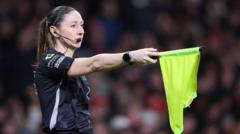
Football officiating lost one of its most recognizable figures when Sian Massey Ellis hung up her assistant referee flag to take on a permanent coaching and development role with the Football Association.
You've probably seen her runs down the line in the Premier League. For years, she stood out not just because she was exceptionally good at spotting offside calls under intense pressure, but because she operated in a heavily male-dominated workspace while dealing with an absurd amount of public scrutiny. Now, she is shifting her expertise away from the pitch and toward shaping the next generation of officials.
That shift changes things. Officiating needs practical talent pipelines more than ever.
The Reality of Elite Match Officials
Let's be real. Being an assistant referee in top-tier football is brutal. You make a split-second decision at high speed, and forty thousand fans plus millions watching on television immediately dissect your judgment using slow-motion replays.
Massey Ellis handled that pressure for decades. She worked matches across the English Football League, the Premier League, and high-stakes international fixtures. Her career wasn't just about running the line. It proved competence on a grand stage where mistakes make national headlines.
When someone with that level of practical experience steps off the grass and into an office at St George's Park, the impact on referee development can be massive. Theory only gets you so far. Real match management comes from surviving years of hostile crowds and high-tempo counterattacks.
Why the FA Role Changes the Pipeline
The Football Association desperately needs better talent acquisition and retention for referees. Grassroots football bleeds officials every single weekend due to abuse from players and spectators. If you want better standards in the professional leagues, you have to fix the bottom of the ladder.
Massey Ellis stepping into a senior refereeing development post means aspiring officials get direct mentorship from someone who navigated the absolute peak of the sport.
- Targeted Coaching: Trainees get real-world insights into positioning and psychological resilience.
- Pathways: Clearer routes for women entering a traditionally closed-off officiating ecosystem.
- Standards: Tighter alignment between modern VAR protocols and on-field assistant referee mechanics.
Mentorship works best when the mentor has lived the exact problem you are facing.
Breaking Down Barriers Without the PR Spin
Too many sports organizations treat diversity hires as checkbox exercises. Massey Ellis never fit that lazy narrative. She earned her spot through sheer consistency, physical fitness test passes, and accurate decision-making.
Her transition to a coaching role highlights a broader shift in football. Clubs and governing bodies are finally realizing that elite players and officials make the best educators. You cannot teach the psychological weight of an Old Firm derby or a relegation six-pointer from a textbook. You teach it because you stood right there while players screamed in your face and you still got the offside call right.
What This Means for the Future of Officiating
The pressure on match officials is not going away. With automated offside technology creeping into more competitions, the role of the assistant referee is evolving rapidly.
Instead of just staring across the pitch for tight runs, officials have to adapt to new tech while maintaining authority on the ground. Massey Ellis understands this transition better than most. Her job now involves preparing officials for a hybrid game where human instinct meets computer algorithms.
If you care about fair play and better-managed matches, keep an eye on how the FA structures its referee academies over the next few seasons. The real test of her new role won't be press releases or launch events. It will show up on Saturday afternoons when a young assistant makes a brave, correct call under pressure because someone taught them how to handle the noise.
Stop treating officials as scapegoats for bad team performances. Support the people building the framework behind the whistle.