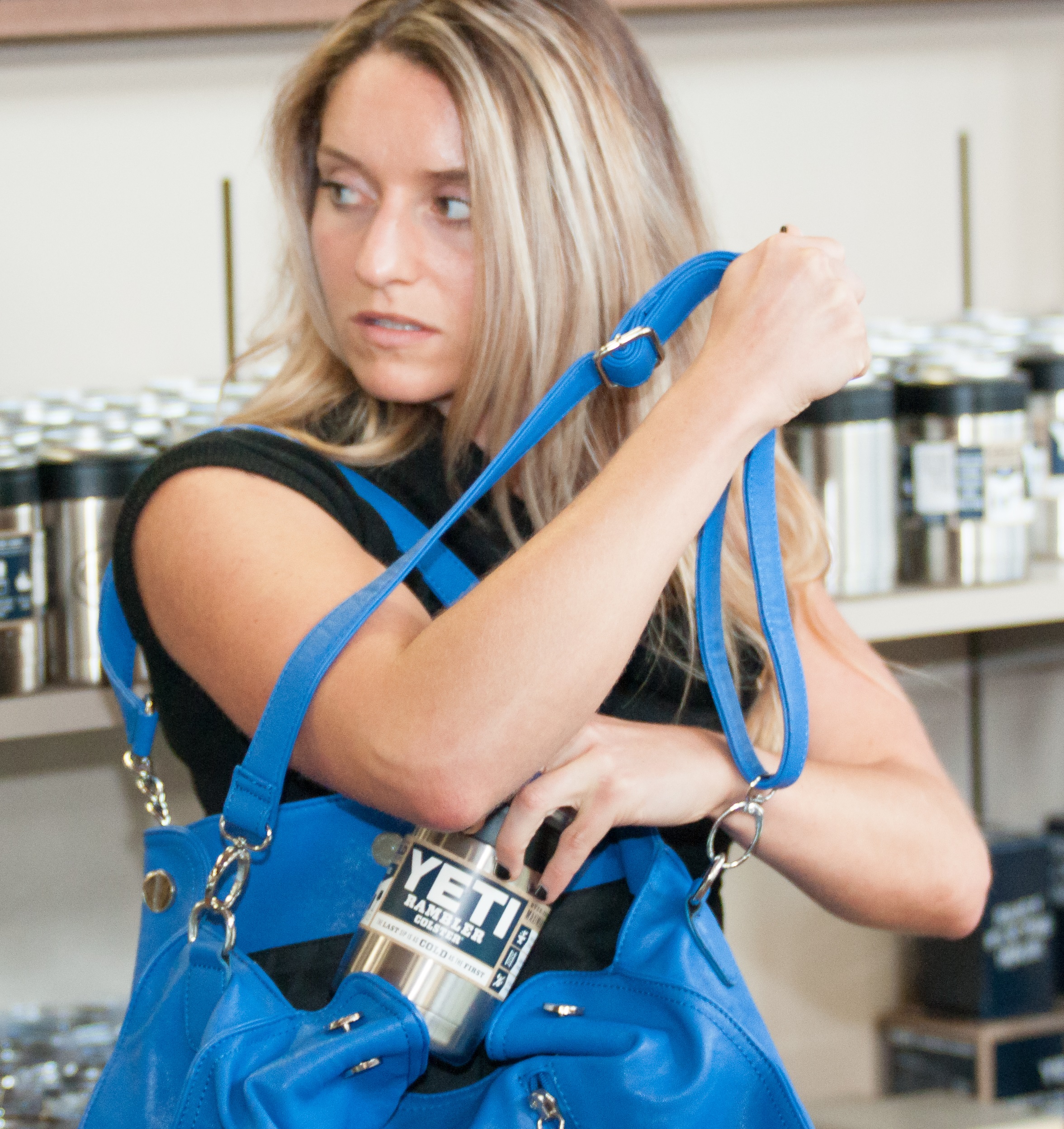
Retailers are crying wolf while their houses are made of straw. The current hysteria surrounding "organized retail crime" and the desperate scramble to "make shoplifting a crime with consequences" is a masterclass in corporate deflection. CEOs are standing in front of cameras, blaming empty shelves on a breakdown of law and order, when the reality is far more embarrassing: they have lost control of their own floor space.
The "consequences" everyone is clamoring for—stricter sentencing, more police in aisles, locking every tube of toothpaste behind plexiglass—are a band-aid on a gunshot wound. Worse, they are a distraction from the fundamental failure of modern retail operations. Shoplifting isn't a legal crisis. It’s an inventory management crisis masked by political theater.
The Myth of the Lawless Vacuum
The standard argument suggests that shoplifters are emboldened by a lack of prosecution. The "lazy consensus" claims that if we just lowered felony thresholds and arrested every teenager with a candy bar in their pocket, the margins would return to their former glory. This is a fantasy.
Criminal justice data doesn't support the idea that harsher penalties act as a deterrent for low-level property crime. It never has. What deterred shoplifting in the 1990s wasn't the threat of a ten-year sentence; it was the presence of an actual human being standing in the aisle. By gutting labor costs to appease shareholders, big-box retailers created a frictionless environment for theft. You can’t fire 40% of your floor staff, replace them with a blinking "Self-Checkout" screen, and then act surprised when the merchandise walks out the door.
Imagine a scenario where a bank removes all its tellers, leaves the vault door open, and places a sign saying "Please record your own withdrawals." When the money goes missing, do we blame the breakdown of society, or do we fire the bank manager?
The Self-Checkout Swindle
Retailers gambled on self-checkout as a way to automate labor costs into oblivion. They lost. Industry analysts at ECR Retail Loss found that stores with self-checkout had loss rates up to 75% higher than those with traditional manned registers.
When you force a customer to do the work of a cashier, you break the psychological contract of the transaction. For many, "forgetting" to scan an item isn't seen as a crime; it’s a self-issued rebate for their labor. Yet, instead of admitting that the self-checkout experiment failed, retailers are doubling down on "consequences." They are installing AI-powered cameras that hover over customers like digital vultures, creating a hostile shopping environment that drives away honest patrons while doing little to stop professional boosters.
Shrinkage—the industry term for lost inventory—isn't just theft. It includes administrative errors, vendor fraud, and damage. By lumping everything under the "organized crime" umbrella, executives are hiding operational rot. It is much easier to tell a board of directors that "gangs are raiding our stores" than to admit "our inventory systems are so broken we don't actually know what's in the warehouse."
The High Cost of Plywood and Plexiglass
The current "solution" to shoplifting is to turn every pharmacy into a minimum-security prison. Locking products behind glass is a white flag. It’s an admission that the retailer has no interest in selling products, only in preventing them from being moved.
This strategy is a mathematical suicide pact. Studies consistently show that once a product is locked up, sales drop by 15% to 25%. Customers don't want to wait seven minutes for a harried employee to unlock a $6 bottle of deodorant. They will simply go home and order it from a digital giant that doesn't treat them like a suspect the moment they walk through the door.
Retailers are spending millions on physical security measures that actively cannibalize their revenue. They are paying to lose money.
The Professionalization of Theft
Let’s be clear about organized retail crime (ORC). It exists. It is real. But it is not the guy stuffing a steak down his pants. True ORC is a supply chain problem, not a storefront problem.
The sophisticated groups stealing in bulk aren't deterred by a "no-chase" policy at the local CVS. They are exploiting the massive, unregulated secondary markets provided by third-party online marketplaces. If you want "consequences," you don't go after the bottom-level runners; you go after the digital fences.
The industry’s insistence on "street-level" consequences is like trying to stop the drug trade by arresting every person with a joint. It fills the jails, costs the taxpayers a fortune, and does exactly zero to stop the flow of product.
Labor is the Only Real Security
I have seen companies spend $5 million on "smart" tagging systems while simultaneously cutting $2 million from their security budget. The result is always the same: theft goes up.
A camera cannot intervene. A plexiglass shield cannot provide customer service. An AI algorithm cannot spot the subtle "tell" of a professional shoplifter. Only humans can do that. The most effective anti-theft device ever invented is a well-trained, well-paid employee who is empowered to engage with customers.
When a store is staffed properly, shoplifting becomes difficult. Not because of the threat of jail, but because of the "Greatest Deterrent": being noticed. Most shoplifters require anonymity. They need the "retail desert" that modern management has created.
The Accountability Gap
We are currently witnessing a massive transfer of responsibility. Retailers are asking for public subsidies—in the form of increased police presence and dedicated prosecutors—to fix a problem created by their own pursuit of "lean" operations. They want the public to pay for the security they refused to fund themselves.
If we want to make shoplifting a crime with consequences, we need to start with the consequences for the retailers.
- Tax the Glass: If a retailer chooses to lock up basic necessities, they should face a "nuisance tax" for the burden they place on the consumer and the time they waste.
- Audit the Shrink: Require retailers to provide audited proof of "organized" theft before they are allowed to close stores or blame local policy for their failures.
- Mandate Staffing Levels: Treat retail floor coverage as a safety issue. A store that cannot monitor its own exits is a public hazard.
Stop asking the police to be your loss prevention department. Stop asking the taxpayer to subsidize your automated checkout machines. If you can't protect your inventory without turning your store into a cage, you don't have a shoplifting problem. You have a business model problem.
Fix your floors. Pay your people. Or keep losing your margins to anyone with a heavy coat and a lack of patience. The choice isn't between "law and order" and "anarchy." It’s between competent management and corporate whining.
Pick one.